
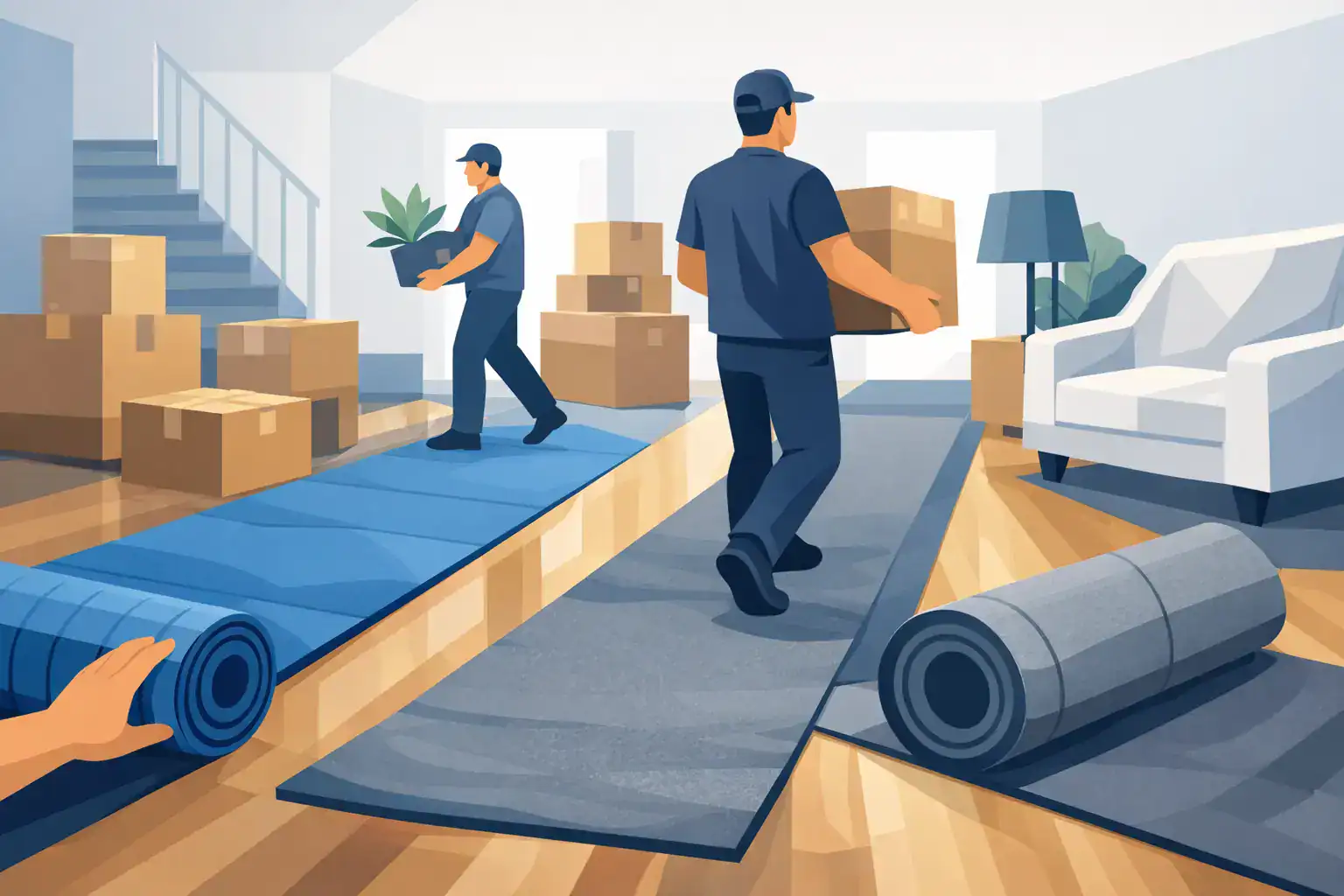
A move can be finished on time, every box can arrive safely, and the day can still feel like a loss if the hardwood is scratched or the carpet is tracked with mud. Floor runners for moving protection are one of the simplest ways to prevent that problem. They create a clean, durable path between the entrance, truck, elevator, and rooms where furniture is being moved.
For professional movers, floor protection is not an optional extra pulled out after something goes wrong. It is part of the setup before the first dresser, appliance, or moving box crosses the threshold. The right runner protects the home, gives the crew better footing, and helps keep a move organized from start to finish.
Why floor protection matters on moving day
Moving creates repeated traffic through the same few areas. A crew may carry dozens of loads down one hallway, across a living room, and through an entryway. Even clean shoes can carry grit that acts like sandpaper on hardwood, laminate, luxury vinyl plank, and tile. Rain, snow, wet grass, and slush add another risk, especially around front doors and garage entries.
Carpet is vulnerable in a different way. Soil can become embedded in fibers, while moisture can leave stains or create a musty smell if it is not addressed quickly. Light-colored carpet near a staircase or entry is particularly easy to mark during a busy move.
Furniture also creates risk. A heavy sofa, refrigerator, filing cabinet, or piano can shift in the hands of even an experienced crew. A padded runner will not replace proper lifting technique or specialty equipment, but it can provide a protective layer between the floor and dirt, wheels, or a briefly lowered item.
For renters, this protection can help avoid disputes over damage deposits. For homeowners, it preserves finishes that cost real money to repair. For office managers, it helps keep a commercial move from disrupting a polished workplace or common area.
Types of floor runners for moving protection
Not every floor needs the same material. The best choice depends on the surface, weather, traffic level, and whether the job involves rolling equipment or only hand-carried items.
Reusable padded runners
Padded moving runners are a professional standard for interior paths. They are typically made with a durable, absorbent fabric surface and a backing designed to stay in place. They work well on hardwood, laminate, tile, vinyl, and carpet because they cushion the floor while trapping dirt and moisture from shoes.
Their biggest advantage is durability. A quality reusable runner can handle constant foot traffic throughout a full moving day. They are also quick to place, roll up, and reposition as the crew moves from one section of the home to another.
The trade-off is that reusable runners need to be clean before use. A dirty runner defeats the purpose, so a professional crew should inspect its equipment before bringing it into your home.
Carpet protection film
Adhesive carpet film is a clear plastic product that sticks lightly to carpet and creates a continuous protective barrier. It is useful for clean, dry carpet in high-traffic paths, such as a hallway leading from the front door to a bedroom or office.
Film can provide excellent protection against dirt and small spills, but it is not right for every situation. It should not be applied to wet carpet, damaged carpet, loose fibers, or certain delicate materials. It can also become slippery if moisture gets on top of it. For a short move in dry conditions, it may be a good option. In rainy weather or on stairs, padded runners often provide better traction.
Hard-surface adhesive film
For some hard floors, low-tack protection film provides a thin barrier against scuffs and dirt. This can be useful in newly renovated spaces or vacant homes where floors need protection during repeated trips in and out.
It must be selected carefully. Some adhesives can leave residue, and certain finishes should not have film applied at all. Natural stone, freshly refinished hardwood, textured surfaces, and floors with manufacturer-specific care requirements deserve extra caution. When there is any doubt, use a non-adhesive runner instead.
Masonite and rigid walkway panels
Heavy commercial moves may call for more than fabric runners. Masonite or other rigid panels can help distribute weight and protect flooring when rolling equipment, loaded dollies, safes, machinery, or large filing systems across a surface.
These panels are effective, but they require trained handling. If the edges are not secured or the path is not level, they can become a trip hazard. They are best used when a crew has assessed the load, route, and turning space in advance.
Where runners should be placed first
The most important paths are not always the most obvious. Start at the point where outdoor dirt enters the property, then follow the route that movers will use most often. This usually includes the front door, garage entry, elevator landing, foyer, main hallway, stairs, and the room where larger furniture is located.
A runner should extend far enough to cover the actual walking path, not just sit inside the doorway. If movers must step off the runner to turn a corner, carry a sectional through a narrow hall, or reach a bedroom, the exposed floor is still at risk.
In multi-story homes, stair protection deserves special attention. Stairs see concentrated traffic, and carrying items up or down them requires secure footing. Properly placed runners should lie flat, follow the stair path cleanly, and avoid loose edges that could catch a shoe.
For apartment and office moves, the route may include common areas managed by a building. Hallways, elevators, lobbies, loading docks, and service corridors may have their own protection rules. Confirm those requirements before move day, especially if the building requires elevator pads, booking windows, certificates of insurance, or designated loading access.
Proper use matters as much as the material
A floor runner only works when it stays in place. Before moving begins, the crew should inspect the route for wet spots, loose rugs, cables, narrow turns, and changes in floor height. Runners should be laid flat and overlapped carefully when more than one is needed. Any curled edge should be corrected immediately.
The path also needs to stay clear. Empty boxes, packing paper, tools, and shrink wrap should not accumulate on protected walkways. A well-run move has a clear travel lane, a staging area for packed items, and a separate area for supplies and debris.
Weather changes the plan. On a dry day, a simple runner path may be enough. During rain or snow, crews may need additional runners at entry points, frequent cleaning, and a controlled route that keeps wet shoes from spreading moisture through the home. In those conditions, moving quickly is less valuable than moving steadily and safely.
What professional movers should bring
A prepared moving crew does not arrive with only a truck and a few dollies. Property protection requires equipment that matches the job. At a minimum, movers should have clean floor runners, moving pads, shrink wrap, hand trucks, straps, and the right tools for disassembly and reassembly.
Specialty items require specialty preparation. Pianos may need skids and additional floor protection. Appliances may need appliance dollies and careful route planning. Office moves may require protection around IT equipment, glass partitions, workstations, and high-traffic corridors. A larger move may also need enough crew members and vehicle capacity to avoid rushing heavy loads through tight spaces.
Baker Home Solutions includes floor runners and moving pads as part of a professional moving setup, alongside packing supplies and specialty equipment for difficult items. That preparation supports the goal every customer wants: protect the property while keeping the move on schedule.
How customers can prepare the route
You do not need to install your own protection system before movers arrive, but a little preparation makes it easier to protect the home. Clear shoes, mats, small furniture, pet bowls, and decorative items from the main travel path. Point out any freshly refinished floors, weak stair treads, loose tile, existing damage, or areas you are especially concerned about.
If you are moving out of a rental, take dated photos of floors and entry areas before the move begins. This creates a clear record of their condition. If you live in a condo or managed building, confirm the moving rules early rather than finding out on move day that a loading dock or elevator was not reserved.
A protective move is built on small decisions made before the truck is loaded. Ask how the crew will protect your floors, make sure the route is clear, and choose movers who treat runners, pads, and careful setup as standard equipment rather than a last-minute add-on.