
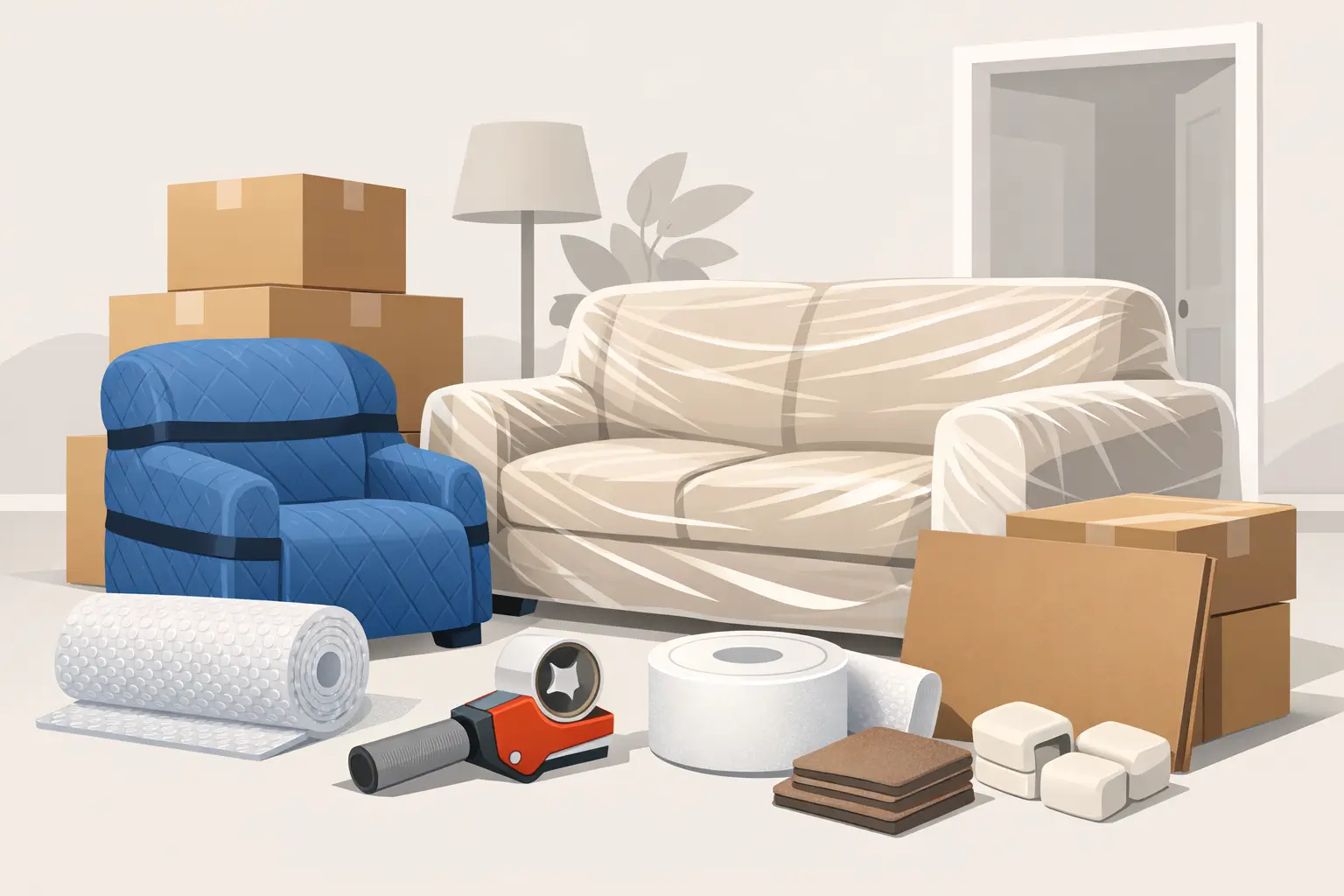
A sofa can arrive at the new house without a scratch and still leave behind a damaged door frame, scuffed hardwood, or a dented stair rail. That is why the best supplies for furniture protection do more than cover furniture. They protect the item, the home you are leaving, and the home you are entering.
For a small move, a few quality materials and a careful plan may be enough. For a full household, office relocation, or heavy-item move, protection supplies need to work as a system. Pads prevent impact damage, wrap holds those pads in place, runners protect walking paths, and the right equipment keeps oversized pieces under control. Skipping one part of that system is how minor risks turn into costly repairs.
Best Supplies for Furniture Protection: The Core Kit
The best starting point is a set of clean, thick moving pads. Also called moving blankets or furniture pads, these are the workhorse of a damage-free move. They cushion wood furniture, upholstered pieces, appliances, mirrors, and boxed items against vibration and contact inside the truck. They also protect walls and trim when a large piece needs to be turned through a narrow hallway.
Look for heavy-duty quilted pads rather than thin utility blankets. Thin blankets can be useful between lightweight items, but they do not offer enough padding for dressers, dining tables, china cabinets, or solid-wood furniture. A good moving pad should cover the corners and broad surfaces of the item, not just the front face.
Shrink wrap is the next essential supply, but it has a specific job. It secures pads around furniture, keeps drawers and doors from opening, and holds loose cushions together. It is especially useful for sectionals, upholstered chairs, wrapped mattresses, and furniture with removable components.
Do not apply shrink wrap directly to finished wood, leather, lacquered surfaces, or delicate upholstery for long periods. Heat, moisture, and pressure can create problems, particularly if the item will sit wrapped in storage. Place a moving pad, clean paper, or a breathable protective layer between the furniture and the wrap first.
A practical protection kit for most residential moves includes:
- Heavy-duty moving pads for furniture, appliances, and large electronics
- Shrink wrap for securing pads, drawers, doors, and upholstered pieces
- Corrugated cardboard sheets or corner guards for edges and flat surfaces
- Low-tack painter’s tape and quality packing tape for temporary securing
- Floor runners, ram board, or temporary surface protection for traffic paths
- Mattress bags, sofa covers, and specialty bags for items that need a clean barrier
The exact amount depends on the size of the job. A one-bedroom apartment may need a modest stack of pads and a few rolls of wrap. A four-bedroom home or office move needs enough material to keep furniture protected from pickup through unloading, not just during the truck ride.
Protect Furniture by Material, Not Just by Size
Not every piece should be wrapped the same way. The right approach depends on what the item is made of and how it will be carried.
Wood furniture
Wood furniture needs padding at corners, legs, and finished surfaces. Remove detachable legs, shelves, knobs, and glass inserts when possible. Wrap those parts separately, label them clearly, and keep hardware in a sealed bag taped to the underside of the corresponding piece.
For dressers and cabinets, remove loose contents before moving. Lightweight drawers can often stay in place if they are empty and secured with wrap. Heavy drawers should come out. That reduces the lifting weight and prevents the drawer slides from twisting under stress.
Avoid using tape directly on stained, painted, or antique wood. Even painter’s tape can lift a weak finish if it is left too long. Use wrap over a pad instead.
Upholstered furniture and mattresses
Fabric furniture picks up dust, moisture, and grime easily during a move. A sofa cover or mattress bag provides a useful clean barrier, especially when furniture may sit in a garage, hallway, or truck before unloading. Add moving pads over the cover when the item will be near hard furniture, appliance edges, or truck walls.
For a sectional, separate the pieces before wrapping. Protect each piece individually, then wrap cushions together in a clean cover or stretch wrap. Leaving cushions loose creates clutter, slows down loading, and increases the chance that they get dirty or left behind.
Glass, mirrors, and fragile surfaces
Glass tabletops, framed mirrors, and artwork need more than a moving pad. Start with a flat layer of cardboard or foam board on the face, protect the corners with guards, then pad the item and secure it with wrap. Mark the package as fragile, but do not rely on a label alone. It should be loaded upright, secured so it cannot shift, and kept away from heavy items.
A glass tabletop should never be laid flat under weight. Even a well-wrapped piece can crack if another item is placed on top of it. For large mirrors, artwork, and display cases, specialty cartons or custom crating may be the safer choice.
Floor Runners Protect the Property Too
Furniture protection is only half the job. Floors, door frames, elevators, and stairways take the brunt of moving-day traffic.
Floor runners are one of the most valuable supplies on a move because they protect the route before the first item comes through. Carpet film can work well in dry conditions, while reusable fabric runners are better for many hard surfaces and high-traffic paths. Ram board or similar heavy paperboard is useful for hardwood, tile, and vinyl where appliances, dollies, or heavy furniture will pass.
The material must match the floor. Adhesive carpet film is not a universal solution, and it should not be used on every type of hard floor. On finished wood, use a non-slip runner or board product designed for that surface. Moisture trapped beneath plastic can damage some floors, and poor adhesion can create a trip hazard.
Door jamb protectors and corner guards are also worth using when moving large pieces through tight spaces. A few minutes spent protecting a narrow doorway can prevent a repair that costs far more than the supplies.
Use the Right Equipment for Heavy and Awkward Items
Protection materials cannot compensate for poor lifting technique or the wrong equipment. A heavy dresser dragged across a runner can still damage the floor. A piano wrapped in blankets can still be unsafe without the proper skid, straps, and trained handling.
Furniture dollies, appliance dollies, lifting straps, shoulder harnesses, and piano skids all have specific uses. Dollies reduce carrying distance and protect crews from strain, but they must be secured properly and used on a clear route. Lifting straps can help with heavy pieces, but they are not a substitute for enough trained people on the lift.
For pianos, large safes, commercial printers, server equipment, and oversized machinery, specialty equipment is not optional. These items have unusual weight distribution and can cause serious damage when handled like standard furniture. A professional crew should assess access, stairs, door widths, and loading requirements before moving day.
Build Protection Into the Loading Plan
The best supplies for furniture protection work best when loading is organized. Start by protecting the home, then wrap large furniture before it reaches the truck. Load heavy, stable pieces first and secure them against the truck wall. Use pads between items, not only around the outside of the load.
Keep metal edges, tools, and appliance corners away from finished furniture. Stack lightweight boxes on top of sturdy pieces only when their weight and shape allow it. Nothing should be able to slide when the truck brakes, turns, or travels over uneven roads.
This is where a professional process matters. A licensed and insured moving company should arrive with enough pads, wrap, runners, straps, and equipment for the job already planned. Asking crews to make do with a few blankets after loading has started creates delays and raises the risk of damage.
When Buying Supplies Makes Sense and When It Does Not
Buying basic supplies can make sense for a short local move with a limited number of furniture pieces. You can reuse mattress bags, unused wrap, cardboard sheets, and small corner guards for storage or future projects.
For a larger move, rental pads or full-service packing are often the better value. Quality moving pads take up significant space, and a complete household needs more of them than most people expect. Professional movers also bring supplies sized for real moving conditions, including floor protection and specialty equipment that are difficult to justify buying for one day.
If you are moving into a newly renovated home, transporting antiques, or relocating an office with electronics and sensitive equipment, prioritize protection over the cheapest supply option. A bargain roll of thin plastic is not a replacement for padding, careful loading, and trained handling.
Before moving day, walk the route from each room to the truck and identify the tight turns, vulnerable floors, and items that need special handling. That simple check gives you time to prepare the right supplies instead of trying to solve a damage problem after it happens.