
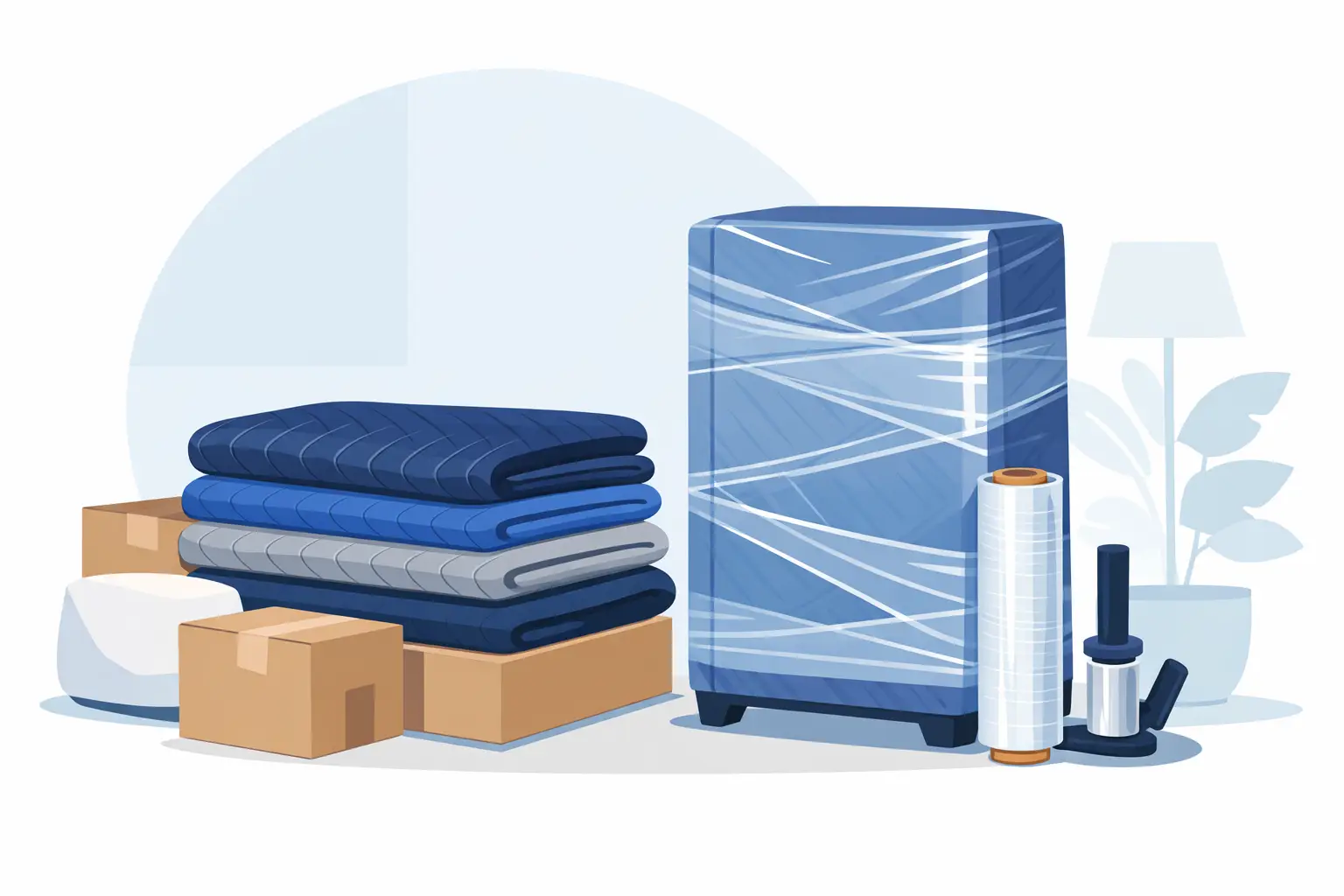
A dresser gets scratched once, and suddenly the cheapest moving quote does not feel cheap anymore. The same goes for torn upholstery, chipped desk edges, cracked cabinet doors, or a gouged hallway wall in the middle of move-out. That is exactly why moving pads and shrink wrap protection matter. They are not extras for show. They are basic protection tools that help keep furniture, equipment, and the property around them in good condition from pickup to final placement.
At a professional level, protection is part of the job, not an afterthought. A move goes better when the crew shows up with the right supplies, knows when to use them, and understands that different items need different handling. A leather sectional does not get treated the same way as a glass-front cabinet, and office electronics do not get wrapped like a dining chair.
What moving pads and shrink wrap protection actually do
Moving pads and shrink wrap work together, but they do different jobs. Pads create a soft barrier that helps prevent scratches, dents, and abrasion during carrying, stacking, and loading. Shrink wrap holds doors, drawers, cushions, and padding in place while also helping keep surfaces clean and dry during the move.
One without the other can leave gaps. If you use shrink wrap alone on wood furniture, for example, you may keep drawers shut, but you are not adding much cushioning against impact. If you use a pad without securing it, the blanket can shift while the item is carried through a doorway or loaded into the truck. Proper protection usually means layering – pad first where cushioning is needed, then shrink wrap to secure and stabilize.
That combination is especially useful in trucks where items are packed tightly to reduce shifting. A well-loaded truck is efficient, but efficiency only works when each piece is protected from rubbing against the next.
Where moving pads make the biggest difference
Pads are most valuable on large, finished surfaces and high-contact pieces. Wood furniture, painted furniture, metal frames, appliances, conference tables, filing cabinets, and headboards all benefit from that soft layer between the item and the outside world.
During a residential move, pads are often the difference between a smooth delivery and cosmetic damage that is frustrating to discover later. Dining tables get bumped at corners. Dressers press against other pieces in the truck. Bed rails scrape walls in stairwells. A padded item has a much better chance of coming through clean.
In commercial moving, the stakes can be higher because appearance and downtime both matter. Office desks, reception furniture, shelving, monitors, and equipment often need to be moved fast without creating avoidable damage. Pads help protect assets, but they also protect the building. A padded cabinet sliding through a tight corridor is less likely to mark walls, door frames, or elevator interiors.
There is also a practical labor advantage. Furniture wrapped in pads is easier for a trained crew to grip and control because the item has defined edges and protection where hands, straps, and dollies are most likely to make contact.
What shrink wrap is best used for
Shrink wrap is not about cushioning. It is about containment, stability, and surface protection. It keeps drawers from sliding open, cabinet doors from swinging, and loose parts from shifting around. It can also secure moving pads so they stay where they belong from the first carry to the final unload.
This matters more than many customers realize. A chest of drawers might look sturdy enough to move as-is, but if the drawers shift during transport, weight distribution changes. That can make the piece harder to handle and increase the chance of internal damage. Wrapping it properly keeps the unit tight and predictable.
Shrink wrap also helps with upholstered furniture. Sofas and mattresses can pick up dirt, dust, or moisture during loading and unloading, especially in bad weather or on high-traffic job sites. A protective layer helps keep those items cleaner without replacing the need for careful handling.
For office moves, shrink wrap is useful for bundling cords, securing keyboard trays, stabilizing rolling components, and keeping parts together. It supports organization, which matters when a business is trying to get people back to work quickly.
Why good protection is about judgment, not just materials
Anyone can buy a roll of shrink wrap and a stack of blankets. The difference is knowing how to use them properly. Overwrapping can trap debris against delicate finishes. Wrapping too tightly on certain surfaces or in the wrong conditions can create problems of its own. Underpadding leaves corners and edges exposed, which is where damage often happens first.
Professional crews make decisions item by item. A glass table may need disassembly, edge protection, and separate handling rather than a quick blanket wrap. A recliner may need moving pads on friction points and shrink wrap to control the footrest. An office copier may require stabilization, protected contact points, and loading methods that account for weight distribution.
That judgment is one reason customers look for licensed and insured movers with real equipment and a clear process. The goal is not to use the most supplies. It is to use the right protection in the right order so the move stays efficient and the risk of damage stays low.
Protection does not stop at the furniture
One of the most common mistakes in moving is focusing only on the items being moved and forgetting the property itself. Floors, entryways, stair rails, and corners take a beating during rushed moves. Good crews plan protection for the home or facility as well, especially when large furniture, appliances, safes, or office equipment are involved.
Floor runners help reduce tracked-in dirt and surface wear. Pads can shield vulnerable edges during staging. Controlled wrapping keeps furniture compact so it does not catch on trim, walls, or elevator frames. This is particularly important in condos, office buildings, and homes with tight hallways or finished basements.
For families, protecting the house matters just as much as protecting the furniture. For businesses and property managers, it can be even more critical because building damage creates delays, complaints, and added cost.
When DIY protection falls short
Some moves are small enough for a do-it-yourself plan, but protection is usually where DIY jobs start to unravel. People underestimate how many pads are needed, skip wrapping steps to save time, or use household blankets that slide off and do very little under pressure. Plastic wrap from a store may help hold a drawer closed, but it is not the same as using professional-grade materials with a proper loading strategy.
The bigger issue is pace. On moving day, people get tired, rushed, and less careful. That is when a table top goes in unpadded because the truck is waiting, or the couch gets dragged because there are not enough hands. Supplies only work when the crew has the discipline to use them consistently.
That is where an operationally prepared mover stands out. A company like Baker Home Solutions does not just bring a truck. It brings the protective tools, trained handling, and enough capacity to move the job without improvising halfway through the day.
What to expect from a properly protected move
A well-run move should feel organized from the first walk-through. Crews identify fragile, oversized, or high-value items early. They decide what needs padding, what needs wrapping, what should be disassembled, and what requires specialty equipment. The truck is loaded with protection in mind, not just speed.
For a homeowner, that means less stress when the sectional clears a narrow staircase or the antique cabinet arrives without new marks. For an office manager, it means desks, chairs, electronics, and files are moved with a plan that supports a faster reset on the other side.
The best protection also saves time after delivery. Furniture that was wrapped and secured properly is easier to place, reassemble, and inspect. There are fewer surprises, fewer preventable claims, and fewer reasons for the move to drag into the evening.
Moving pads and shrink wrap protection are part of professional standards
When customers ask what separates one mover from another, the answer is often visible in the basics. Do they arrive with enough supplies? Do they protect floors? Do they pad and wrap furniture before it is halfway to the truck? Do they handle office assets and heavy household pieces like they have done it many times before?
Those details are not small. They are how damage gets prevented, how schedules stay on track, and how a move feels professional instead of chaotic. Licensed and insured status matters. WSIB certification matters. Uniformed crews with the right equipment matter. But all of that should show up in the handling itself.
If you are planning a household move, office relocation, or a job that includes packing support, ask about protection methods before move day. Not because you want more materials, but because you want fewer problems. The right wrap, the right padding, and the right crew can make the difference between a move that simply gets done and one that gets done right.
A good move should leave you focused on settling in, not inspecting for fresh damage.