
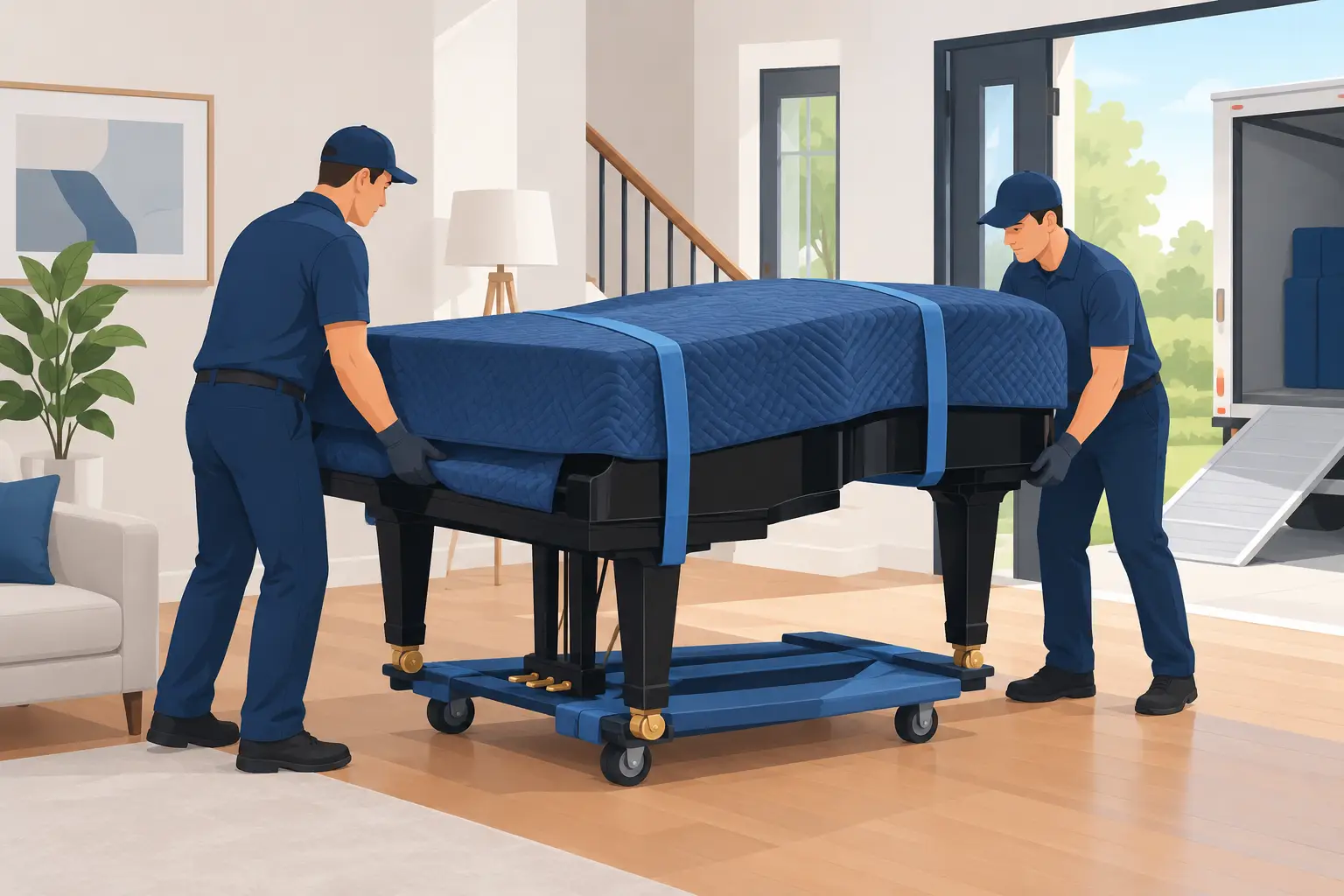
A piano can look stationary and solid right up until moving day. Then its real challenge becomes clear: concentrated weight, an awkward center of gravity, delicate internal parts, and a finish that can be damaged by one careless turn. Piano transport safety is not simply about getting the instrument onto a truck. It is about protecting the piano, the people moving it, and every floor, wall, stairway, and doorway between its old location and its new one.
An upright piano commonly weighs 300 to 800 pounds. Grand and baby grand pianos can weigh considerably more, with much of that weight carried through a cast-iron plate. That is not a job for a few friends, a furniture dolly, and a pickup truck. A safe move starts with an accurate plan, proper equipment, and a trained crew that knows where the risks are before the piano moves an inch.
Why Pianos Need a Different Moving Plan
A piano is both a heavy piece of furniture and a precision musical instrument. The outer cabinet can be scratched or cracked, but the higher concern is what cannot be seen immediately. Internal action components, pedals, strings, pins, and the soundboard can be affected by impact, vibration, moisture, or improper lifting.
Weight distribution makes the job more demanding. On an upright piano, the lower back and base carry much of the load. Lifting from the wrong point can damage the cabinet or cause a sudden shift in weight. On a grand piano, the legs are not designed to support the instrument while it is being maneuvered through a home. They must be removed only after the piano is properly secured and supported on a specialized skid.
The route matters just as much as the instrument itself. A short move across a flat ground-floor room may be relatively straightforward for an experienced crew. A move involving narrow landings, tight stair turns, ice, uneven walkways, or a second-floor apartment requires a more detailed assessment. In some cases, a different exit route or specialty lifting solution is safer than forcing a piano through a space that is too tight.
Piano Transport Safety Starts Before Moving Day
The best protection is preparation. Before scheduling the move, measure the piano and identify its type: spinet, console, studio upright, upright, baby grand, grand, or player piano. Then measure every critical part of the route, including door openings, hallways, stair widths, ceiling clearance at landings, exterior steps, and the path to the truck.
Measurements alone do not tell the whole story. A doorway may technically be wide enough, yet an immediate turn beyond it can make the route impossible. Low handrails, pendant lights, slippery tile, loose rugs, and crowded entryways can also create preventable problems. Clear the route in advance and remove items that reduce walking space.
Homeowners should also consider access at the destination. It is common to focus on getting the piano out of the current home and discover later that the new home has a narrower staircase or a more difficult entry. Providing photos and details of both locations helps movers plan the right crew size, equipment, vehicle placement, and handling method.
Protecting Floors, Walls, and Doorways
The piano is not the only asset at risk. Hardwood, tile, carpeting, railings, trim, and freshly painted walls can all be damaged during a heavy-item move. Professional crews protect travel paths with floor runners, moving pads, and door protection where needed. The piano itself should be padded thoroughly, then secured with stretch wrap or shrink wrap so the pads stay in place without taping directly to the finish.
This protection is especially important around corners and stairwells. A padded piano is less likely to mark a wall if it comes close, but the crew should still control the load rather than rely on padding to correct poor handling. Careful communication matters here. One person should call the movement, especially when navigating turns, steps, or threshold changes.
The Equipment That Makes a Safer Move Possible
Piano transport safety depends on equipment designed for heavy, controlled handling. Standard furniture dollies are not enough for every piano or every route. Professional movers use the right tools based on the type of instrument and conditions on site.
For an upright piano, this may include a piano board or skid, heavy-duty straps, moving pads, a controlled dolly system, and a ramp or liftgate when loading. For a grand piano, a specialized piano skid is essential. The piano is secured to the skid after its legs and pedal assembly are removed correctly, allowing the crew to transport it on its side in a stable, protected position.
A properly equipped truck is equally important. The piano should be loaded against a secure surface and tied down to prevent shifting during braking, turns, or uneven road conditions. It should never ride loose among boxes and household furniture. Other items must be loaded so they cannot press into the piano or create movement inside the truck.
At Baker Home Solutions, crews use moving pads, floor runners, shrink wrap, and specialty piano skids as part of a practical heavy-item moving setup. That preparation helps protect both the instrument and the property around it, without improvising once the crew arrives.
Common Piano Moving Mistakes to Avoid
The most serious mistakes usually begin with underestimating the job. A piano may fit through a doorway, but that does not mean it can be safely carried around the next corner or down a staircase. Trying to save time by rushing the route can lead to damaged property, injured helpers, or a dropped instrument.
Another mistake is lifting by the keyboard end, music stand, lid, handles, or decorative cabinet parts. These components are not safe lifting points. The piano must be supported from its structural base using the correct grip, positioning, and equipment.
Avoid transporting a piano on its back in an open pickup or unsecured trailer. Exposure to rain, temperature swings, road debris, and vibration can harm the finish and internal components. Even in an enclosed vehicle, poor tie-down practices can allow the piano to shift with enough force to damage the instrument or truck interior.
Finally, do not move a piano with people who are not physically prepared for the work. Heavy lifting injuries often occur when the load shifts unexpectedly, a helper loses footing on a step, or someone tries to catch a falling piano. The safe response to an unstable load is to stop, lower it in a controlled way if possible, and reset the plan. No move is worth risking a back, hand, foot, or shoulder injury.
When Professional Piano Movers Are the Better Choice
There are situations where professional help is not just convenient but sensible. Stairs, long carries, tight turns, grand pianos, antique instruments, player pianos, and high-value finishes all raise the stakes. So do winter weather, limited parking, condo rules, and moves that must be completed on a strict schedule.
Look for a moving company that can explain its process clearly. Ask whether the crew uses piano skids, protective padding, floor protection, secure truck tie-downs, and trained handlers. Confirm that the company is licensed and insured, and ask what information they need before providing a quote. A professional estimate should account for the piano type, access conditions, stairs, travel distance, and any special equipment required.
Credentials also matter when a heavy item is being moved through your home or business. A licensed and insured company with WSIB-certified operations, uniformed crews, and appropriate PPE provides a higher level of accountability than an informal arrangement. Strong reviews can offer useful context, but the practical questions are still the most revealing: What is the route? What equipment will be used? How will the piano be secured in transit?
After the Piano Is Delivered
Once the piano reaches its new room, give it time to acclimate before scheduling tuning. Changes in temperature and humidity can affect tuning stability, particularly after a long move or seasonal weather exposure. Many piano technicians recommend waiting a few weeks, although the right timing depends on the instrument, the home environment, and how much climate change it experienced.
Place the piano away from direct sunlight, heating vents, fireplaces, exterior doors, and areas with major humidity swings when possible. A level, stable floor is also helpful. If the piano was moved on a skid or had legs removed, check that it has been reassembled correctly and sits securely before anyone plays it.
A well-planned move lets a piano arrive ready for its next chapter, not its first repair appointment. Before moving day, take the time to assess the route, protect the home, and choose handlers with the equipment and experience to keep every pound under control.