
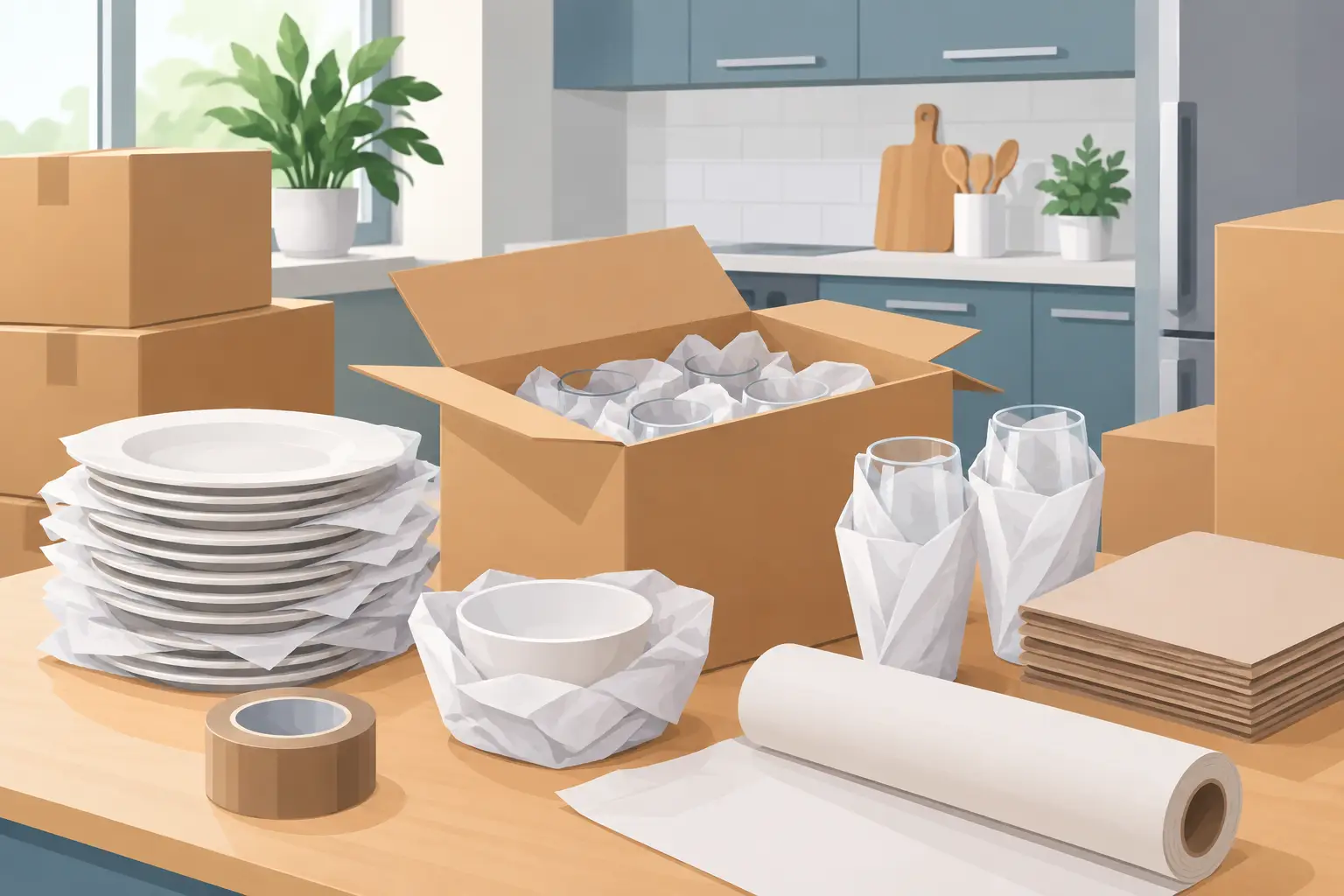
A kitchen can look manageable right up until moving day. Then the drawers, glassware, pantry shelves, and small appliances reveal how much breakable, awkward, and heavy stuff you actually own. When you pack kitchen for movers, the goal is not simply to get everything into boxes. It is to protect fragile items, keep boxes at a safe lifting weight, and make the first night in your new home less chaotic.
Kitchen packing rewards a clear sequence. Start early, use the right materials, and pack by item type rather than trying to clear one cabinet at a time. That approach reduces breakage and helps your moving crew load boxes safely and efficiently.
Start by Reducing What Has to Move
The cheapest, safest box is the one you do not have to pack. Begin with a quick sort before any wrapping starts. Pull aside expired pantry goods, chipped dishes, duplicate utensils, old takeout containers without lids, and appliances you no longer use. This is also a good time to set aside donations or arrange junk removal for unwanted items.
Use up refrigerated and frozen food during the week before your move. Most movers cannot transport perishable food over long distances, and an overloaded cooler can become a leak problem in the truck. Dry, sealed pantry items may be worth moving if the distance is short and the containers are in good condition. For a longer move, compare the cost of replacing bulky, low-value food against the space and weight it adds.
Keep a separate box or tote for the things you will need immediately: coffee supplies, medications, pet food, paper towels, a can opener, basic cutlery, dish soap, and a few plates or disposable alternatives. Mark it clearly and move it in your own vehicle if possible.
Gather Materials That Actually Protect Kitchen Items
Kitchen boxes need more than packing tape and a few grocery bags. Thin boxes collapse, loose items shift, and overloaded cartons create lifting hazards. Professional-grade supplies are worth using here, especially for dishes, glassware, and heavy cookware.
You will need small and medium moving boxes, heavy-duty packing tape, unprinted packing paper, bubble wrap for delicate pieces, cardboard dividers for glassware, and permanent markers. Small boxes are best for dense items such as canned goods, cookware, and dishes. Medium boxes work for lightweight plastics, pantry items, and small appliances with room for cushioning.
Avoid packing dishes in oversized boxes just because there is room. A large carton filled with plates can be too heavy to carry safely and can fail from the bottom. If a box is difficult for one adult to lift without straining, it needs less weight.
Pack Plates, Bowls, and Glassware on Edge
The biggest mistake people make is stacking plates flat in a box. Plates are stronger when packed upright, like records in a crate, with paper between each piece. Line the bottom of a sturdy small box with several crumpled sheets of packing paper for cushioning. Wrap each plate individually, place it on edge, and fill open spaces tightly so nothing can shift.
Bowls should be wrapped one at a time and nested only when each bowl has paper between it. Put the heaviest items at the bottom and lighter pieces on top. Add a final layer of crumpled paper before closing the carton. The box should feel full but not strained or bulging.
For wine glasses, mugs, and stemware, wrap each item separately and protect handles and stems with extra paper. Glasses should be packed upright in divided boxes when available. If you do not have dividers, use a small box, create a thick paper cushion around every item, and do not stack heavy pieces above them.
Label these cartons on more than one side: “FRAGILE – GLASS” or “FRAGILE – DISHES,” along with the destination room. Clear labels help movers place them correctly and help you identify priority boxes when unpacking.
Protect specialty and sentimental items separately
Fine china, crystal, heirloom serving pieces, and high-value cookware deserve extra attention. Wrap them with packing paper first, then add bubble wrap around the outside if needed. Do not use newspaper directly against delicate surfaces because ink can transfer.
If an item is unusually valuable, irreplaceable, or difficult to insure, consider transporting it yourself. The right choice depends on its value, your travel arrangements, and whether you can secure it properly in your vehicle. Do not place a fragile family heirloom loose on a car seat and assume it is safer than a well-packed moving carton.
Handle Pots, Pans, Knives, and Small Appliances Safely
Pots and pans are durable, but they can scratch other items and add weight quickly. Nest them with packing paper or towels between surfaces, then use a small box. Put lids in separately wrapped bundles or stand them vertically along the side of the box with padding between each one.
Knives require a different approach. Wrap each knife individually with thick paper or a dish towel, secure the wrapping with tape, and place the bundle in a clearly labeled box. Never leave loose knives in a drawer or toss them into a box with utensils. A sharp edge can cut through paper and injure whoever unloads it.
For coffee makers, blenders, air fryers, mixers, and similar appliances, empty and clean them first. Remove loose parts, wrap those parts separately, and tape cords gently to the appliance or place them in a labeled bag inside the same box. Original manufacturer boxes are useful when you still have them, but a properly padded moving box works well too.
Heavy countertop appliances should go at the bottom of a small carton with padding around all sides. Do not pack a cast-iron Dutch oven on top of a toaster oven, even if both technically fit in the same box.
Pack the Pantry Without Creating a Mess
Check every food container for leaks before packing. Tape lids on jars, bottles, oils, and cleaning products if they are being moved. Then place them upright in a plastic bag or small leak-resistant bin before placing them in a box. This extra step is simple protection against one loose cap ruining a carton of dry goods.
Canned goods are compact but extremely heavy. Pack only a limited number in each small box, filling remaining space with lighter pantry items or paper. Glass jars should be wrapped individually and kept upright. Open bags of flour, sugar, rice, or spices are better used up, sealed in airtight containers, or replaced after the move.
Separate food from household cleaners. Even sealed cleaning products should not share a box with pantry goods, dishes, or cookware. Some products may also be restricted by moving companies because they are flammable, corrosive, or pressurized. Ask your mover in advance about aerosols, propane cylinders, bleach, paint, and other hazardous materials.
Prepare the Refrigerator and Large Kitchen Items
Defrost and clean the refrigerator at least 24 hours before it is moved. Remove all food, shelves that are not secured, and ice from the freezer. Dry the interior fully to prevent mildew and odors. If the refrigerator has a water line or ice maker, arrange for proper disconnection before moving day.
Clean the oven, dishwasher, and microwave, then remove loose racks, trays, and turntables. Wrap removable glass trays separately. Secure appliance doors only as directed by the manufacturer or your moving professional. Improper taping can damage finishes or leave adhesive residue.
A trained crew can protect large appliances with moving pads, shrink wrap, floor runners, and the right equipment for stairs or tight access. This is where hiring an insured, equipped moving company matters. Kitchen appliances are heavy, but the surrounding floors, door frames, and walls need protection too.
Label Boxes for a Faster, Safer Unload
Every kitchen box should have three details: the room, a general contents description, and handling instructions when needed. “Kitchen – Everyday Plates – Fragile” is much more useful than simply writing “Kitchen.” Mark heavy boxes as “HEAVY” so they are not stacked on fragile cartons and so the crew can plan the load correctly.
Keep boxes closed and taped before movers arrive. Open cartons slow down loading, invite loose items to fall out, and make it harder to stack safely. If you are using a packing service, point out any specialty items before the crew begins so they can choose the right packing method and materials.
Baker Home Solutions approaches packing as part of the move, not an afterthought. Licensed and insured crews, proper moving pads and floor protection, and a structured loading plan help protect both your kitchen items and your home.
A well-packed kitchen makes the new place feel livable sooner. Save one clearly marked essentials box, give fragile cartons the protection they need, and let the rest of the kitchen arrive ready for a careful unload rather than a frustrating cleanup.