
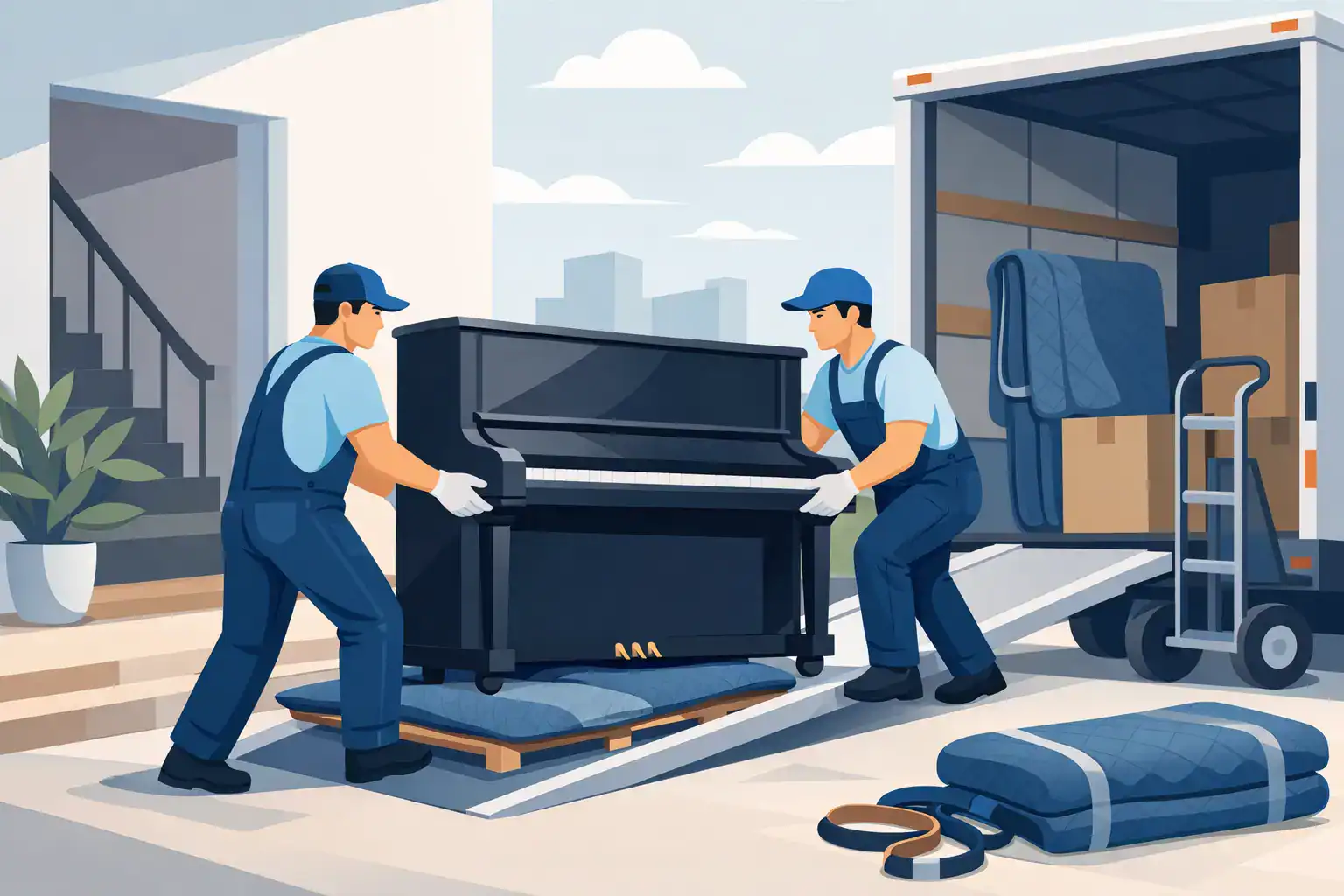
One bad grip on a piano can damage your floors, crush a hand, throw out a back, or knock an expensive instrument out of alignment. If you are searching for how to move a piano safely, the first thing to know is simple: this is not a standard furniture move. A piano is heavy, awkward, top-weighted, and vulnerable to damage even when it looks solid on the outside.
That is why the safest approach starts with an honest assessment. Some piano moves are manageable with the right equipment, enough trained hands, and a short, obstacle-free path. Others should be handed to professionals immediately, especially if stairs, tight turns, long carries, or high-value instruments are involved.
Why piano moves go wrong so fast
A couch is bulky, but a piano is different. The weight is concentrated in a way that makes balance unpredictable, and the shape does not give movers many safe handholds. Uprights can feel stable until they start tipping. Grand pianos require partial disassembly and careful protection of the legs, pedals, and lid. Even a small spinet can cause major damage if it slides or drops.
The other issue is hidden damage. A piano can survive a move without obvious scratches and still come out with internal problems. The legs may weaken, the casing can shift, and the action inside may be affected by impact or improper positioning. That means the goal is not just getting it from point A to point B. The goal is moving it without injury, property damage, or avoidable repair costs.
How to move a piano safely before lifting starts
Most of the work happens before the piano moves an inch. Start by identifying the type of piano you have. An upright, studio, console, spinet, baby grand, and full grand all need different handling. Weight can range from a few hundred pounds to well over one thousand, so guessing is a mistake.
Next, map the full route. Measure doorways, hallways, stair widths, truck access, and any tight corners. Remove rugs, decor, cords, and anything that can catch a dolly wheel or a mover’s foot. Protect floors with runners, plywood, or heavy-duty coverings if needed. If weather is a factor, think through rain, snow, or ice before moving day instead of hoping conditions improve.
You also need the right crew. This is not a one-person or two-person job. Even when the distance is short, piano moving takes coordination. Everyone involved should know the plan, the commands being used, and where they are positioned before the first lift. If your team is improvising, stop there.
The equipment matters more than people think
Strength helps, but equipment is what turns a dangerous move into a controlled one. At minimum, you need heavy-duty moving straps, thick moving pads, shrink wrap or secure wrap for padding, and a proper dolly designed for weight. For uprights, piano skids can make a major difference. For grands, a piano board is often necessary once the instrument is partially disassembled.
A basic furniture dolly is usually not enough. Cheap wheels, small platforms, and poor weight distribution create unnecessary risk. The same goes for pickup trucks without proper tie-down points or ramps that are too steep. Pianos should travel secured in a vehicle that can handle the load and keep the instrument stable through turns, braking, and road vibration.
This is one reason experienced moving crews tend to be faster and safer at the same time. They are not stronger by magic. They are using the right pads, runners, skids, straps, and transport setup from the start.
Moving an upright piano
An upright piano should stay upright during the move. Tipping it too far can shift internal parts and make control harder. Close and lock the keyboard lid if possible. If it does not lock, secure it gently so it cannot swing open. Wrap the piano in moving pads, paying extra attention to corners and finished surfaces, then secure the padding so it does not slide.
From there, the piano is typically lifted carefully onto a heavy-duty dolly. This is the point where communication matters most. One person should direct the move, and the crew should move in slow, controlled steps. Rushing across a threshold or trying to catch a slip mid-motion is where injuries happen.
If stairs are involved, the risk level goes up immediately. A few steps at a front porch are one thing. A full interior staircase is another. Weight shifts differently on stairs, and one misstep can put the entire load onto one person or send the piano into the wall. In those cases, professional equipment and trained handling are the safer call.
Moving a grand or baby grand piano
A grand piano is not rolled out of a room in one piece the way many people expect. To move it properly, the lid is secured, the lyre or pedal assembly may be removed, and the legs are typically taken off in a controlled sequence while the piano is supported on its side on a padded board. Every removed part needs to be protected and labeled so nothing gets scratched or misplaced.
This is where experience really shows. The legs are not just decorative. They are a structural concern during the move, and handling them incorrectly can crack wood or damage mounting points. Once the piano body is secured to a board or skid, it can be moved with much better control.
Trying to skip these steps to save time usually creates the opposite result. You end up fighting the size of the instrument, exposing delicate parts, and increasing the chance of impact damage.
Loading, transport, and unloading
Getting the piano out of the house is only half the job. Loading into the truck has to be controlled, with a ramp or liftgate that can handle the weight. The piano should be positioned to prevent shifting and secured with proper tie-downs. It should never be free to roll, lean, or bounce during transport.
Temperature and humidity also matter more than many people realize. A short local move is usually fine, but leaving a piano sitting for hours in extreme heat, cold, or damp conditions is not ideal. It can affect tuning, finish, and internal components. Safe transport means minimizing unnecessary exposure and getting the instrument into its new space efficiently.
At delivery, measure again before bringing it inside. A move that went smoothly at pickup can still hit trouble at the destination if there is a tighter hallway, steeper entry, or different floor surface. Once placed, give the piano time to settle before scheduling tuning. Even a perfect move can shift it slightly, and tuning too soon may not hold as well.
When not to move a piano yourself
There is a point where a DIY plan stops being practical. If the piano is going up or down multiple flights, passing through narrow stairwells, crossing uneven ground, or entering an elevator, you are into specialty-move territory. The same is true for antiques, heirloom pianos, high-end grands, and any instrument with sentimental or financial value you cannot afford to risk.
Insurance matters here too. If a friend gets hurt helping, or the piano damages hardwood, tile, railings, or walls, the cost can exceed what professional service would have been in the first place. Hiring a licensed and insured mover with the right equipment is often the lower-risk option, not the expensive one.
For homeowners and businesses alike, the real value is control. A trained crew shows up with a plan, proper protection, the right truck setup, and enough manpower to handle the move without turning it into a full-day problem. That is especially important when timing, building access, or floor protection are non-negotiable.
A practical standard for safe piano moving
If you are still deciding whether to handle the move yourself, use a simple test. Can you identify the piano type, verify the weight, protect the route, secure the right equipment, provide enough trained help, and control every step from room to truck to final placement? If any part of that answer is no, that is your answer.
At Baker Home Solutions, this is exactly why specialty equipment, trained crews, floor protection, and secure transport are treated as standard, not extras. Pianos are moved safely when the process is organized, the crew is prepared, and nothing is left to chance.
A piano is built to make music, not absorb mistakes. Move it with patience, proper equipment, and a clear plan, and you give it the best chance of arriving ready for its next home.