
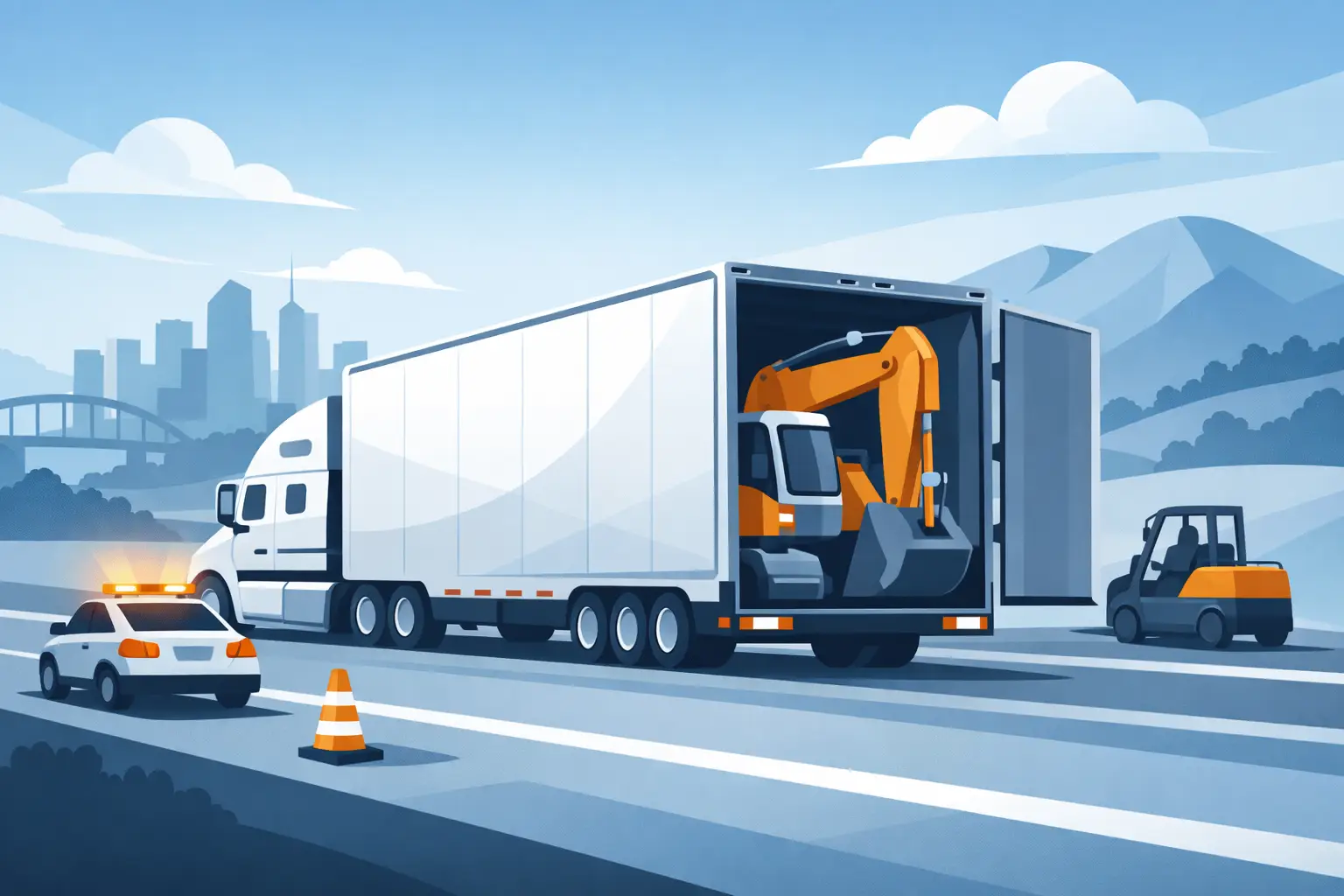
A load can be too large to trust to a basic open trailer, but still too valuable to leave exposed. That is where enclosed trailer hauling for oversized loads earns its place. When you are moving oversized furniture, commercial equipment, boxed inventory, trade show materials, or specialty items that cannot take weather, dust, or road debris, the trailer itself becomes part of the protection plan.
For homeowners and businesses, the real question is not just whether the load fits. It is whether the load arrives clean, stable, and undamaged, without turning moving day into a repair bill. Oversized hauling needs more than extra space. It needs planning, the right hitch setup, trained handling, and a crew that understands weight distribution, access points, and how to protect both the cargo and the property around it.
When enclosed trailer hauling for oversized loads makes sense
Not every large item belongs on an open trailer. If the cargo has finished surfaces, electrical components, wrapped inventory, soft materials, or parts that can shift in wind, enclosure matters. The same goes for loads that need privacy, cleaner transport conditions, or better theft deterrence during longer moves.
In residential work, this often applies to oversized sectionals, antique furniture, home gym equipment, motorcycles, palletized household goods, and packed contents from larger homes. In commercial settings, it can include office furniture, electronics, staging materials, equipment cases, retail fixtures, and sensitive business assets that should not be exposed during transport.
There is also a practical site-access reason. A properly matched enclosed trailer can offer a more controlled loading environment than a larger box truck in certain layouts. Depending on the property, trailer size, driveway access, and turning radius, a trailer may be the better fit for the job. That decision should be made after looking at the full move, not just the cargo dimensions on paper.
The protection is not just the trailer walls
People often hear “enclosed” and assume that is enough. It is not. A trailer shell protects from weather and debris, but oversized cargo still needs interior securement, padding, load balance, and careful loading order.
That matters because large items create leverage. A piece that is only slightly unstable can shift under braking or on turns and transfer force to other contents. One poorly placed heavy item can also create axle imbalance, trailer sway, or damage to flooring and walls inside the trailer. The protection plan has to account for motion, weight, and contact points from start to finish.
That is why experienced movers rely on moving pads, shrink wrap, floor protection, straps, and specialty handling tools based on the item itself. A polished table, a safe, a copier, and a crated machine do not get treated the same way just because all of them are large. Good hauling starts with knowing what the item can tolerate.
Oversized loads bring trade-offs
Enclosed trailer hauling for oversized loads offers real advantages, but it is not automatically the right answer for every move. The enclosed space protects cargo better, yet that same enclosure limits opening width, interior height, and maneuvering room. Some items are bulky in a way that makes loading through trailer doors more difficult than using a box truck ramp or another specialized setup.
Weight matters too. Oversized does not always mean extremely heavy, but when size and weight come together, towing capacity, hitch type, braking, and trailer rating become non-negotiable. A gooseneck setup may be the safer choice for certain heavy-load applications because it improves stability and weight distribution compared with lighter ball hitch configurations. The right answer depends on what is being moved, how far it is going, and the roads and properties involved.
That is also why the cheapest hauling option can become the most expensive. If a provider is guessing on capacity, using minimal securement, or loading without proper equipment, the risk moves directly onto your cargo and your property.
What a professional hauling process should look like
The first step should be a real assessment. That means measuring the item, reviewing weight if known, checking pickup and delivery access, and identifying any obstacles like stairs, narrow hallways, soft ground, low branches, or steep driveways. For business moves, it may also mean coordinating building access, elevator timing, or asset protection procedures.
From there, the hauling plan should match the load. That includes trailer selection, hitch setup, securement strategy, protective materials, crew size, and loading sequence. If an oversized item needs to come apart for safer transport, that should be decided before moving day, not in the middle of it.
Loading is where experience shows. Large pieces should be staged, padded, wrapped, and positioned to control movement and protect pressure points. Heavier items need to be placed with axle balance in mind. Fragile items should not be trapped behind awkward unload sequences. If the load includes mixed contents, such as equipment plus boxed inventory or household goods plus furniture, each category needs its own handling approach.
The best crews also think beyond the trailer. They protect floors, entryways, and common areas while getting oversized items in and out. That is especially important in occupied homes, office buildings, and properties where one mistake can leave wall damage, scratched flooring, or downtime for the customer.
Why credentials and equipment matter more on bigger jobs
Oversized hauling leaves less room for improvisation. When a provider is licensed and insured, that is not just a badge for the website. It tells you there is a baseline level of accountability behind the work. WSIB certification, trained crews, and proper PPE also matter because heavy and awkward items create more risk during loading and unloading.
The same applies to fleet capacity. A company with multiple trucks and trailers can match equipment to the job instead of forcing every move into the same setup. That flexibility is a real advantage when a load calls for heavy-load towing, a specific trailer size, or a different loading plan than originally expected.
Baker Home Solutions takes that practical approach seriously, with fleet capacity, heavy-load towing capability through ball hitch and gooseneck setups, and the moving tools needed to protect both residential and commercial cargo. That matters when the goal is not just transport, but damage prevention.
Common oversized loads that benefit from enclosed transport
Some of the most common enclosed oversized loads are not industrial at all. They are the items people care about most and worry about most. A large dining set with delicate finishes, a sectional that barely clears a doorway, a custom desk, filing systems, boxed electronics, framed artwork, and event equipment all benefit from enclosed transport when weather, dirt, and shifting are concerns.
For office and commercial clients, enclosure adds another layer of control. IT equipment, retail fixtures, inventory, and packed workstations often need to move on a schedule that leaves little room for damage or delays. A late or damaged delivery can affect reopening, staffing, or customer service. In those cases, the hauling method should support business continuity, not create another problem to solve.
How to know if your load needs a trailer assessment
If you are not sure whether your oversized cargo belongs in an enclosed trailer, ask a few direct questions. Does it need protection from weather or debris? Does it have sensitive surfaces, electronics, upholstery, or boxed contents? Is it too large or awkward for a standard van or pickup setup? Will loading and unloading require specialized tools or more than two people? If the answer is yes to even a couple of those, a professional assessment is worth it.
You should also get cautious if someone quotes the job without asking for dimensions, access details, or photos. Oversized hauling is rarely a one-size-fits-all service. The planning is part of the value.
A good move feels controlled from the start. The crew shows up prepared, the equipment fits the job, the cargo is protected properly, and nothing about the process feels rushed or improvised. When oversized items need real protection, enclosed hauling is not about making the load disappear behind a trailer door. It is about giving that load the right conditions to arrive exactly the way it left.