
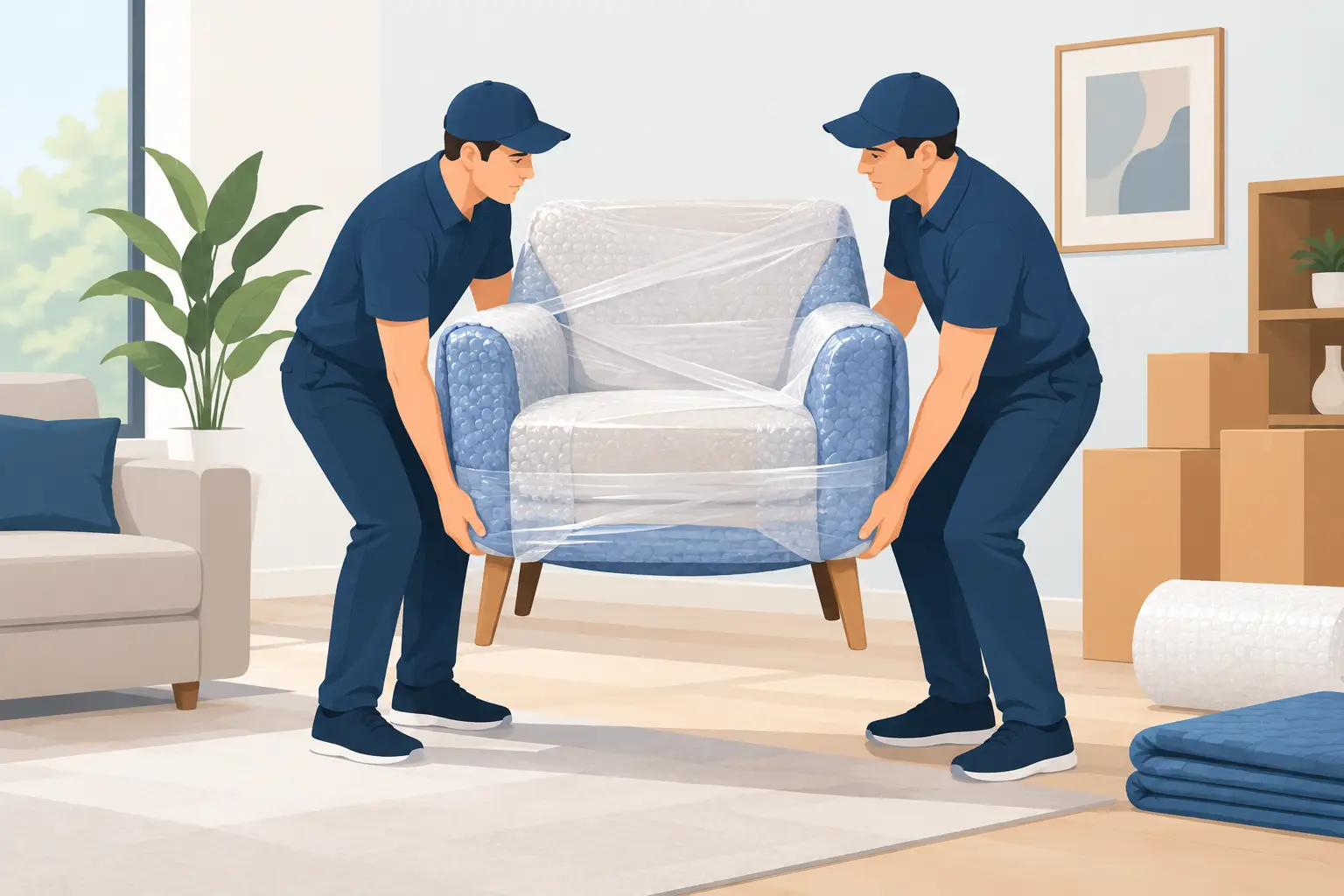
A glass-front china cabinet can look solid until it reaches a doorway. A marble-top table can survive years in a dining room but crack from one hard set-down in a truck. Moving fragile furniture safely comes down to controlling the details before the first item leaves the room: what comes apart, how it is protected, who carries it, and how it is secured in transit.
For homeowners and businesses, the expensive part of a damaged piece is not always the replacement cost. It can be the lost family heirloom, the delayed office opening, the interrupted workflow, or the time spent arranging repairs. Careful handling is not an upgrade. It is the baseline for a professional move.
Identify What Makes the Piece Fragile
Fragility is not limited to obvious glass furniture. A large mirror, a curio cabinet, a porcelain-topped console, a grandfather clock, an antique dresser, and a dining table with a stone slab all need a different handling plan. Even modern furniture can have weak points: thin legs, loose veneer, unsupported corners, delicate drawer slides, or a heavy top attached to a light base.
Before packing, inspect each piece closely. Look for existing chips, loose joints, wobbly feet, cracked glass, and hardware that could shift during lifting. Take clear photos of pre-existing wear. This creates a record, but it also helps determine the right approach. A chair with loose arms may need reinforcement or special carrying positions. A glass cabinet may need its shelves and doors removed before it can be safely wrapped.
Weight distribution matters just as much as material. A tall bookcase that is top-heavy, for example, can become unstable when tilted. A heavy marble top may require several movers, a dolly, and a clear route from room to truck. Trying to rush either item through a narrow hall puts the furniture, the property, and the crew at risk.
Plan the Route Before Moving Fragile Furniture
A protected piece can still be damaged by a bad path. Measure tight doorways, stair landings, elevators, turns, and ceiling clearance before moving day. Remove rugs that can slide, clear shoes and small furniture from walkways, and keep pets and children away from the carrying route.
The right route is not always the shortest one. A wider path through a garage or patio may be safer than forcing a large cabinet through an interior hallway. In apartment buildings and offices, reserve elevators when required and confirm loading-dock rules ahead of time. Those small arrangements prevent the crew from waiting with a fragile item in hand.
Protection should extend to the property as well. Floor runners guard hardwood, tile, and carpet from dirt and scuffs. Corner guards and door-frame protection may be appropriate in tight spaces. Professional movers should also assess weather conditions. Rain, ice, and wind change the plan, especially for furniture with exposed wood, upholstery, or glass.
Disassemble What Can Be Safely Separated
Large furniture usually travels better in smaller, supported components. Remove shelves from cabinets, detach table legs when the design allows it, take drawers out of dressers, and separate removable mirror sections from bedroom furniture. Place hardware in labeled bags and keep it with the item rather than tossing it into a general box.
Disassembly has limits. Older furniture, glued joinery, and certain engineered pieces can be weaker after being taken apart. Some items should remain intact because disassembly creates more risk than it removes. That is why experience matters. The goal is not to take everything apart. It is to reduce stress on vulnerable joints, glass, and surfaces while preserving the furniture’s structural integrity.
For commercial moves, this same judgment applies to reception desks, display cases, conference tables, and specialty storage. Downtime is expensive, so components should be labeled clearly for efficient reassembly at the destination.
Use Materials That Protect, Not Just Cover
A single moving blanket over a delicate item is rarely enough. Moving pads should fully cover exposed surfaces and be secured so they cannot slide during carrying. Shrink wrap helps hold pads in place and keeps drawers or doors closed, but it should not be wrapped directly against finished wood, leather, or painted surfaces for long periods. Trapped moisture and pressure can cause problems, particularly during storage or humid weather.
Glass needs extra protection. Remove it when possible, wrap it in protective material, place it in a properly sized carton or crate, and label it clearly. If glass cannot be removed, pad the entire piece, protect corners, and prevent any other item from resting against the glass panel.
Wood furniture benefits from padded coverage that prevents scratches and abrasion. Upholstered pieces need protection from dirt and moisture without being compressed under heavy loads. For antiques, artwork, or pieces with unusual finishes, standard packing materials may not be enough. Custom crating or specialty packing can be the safer choice.
Lift With Control, Not Speed
The fastest-looking move is often the one that goes wrong. Fragile furniture should be carried by stable structural points, not by decorative trim, drawers, handles, arms, or thin legs. Movers should communicate before every lift: who leads, where the turns are, when the item will be set down, and whether a spotter is needed.
Use proper equipment when the weight or shape calls for it. Furniture dollies, appliance dollies, lifting straps, ramps, piano skids, and stair equipment reduce strain and provide more control. Specialty equipment is particularly valuable for pianos, safes, oversized cabinets, stone furniture, and heavy commercial assets.
There is a trade-off here. A dolly can make a move more efficient, but it is not the right tool for every staircase or uneven surface. In some cases, a trained team carrying the item by hand is safer. The method should follow the item and the environment, not a one-size-fits-all routine.
Load the Truck Like the Trip Matters
Damage often happens after the item is already on the truck. Fragile furniture must be positioned upright or according to the manufacturer’s handling requirements, then secured against movement. It should never be treated as a gap-filler between heavier loads.
Heavy, stable items belong low and toward the front of the truck. Delicate pieces should be protected from pressure, shifting, and contact with hard edges. Tie-downs should secure the load without crushing panels or pulling against a weak point. Moving pads create separation between furniture, while careful stacking keeps the truck balanced for safer driving.
A properly equipped moving truck makes a real difference. Adequate moving pads, straps, shrink wrap, floor runners, wardrobe boxes, and specialty tools allow the crew to solve problems without improvising. Baker Home Solutions approaches fragile loads with the equipment and crew planning needed to protect both the item and the home or workplace around it.
Handle Delivery With the Same Care
The job is not finished when the truck arrives. Before unloading, inspect the new space and confirm where each delicate piece belongs. Moving a cabinet across a room several times increases the chance of an impact, so placement should be decided early.
Reassemble furniture on a clean, protected surface. Reinstall shelves, legs, mirrors, and hardware carefully, then check that the piece is level and stable. For glass-front cabinets and tall furniture, make sure doors align properly and consider anchoring when appropriate, especially in homes with children or in busy commercial spaces.
After placement, remove wrapping carefully. Do not cut against upholstery, wood finishes, or glass. A quick final inspection with the customer provides peace of mind and makes it easier to spot any issue before the crew leaves.
When Professional Help Is the Safer Call
DIY moving can work for simple, lightweight furniture and short, clear routes. It becomes less practical when the item is heavy, valuable, awkwardly shaped, or difficult to maneuver. Multi-story homes, elevators, tight staircases, antiques, pianos, stone tops, and commercial equipment are all situations where trained movers can prevent a costly mistake.
Look for a provider that is licensed and insured, uses uniformed crews with proper PPE, carries the right moving equipment, and explains its process before the job begins. Clear estimates and an in-person assessment are especially useful when there are specialty items or access challenges that could affect the plan.
If a piece would be painful to replace or difficult to repair, treat it accordingly. Give it the route, materials, equipment, and experienced hands it needs before moving day turns one careful lift into an expensive problem.