
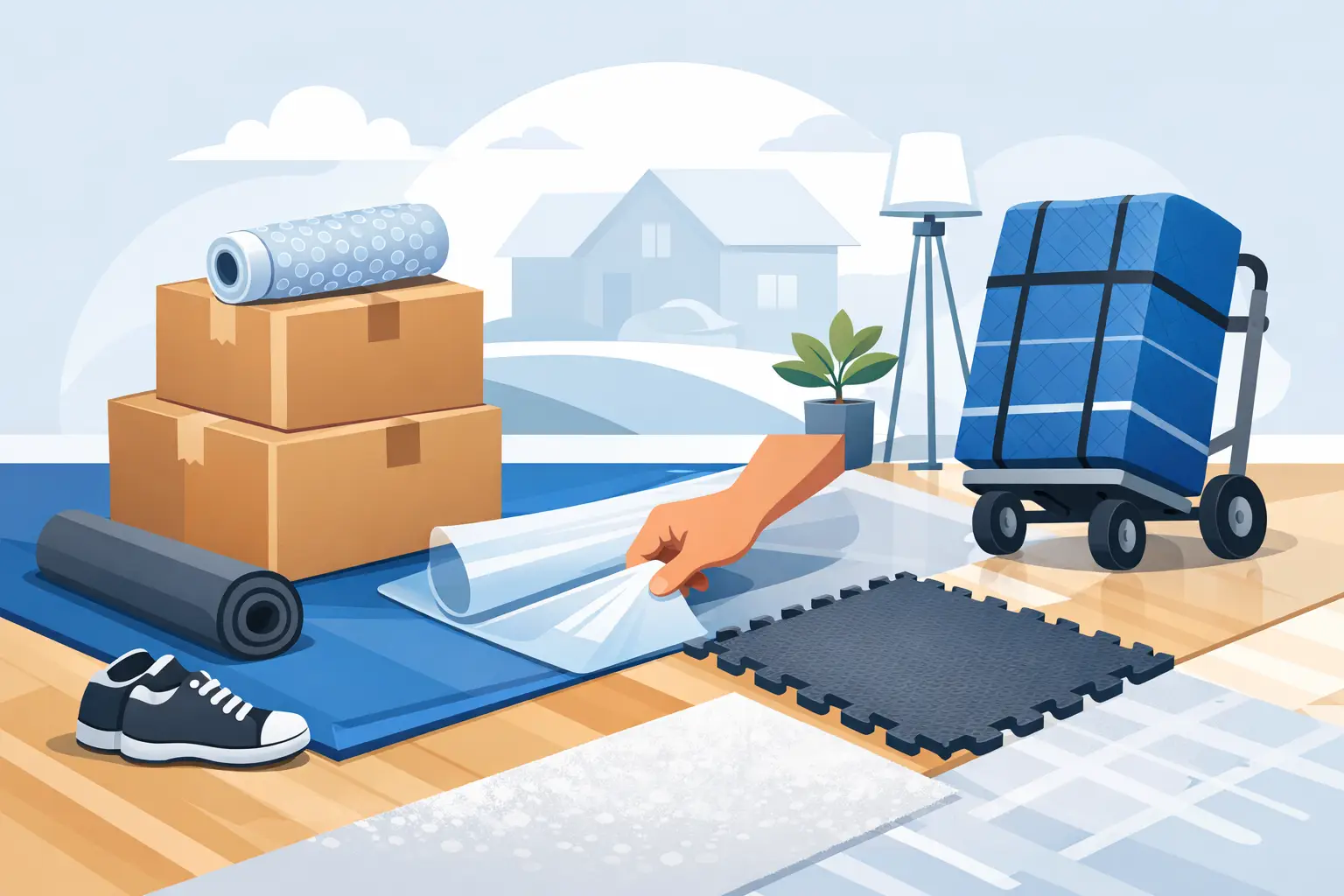
A moving truck can be loaded perfectly and still leave a bad impression if the first crew member tracks grit across a hardwood floor. The best floor protection for moving is not one material used everywhere. It is a planned combination of runners, mats, boards, and careful handling that matches the floors, weather, entry points, and weight of the items being moved.
For homeowners and renters, protecting floors helps avoid repair bills, lost security deposits, and an unnecessary headache during an already busy day. For office moves, it helps keep a workspace presentable while crews relocate desks, electronics, inventory, and equipment. The goal is simple: create a clean, durable path from the door to the truck before the heavy lifting starts.
What Is the Best Floor Protection for Moving?
For most moves, reusable floor runners are the best first line of defense. They cover the walking path, trap debris, add traction, and reduce direct contact between shoes, dollies, and finished flooring. A professional crew should place them at entrances, hallways, stair landings, and the main route through the home or business.
But runners are not enough for every surface or every item. Hardwood can be gouged by a loaded appliance dolly. Tile can crack when a concentrated load rolls over a weak spot. Light-colored carpet can show a muddy wheel track long after the truck has left. The best protection depends on what is being moved and where it needs to go.
A practical setup usually combines runners for foot traffic with rigid boards for heavy rolling equipment. Doorway mats handle the dirtiest transition point, while furniture pads, shrink wrap, and proper lifting prevent the item itself from becoming the source of damage.
Match the Protection to Your Floor Type
Hardwood, engineered wood, and laminate
Hard surfaces show scratches quickly, especially near entryways and in narrow hallways where furniture must be turned. Use clean, non-slip runners for traffic and add hardboard, Masonite, or similar rigid panels when moving safes, appliances, pianos, large cabinets, or heavily loaded dollies.
Avoid placing dirty cardboard directly on finished wood floors. Cardboard can trap moisture and grit underneath, which creates abrasion when people walk over it. Plastic sheeting is also a poor choice as a main walkway because it can become slippery, particularly in wet conditions.
Before runners go down, sweep or vacuum the route. A quality runner placed over sand, salt, or small stones can still leave a scratch when weight presses everything into the floor.
Carpet and area rugs
Carpet protection needs to address both dirt and pressure. Carpet film can work well in dry conditions for short-term protection, particularly in a clean, occupied home. It adheres to carpet fibers and creates a visible barrier against shoe traffic.
There are trade-offs. Carpet film is not ideal for every carpet type, and it should not be left down for extended periods. On stairs, loose rugs, or damp carpet, runners with secure placement are often the safer option. For wet weather, absorbent runners and entry mats are more reliable because they help manage moisture instead of sealing it against the carpet.
Area rugs should usually be rolled and moved before the main moving path is established. This prevents trip hazards and keeps the rug from catching dirt, furniture feet, or dolly wheels.
Tile, stone, vinyl, and concrete
Tile and natural stone can be durable, but their grout lines, edges, and surface finish still need care. Runners protect against scuffs and dirt, while rigid boards spread the weight of loaded dollies or specialty equipment. This matters most when rolling appliances, commercial copiers, filing cabinets, and heavy tool chests.
Vinyl floors can dent or tear under sharp furniture legs and high point loads. Use furniture sliders only when they are appropriate for the surface, and never drag a heavy item blindly across vinyl. A trained crew will lift, use a dolly, or place a rigid layer beneath the route when the weight calls for it.
Protect the High-Risk Areas First
Not every square foot needs to be covered. Focus on the route that will see repeated traffic. The front door, garage entry, hallway corners, stairs, and the path between large rooms take the most abuse on moving day.
Pay close attention to thresholds. A metal transition strip, raised wood sill, or tile edge can catch a dolly wheel and create a sudden jolt. That is how furniture gets dropped and floor edges get chipped. Runners should lie flat, and boards should be positioned so wheels roll smoothly across transitions.
Walls and door frames belong in the plan as well. A protected floor does little good if a sofa corner damages a freshly painted hallway. Door jamb protectors, moving pads, and clear communication between the person guiding and the person carrying help control tight turns.
Weather Changes the Floor Protection Plan
Rain, snow, mud, and road salt turn a standard move into a higher-risk job. On wet days, crews should use extra entry mats, replace saturated runners as needed, and keep a clear boundary between outdoor shoes and clean interior surfaces.
The best approach is to stage the job. One person can manage the truck and outdoor loading area while interior movers stay on protected surfaces whenever possible. This limits how often wet footwear crosses the home. It also keeps the truck floor, ramps, and dollies cleaner, which reduces what gets carried inside on later trips.
If conditions are severe, a few extra minutes spent resetting the route is worth it. Rushing through a wet entryway is how water gets tracked onto hardwood and grit gets ground into carpet.
Heavy Items Need More Than a Runner
A refrigerator, gun safe, piano, commercial printer, or oversized sectional creates risks that ordinary walking traffic does not. These items may need appliance dollies, piano skids, lift straps, ramps, and rigid floor protection designed to distribute weight.
The equipment matters, but so does the crew using it. Heavy items should be assessed before they move: measure the route, identify stairs and turns, check for floor transitions, and decide where the item can safely rest if a reposition is needed. Improvising halfway through a carry is when damage and injuries become more likely.
For office relocations, plan the same way around server cabinets, conference tables, filing systems, machinery, and sensitive electronics. Protection should cover the full route from the work area to the loading point, including elevators, lobbies, and common corridors when required by building management.
What Professional Movers Should Bring
A prepared moving crew does not arrive hoping the customer has enough blankets or old sheets to protect the house. They bring the basic protection tools as part of a professional process.
For a typical residential or commercial move, that includes:
- Clean floor runners and absorbent entry mats
- Moving pads for furniture, doors, and vulnerable surfaces
- Shrink wrap to secure drawers, cushions, and padded items
- Hardboard or rigid panels for heavy rolling loads
- Dollies, straps, ramps, and specialty equipment suited to the item
- Shoe covers or a clean-shoe policy when conditions call for it
At Baker Home Solutions, floor runners, moving pads, shrink wrap, and specialty handling equipment are part of the working standard, not an afterthought. A licensed and insured, WSIB-certified crew should be prepared to protect the property as carefully as the belongings being transported.
A Quick Pre-Move Walkthrough Prevents Surprises
Before loading begins, walk the route with the crew lead. Point out newly refinished floors, loose tiles, light carpet, fragile thresholds, low ceilings, and any areas where access is tight. If a building has elevator reservations, loading-dock rules, or protection requirements, address them before the truck arrives.
This is also the time to identify items that need special handling. A large mirror, stone tabletop, piano, or unusually heavy piece should never be treated like standard furniture. Clear information lets the crew bring the right equipment, assign enough people, and protect the route properly.
If you are moving yourself, do the same walkthrough before friends or rental helpers arrive. The best floor protection is far more effective when it is installed before the first box crosses the threshold, not after the first scrape.
A clean path, the right materials, and a crew that does not cut corners can protect more than the floor. They protect the condition of the property you are leaving, the property you are entering, and your peace of mind when moving day gets busy.