
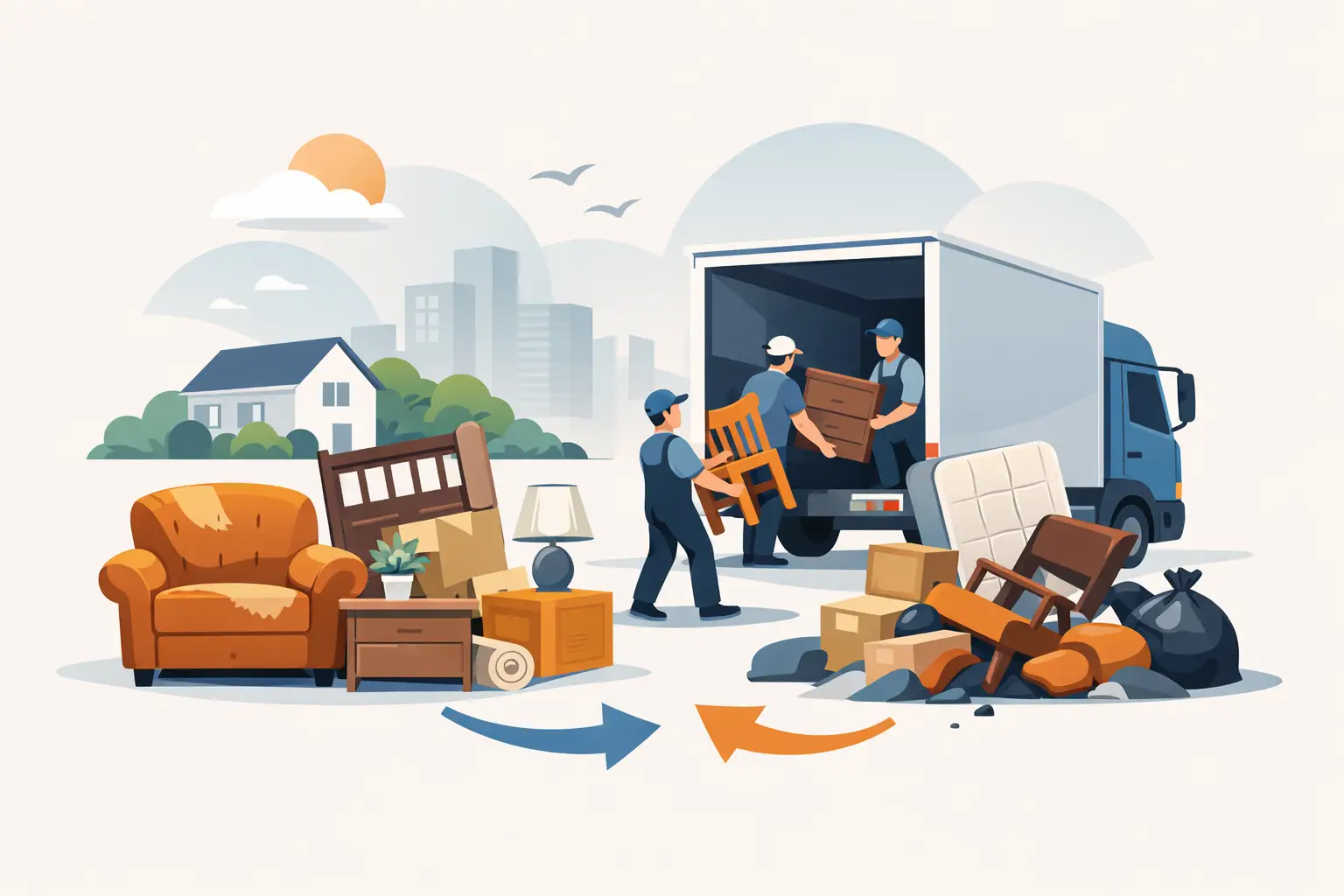
That old couch in the basement usually stays there longer than anyone plans. It is too bulky for regular trash, too awkward to move alone, and if you drag it out carelessly, you can damage walls, floors, and your back in the process. If you are figuring out how to dispose of old furniture, the right answer depends on its condition, your timeline, and how much risk you want to take on yourself.
Furniture removal sounds simple until you are dealing with a waterlogged sectional, a solid wood dresser on a second floor, or office desks that need to be cleared without disrupting the rest of the property. Some pieces can be donated. Some should be recycled. Some need proper junk removal because they are damaged, unsafe, or simply too large to handle without the right crew and equipment. The goal is not just getting it out. The goal is getting it out safely, legally, and without turning a cleanout into a repair bill.
How to dispose of old furniture based on condition
The first step is to be honest about what you have. If the piece is clean, structurally sound, and still usable, donation or resale may make sense. A dining table with a few scratches, a bed frame in good shape, or a matching office credenza set may still have value to someone else.
If the furniture is broken, heavily stained, infested, moldy, or smells like smoke or moisture, donation is usually off the table. In those cases, recycling or junk removal is the better route. Many people waste time trying to give away furniture that no donation center will accept. That delay often leaves the item sitting in the garage, driveway, or office longer than it should.
Material matters too. Solid wood, metal frames, and some untreated components may be recyclable depending on local rules. Upholstered furniture is tougher. Sofas, recliners, and mattresses often have mixed materials that make recycling more limited and disposal more complicated.
Donation works – but only for furniture in real usable shape
Donating furniture can be the best option when the item is still functional and clean. The standard is usually higher than people expect. A chair with one loose leg, a dresser missing drawers, or a couch with deep pet odor may not qualify.
Before offering it for donation, inspect the piece the way a recipient or pickup team would. Check stability, fabric condition, surface damage, and cleanliness. If you would hesitate to put it in your own guest room, it may not be donation-grade.
You also need to factor in handling. A large armoire or sleeper sofa may be accepted in theory but still difficult to move out of a tight space. That is where people underestimate the labor involved. Tight staircases, narrow landings, and finished floors change the job fast. What looks like a quick furniture drop-off can become a heavy-item removal that needs moving pads, shrink wrap, floor protection, and enough crew to control the load safely.
Bulk trash pickup is convenient, but it has limits
For homeowners and renters, municipal bulk pickup can be useful if your area allows it. But bulk pickup comes with rules, and those rules matter. Many cities limit the number of items, require advance booking, or refuse certain materials. Some will not take furniture that contains glass, metal springs, or oversized sections unless it is broken down first.
Curbside placement creates another issue. You still need to get the furniture out of the house, down the steps, and to the pickup point without scraping walls, gouging hardwood, or blocking access. That is often the hardest part, especially with older, heavier furniture built from solid materials.
Weather is another trade-off. If a pickup is delayed and the furniture sits outside, rain can turn manageable disposal into a mess. Wet upholstery gets heavier, dirtier, and harder to handle. If timing is tight, waiting on curbside service may not be the best option.
Recycling old furniture is possible – sometimes
People often ask whether furniture can just be recycled. Sometimes yes, but not as one single piece dropped anywhere. Recycling usually depends on separating materials and finding facilities that accept them.
Metal bed frames, filing cabinets, and some patio furniture are often easier to recycle than upholstered items. Wood furniture may be accepted if it is untreated and free from major contamination. Glass inserts, foam padding, particleboard laminates, and bonded fabrics make things more complicated.
This is where disposal becomes less about good intentions and more about logistics. If you have one lightweight chair, sorting materials might be worth it. If you have a full-house cleanout, office teardown, or multiple heavy items, labor and transport can outweigh the recycling value. In those situations, a professional team can help determine what can be diverted and what needs straightforward removal.
When junk removal is the smartest option
The most practical answer to how to dispose of old furniture is often professional junk removal, especially when the furniture is heavy, damaged, or located in a difficult space. This is not just about convenience. It is about controlling risk.
A large sectional can tear drywall on the turn. A dresser can crack tile if it is dropped. A refrigerator-sized entertainment unit can injure someone if the weight shifts on stairs. Add rain, snow, or a rushed timeline, and the margin for error gets smaller.
Professional removal makes the most sense when you are dealing with estate cleanouts, move-outs, renovation debris mixed with furniture, office furniture turnover, or same-day pickup needs. It also helps when you want one vendor to handle the whole job instead of coordinating donation calls, curbside schedules, and separate hauling arrangements.
For households and businesses, the difference is usually in execution. A trained crew shows up with the right truck capacity, protective materials, and equipment to move large pieces without turning removal day into a property damage claim. That matters when the furniture is not just old, but oversized, awkward, or in a space with limited access.
How to prepare furniture for removal
Even if you are hiring help, a little prep can save time. Empty drawers, remove loose shelves, and clear a path from the item to the exit. If the piece comes apart safely, disassembling it can reduce the chance of damage during removal.
That said, not every item should be taken apart. Older furniture, cheaply assembled particleboard units, and some modular office pieces can become less stable once loosened. If you are unsure, leave it intact and let the removal team assess it. Forcing disassembly often creates sharp edges, stripped fasteners, and a bigger cleanup problem.
You should also think about building protection. Elevators, condo hallways, stair railings, and entry floors can all take a beating during furniture removal. In professional jobs, this is where proper floor runners, moving pads, shrink wrap, and controlled lifting techniques make a visible difference. It is one of those details people do not think about until after the scrape is already there.
How to dispose of old furniture during a move or renovation
Moves and renovations are when old furniture disposal becomes urgent. You are already managing timelines, contractors, boxes, and access issues. The last thing you need is a bulky sofa or outdated office desk slowing down the entire schedule.
This is where combining removal with moving support makes practical sense. If the same team can handle packing, loading, transport, and junk removal, you reduce handoffs and avoid having furniture sit around waiting for a second appointment. For busy households, property owners, and office managers, fewer moving parts usually means fewer delays.
In that kind of job, professionalism matters as much as hauling ability. Licensed and insured service, WSIB-certified crews, and proper PPE are not just badges. They are proof that the team is set up to work safely on active properties and around higher-risk items. Baker Home Solutions approaches these jobs with the same standard used for full-service moves and heavy-item handling – careful planning, the right equipment, and enough truck capacity to keep the job moving.
The cheapest option is not always the lowest-cost option
A lot of people start with the cheapest disposal idea and work backward. That is understandable, but cheap can get expensive fast if the job goes sideways. One damaged wall, strained back, missed pickup window, or rental truck fee can wipe out any savings.
The better question is what the job actually requires. One small table at the curb is different from removing a sectional from a third-floor walk-up. A few office chairs are different from clearing desks, shelving, and electronics from an active business. When you match the method to the real scope of the job, disposal gets easier and usually faster.
Old furniture has a way of lingering because people assume they will deal with it later. Usually later becomes more clutter, more stress, and a harder removal. If the piece is still useful, pass it on. If it is not, move it out properly and protect your space on the way out.