
A scratched hardwood floor, a dented door frame, or a cracked table leg can turn a move into an expensive cleanup job fast. That is exactly why a damage free moving protection guide matters before the first box is taped shut. If you want your home, your furniture, and your timeline protected, the real work starts well before moving day.
Most moving damage does not happen because people are careless. It happens because the move was underplanned, under-equipped, or rushed. A heavy dresser gets dragged instead of padded and carried. A sofa clips a tight hallway because no one measured the turn. An office move stalls because cables, monitors, and desk components were packed without a system. Damage prevention is not luck. It is process, equipment, and trained handling.
What a damage free moving protection guide really means
A true damage free moving protection guide is not just about wrapping fragile items. It is about protecting four areas at the same time – the building, the contents, the people doing the work, and the schedule. If one of those gets ignored, the risk goes up everywhere else.
For homeowners and renters, that usually means guarding floors, walls, stair rails, entryways, and large furniture. For offices and commercial spaces, the stakes are wider. You may be moving electronics, filing systems, inventory, machinery, artwork, or modular furniture that cannot afford rough handling or a disorganized setup. In both cases, prevention comes from planning the path, using the right materials, and assigning the right crew.
This is also where cheap moving shortcuts tend to cost more. A low quote can look good until there are no floor runners, no moving pads, no wardrobe boxes, and no specialty equipment for oversized or delicate items. If a mover shows up with little more than a truck and a dolly, your belongings and your property take on that risk.
Start with the walk-through, not the truck
The cleanest moves start with a proper review of what is being moved and where it is going. That means identifying narrow hallways, sharp stair turns, elevator rules, long carries, fragile finishes, and pieces that need disassembly. A quick estimate over the phone can be fine for simple jobs, but larger homes, tight access properties, and office relocations benefit from an in-person look.
Measurements matter more than most people expect. A king mattress, sectional sofa, executive desk, or commercial copier may fit in the room it came from but not the path out. Knowing that early changes the plan. Sometimes the solution is disassembly. Sometimes it is a different loading order. Sometimes it means assigning extra crew and specialty tools so the item can be moved safely instead of forced through a tight opening.
Good planning also protects your schedule. If a crew has to figure everything out on the spot, moving day slows down and mistakes increase. A documented plan keeps the work efficient without cutting corners.
Protect the property before anything is carried out
Floors and walls usually take the first hit during a move. The fix is simple in theory but often skipped in practice. High-traffic paths should be covered before loading starts, especially on hardwood, tile, freshly finished surfaces, and carpet you do not want ground in with dirt and moisture.
Floor runners help prevent scratches, scuffs, and tracked-in debris. Door frames and tight corners need extra awareness, especially when large items are being pivoted through narrow spaces. Moving pads are not just for furniture in the truck. They are useful during staging and carrying as well, because contact damage often happens inside the home, not on the road.
For apartments, condos, and offices, common areas matter too. Elevators, lobby floors, and shared hallways may have building rules for move protection and booking windows. Ignoring those details creates delays at best and property claims at worst.
Packing is where damage is either prevented or invited
Packing is not about filling boxes quickly. It is about controlling movement. When items shift, collide, or carry too much weight for the container, damage becomes much more likely.
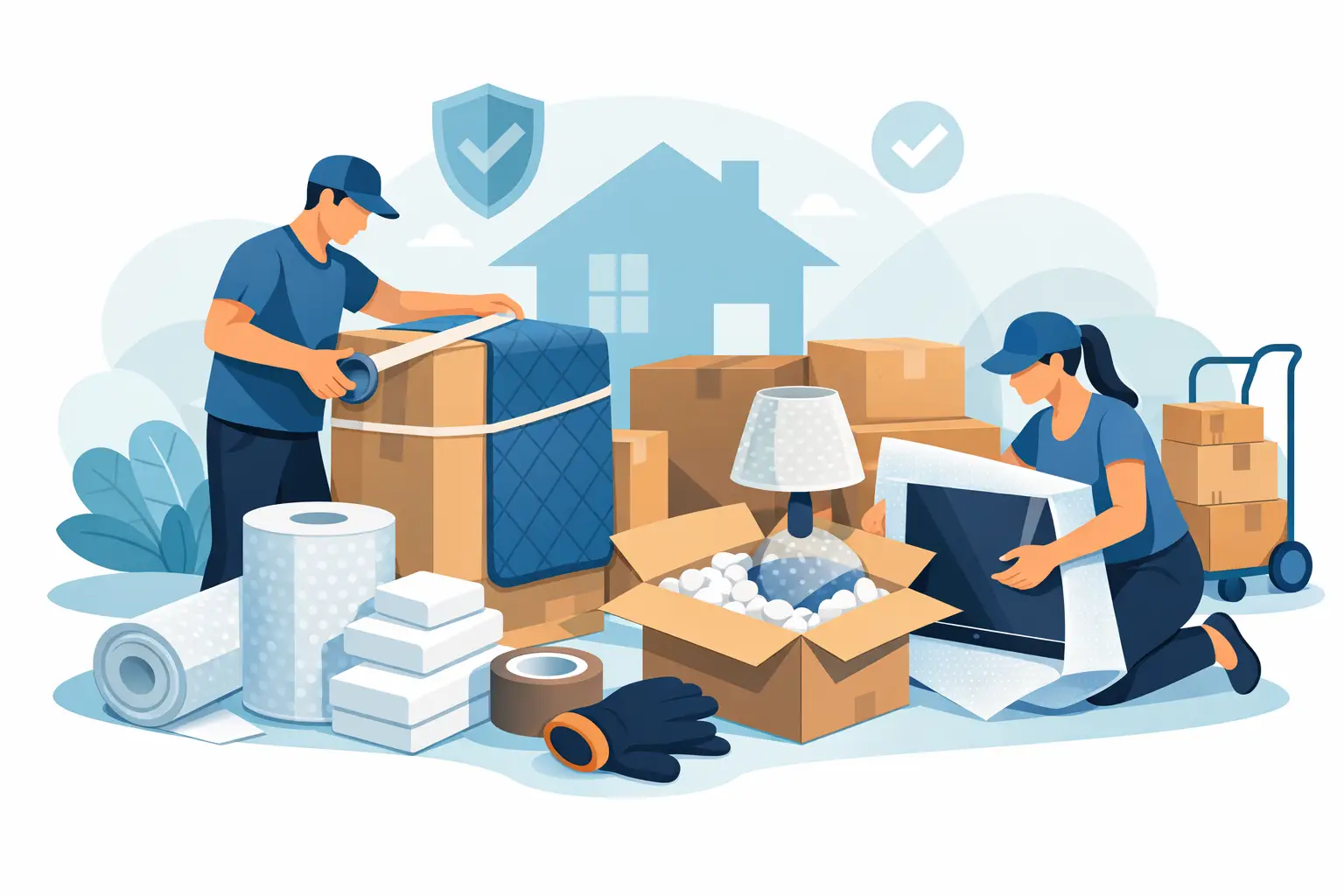
Boxes should match the item, not just the shelf they came from. Dishware, framed pieces, electronics, lamps, and decor all need different treatment. Wardrobe boxes protect hanging clothes and save time on both ends of the move. Shrink wrap secures drawers, cushions, and grouped items so they stay stable in transit. Moving pads protect finished wood, glass, upholstered pieces, and appliances from rubbing and impact.
There is also a trade-off between speed and protection. Overpacking a box with books may feel efficient, but it creates a heavy, failure-prone load. Underpacking leaves empty space and allows shifting. The right balance keeps boxes manageable and contents stable.
For offices, labeling needs to go beyond room names. Monitors, docks, cables, keyboards, and desk components should be grouped by workstation or department so setup is faster and less chaotic. If your business loses a day trying to match cords and equipment after the move, that is operational damage even if nothing is broken.
Large, heavy, and specialty items need a different plan
Pianos, safes, oversized sectionals, stone tops, gym equipment, and commercial machines should never be treated like regular furniture. These items often need specialty equipment, more labor, and a controlled route from start to finish.
This is where experience shows up fast. A piano is not just heavy. Its weight distribution, finish, and internal components all require careful handling. The same goes for large appliances, glass-top pieces, and high-value commercial assets. Without proper skids, pads, tie-down methods, and lifting technique, one bad angle can damage the item, the home, or both.
Heavy-load towing capability also matters when the job goes beyond a standard household move. Trailers, ball hitch setups, and gooseneck options can be the difference between piecing together transport and getting everything moved in a controlled, efficient way. If the move includes equipment, overflow inventory, or mixed load types, capacity is not a minor detail. It is part of the protection plan.
The truck load matters as much as the packing
A well-packed home can still suffer damage if the truck is loaded poorly. Items need to be staged by weight, fragility, and delivery order. Heavier pieces create the base, lighter and fragile items are protected above and around them, and everything must be secured so it does not shift during braking, turning, or uneven road conditions.
Blankets and pads should separate surfaces that could rub. Glass and mirrors should be positioned and protected correctly, not wedged wherever space is left. Disassembled furniture components should stay together and be labeled clearly so reassembly is faster and less stressful.
This is one reason trained crews outperform casual labor. Moving is physical work, but it is also technical work. Knowing how to build a safe load inside the truck protects your belongings in ways most customers never see.
Why credentials and crew standards matter
If you are serious about a damage-free move, ask who is showing up and what standards they work under. Licensed and insured is not just a line on a website. It is part of basic risk control. WSIB certification matters too, because it reflects a professional operation with worker protections in place.
Uniformed crews with PPE may sound like a small detail, but it signals consistency and accountability. So does a company that shows up with proper pads, wrap, runners, boxes, and specialty tools as a standard, not as an afterthought. Baker Home Solutions takes that approach because damage prevention is built into the job, not added only when a customer asks.
Reviews matter for the same reason. When customers repeatedly mention care, punctuality, and professionalism, that usually reflects real process on the ground. Damage-free moves are rarely about one heroic effort on moving day. They are usually the result of repeatable systems and crews who follow them.
A damage free moving protection guide for moving day itself
On moving day, the goal is controlled pace, not panic speed. Fast is good when it comes from preparation. Fast becomes risky when it comes from rushing.
Clear the pathways. Keep pets and small children out of the carry zones. Confirm what is staying and what is going before loading starts. If there are items headed for junk removal, donation, storage, or a second stop, separate them clearly so there is no confusion once the truck is in motion.
Do one final check of drawers, cabinets, and closets before the crew leaves each room. Then let the team work their process. Too much last-minute reshuffling from multiple people usually creates more risk, not less.
For businesses, assign one point of contact. That keeps decisions quick and avoids mixed directions about what gets loaded first, where equipment goes, and how departments are staged at the new location.
The best moves feel organized because they are organized. Damage prevention is not glamorous, but it is visible in every protected floor, every wrapped furniture edge, every properly loaded truck, and every room that gets set up without surprises. If you want the move to end with relief instead of repairs, choose the crew, equipment, and plan that treat protection as part of the service, not an extra. That is how you keep moving day from becoming a damage claim.