
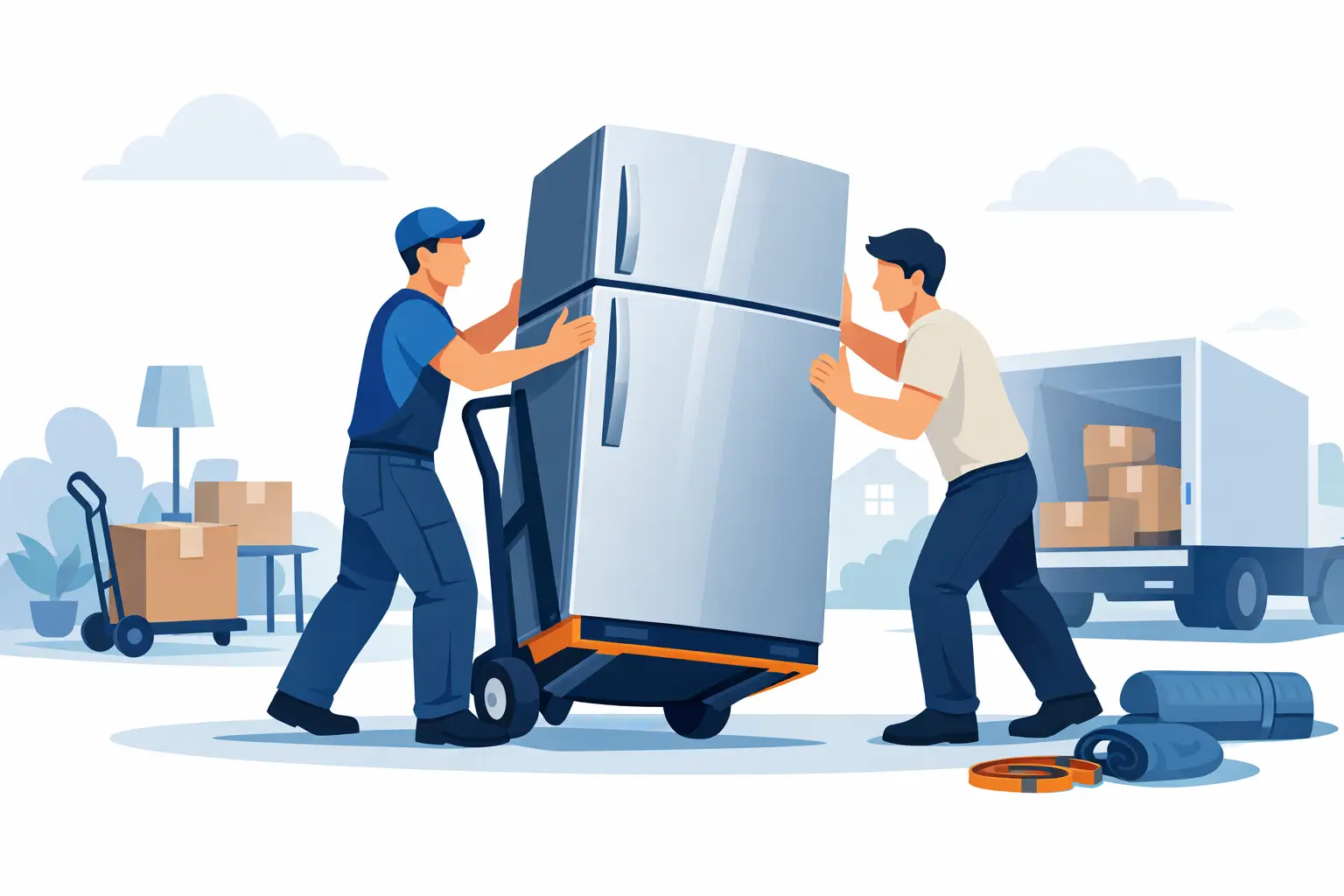
A refrigerator is one of those items that looks straightforward until it starts tipping, scraping a doorway, or shifting on the dolly. If you are figuring out how to move a refrigerator safely, the real job is not just muscle. It is planning, control, and protecting your floors, walls, appliance, and back at the same time.
Most refrigerator damage happens before the truck is even loaded. A rushed disconnect, doors that swing open mid-carry, or a unit laid down the wrong way can turn a routine move into a repair bill. The good news is that a careful process reduces that risk fast.
How to move a refrigerator safely before lifting starts
Start with the basics the day before the move, not ten minutes before the dolly comes out. Empty all food, remove loose shelves and drawers, and pack those separately. If they stay inside, they can crack, slide, or turn into weight that shifts when you tilt the unit.
Unplug the refrigerator and give it time to defrost if there is any frost buildup in the freezer. Put towels around the base and keep a shallow pan nearby if you expect water. Once it is dry, wipe down the interior so you are not moving a wet appliance that can drip through the house or truck.
If your refrigerator has a water line or ice maker, shut off the water supply first. Disconnect the line carefully and keep a small towel ready for residual water. Tape the line and power cord securely to the back of the unit so nothing drags or snags during the move.
Then measure everything. Measure the refrigerator height, width, and depth. Measure the doorways, hallway turns, stairwells, and the opening on the truck. A lot of moving-day problems come from assuming it will fit because it fit once before. Handles, hinges, and tight turn angles change the math.
The tools that make the move safer
This is not a job for bare hands and guesswork. The safest setup includes an appliance dolly with straps, moving blankets, floor protection, work gloves with grip, and ratchet straps for the truck. If the path includes hardwood, tile, or fresh flooring, lay down floor runners or other surface protection first.
The dolly matters. A standard hand truck is often not enough for a full-size refrigerator because the weight is tall, awkward, and front-heavy. An appliance dolly is built to hold that load more securely and gives you better control while tilted.
Moving blankets protect the finish and help prevent dents to walls and trim. Gloves improve grip, but they do not replace proper lifting technique. If the refrigerator is oversized, built-in, or going up or down stairs, the trade-off changes quickly. That is the point where professional movers are usually the safer option.
Getting the refrigerator ready to roll
Once the unit is empty, dry, and disconnected, secure the doors. You can use moving straps or tape, but tape should be applied carefully so it does not damage the finish. The goal is simple: no swinging doors while the refrigerator is tilted.
If the model has adjustable leveling legs, raise them according to the manufacturer instructions so the fridge can roll or slide more easily. Some units also have delicate rear components that should not be crushed against the dolly, so take a quick look at the back before you strap anything down.
At this stage, wrap the refrigerator in moving blankets. Focus on corners, handles, and the front face. Those are the areas most likely to get chipped, scratched, or dented when moving through a tight opening.
Lifting and loading without hurting yourself
When people ask how to move a refrigerator safely, this is the part that matters most. Never try to dead-lift a refrigerator with one person on each side and hope for the best. You want controlled tilt, not a full carry.
With one person stabilizing and one person guiding the dolly, carefully tip the refrigerator just enough to slide the appliance dolly underneath. Keep the tilt minimal and steady. Once the dolly plate is positioned properly, strap the refrigerator tightly to the dolly so it moves as one unit.
As you tilt it back, keep the load balanced. The person controlling the dolly should do the heavy steering, while the second person helps steady from the side or front depending on the path. Communicate every step. Short commands like stop, tilt, lower, and pivot work better than talking over each other.
Do not rush through doorways. Move slowly and square the unit to the opening before trying to pass through. If a door needs to come off its hinges to create clearance, do that before the refrigerator is halfway jammed in the frame. For some models, removing refrigerator doors is also an option, but that depends on the appliance design and should be done only if you know how to reinstall everything correctly.
Moving a refrigerator on stairs
Stairs are where DIY appliance moves go sideways fast. The weight shifts differently, footing changes, and one bad angle can damage the fridge or seriously injure someone. If stairs are involved, the safe answer depends on the size of the refrigerator, stair width, and whether you have trained help and proper equipment.
For a short set of wide, straight steps, an appliance dolly and two strong movers may be enough. For narrow stairs, turns, landings, or a heavier built-in unit, it is usually smarter to hand the job to a licensed and insured moving crew with the right equipment. There is no prize for forcing a stair move that was never under control.
If you do proceed, keep the refrigerator strapped to the dolly, move one step at a time, and keep the stronger position on the lower side of the load. Do not let the refrigerator free-slide or bounce. Every stair move should feel slow and deliberate.
Transporting it in the truck
A refrigerator should be transported upright whenever possible. That is the safest position for protecting the compressor and internal fluids. Laying it down can cause oil to move into the cooling lines, which may lead to performance problems when the unit is turned back on.
Sometimes tight access or truck limitations make a temporary horizontal position unavoidable. If that happens, check the manufacturer guidance for your model first. In general, if a refrigerator has been on its side, it should stand upright for several hours before being plugged in again. Some situations call for even longer.
Inside the truck, place the refrigerator against a solid wall and secure it with ratchet straps so it cannot roll or tip. Pad contact points with moving blankets. Do not load heavy items against the doors or sides. The goal is to prevent movement, not just squeeze everything in.
Setting it in place at the new location
The move is not done when the refrigerator comes off the truck. Roll it into place carefully, remove the wrapping, and let it settle upright if it was tilted significantly or laid down during transport. Reconnect the water line only after you have the unit positioned properly.
Before plugging it in, inspect for dents, loose cords, or signs of leaking. Reinstall shelves and drawers once the refrigerator is level. If the doors are not closing correctly or the unit rocks, adjust the leveling legs before loading it with food.
Then give it time to cool down to the proper temperature before restocking. That protects food safety and helps the appliance return to normal operation without extra strain.
When it makes sense to call professionals
Some refrigerator moves are reasonable DIY jobs. Others are not. If you are dealing with stairs, tight condo hallways, high-end flooring, oversized French-door units, built-ins, or a time-sensitive move, professional help usually costs less than one mistake.
That is especially true when the crew shows up with the right gear from the start – appliance dollies, pads, floor protection, truck tie-downs, and a clear plan for access and placement. At Baker Home Solutions, that preparation is part of how damage gets prevented, not explained away afterward.
A refrigerator is heavy, awkward, and expensive to replace. Treating it like a controlled move instead of a quick lift is what keeps the job safe. If you slow down, protect the path, and use the right equipment, you give yourself a much better shot at getting it from one kitchen to the next without injury, dents, or surprises.