
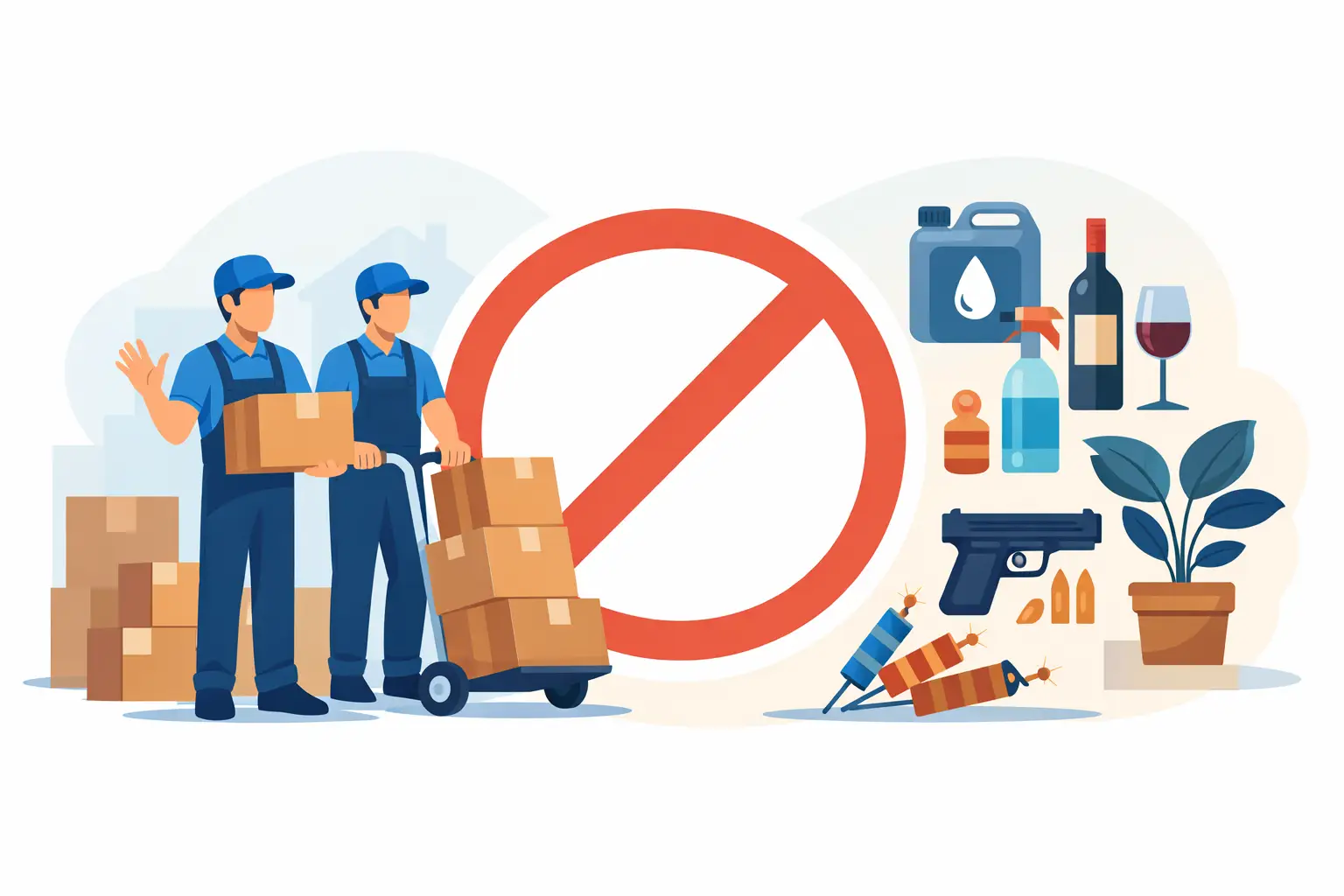
You do not want to find out on moving day that the crew cannot load half a shelf in your garage. That is usually how this question comes up: what do movers not take, and what needs a different plan before the truck arrives? The short answer is that professional movers are there to transport household and business goods safely, not to haul anything hazardous, perishable, illegal, or likely to damage the truck, your property, or other items in transit.
That answer sounds simple until you are standing in a basement surrounded by paint cans, propane tanks, cleaning chemicals, old electronics, family records, and a fridge full of food. The details matter. Every moving company has its own policies, but there are common categories that most licensed and insured movers will not touch, or will only move under strict conditions.
What do movers not take on moving day?
In most cases, movers will not take hazardous materials, flammables, explosives, perishables, live plants on some moves, pets, firearms without advance arrangements, and valuables that should stay with you. They may also refuse anything leaking, infested, mold-damaged, structurally unsafe, or not properly packed.
The reason is not a lack of effort. It is risk control. A professional crew can protect furniture, appliances, office equipment, and fragile pieces with pads, wrap, runners, carts, and specialty handling gear. That does not change the rules around items that can ignite, spill, spoil, contaminate, or create liability.
Hazardous and flammable items
This is the biggest category. Gasoline, propane cylinders, lighter fluid, kerosene, paint thinner, pool chemicals, pesticides, fireworks, ammunition, and many solvents are commonly refused. Even everyday products can be a problem if they are classified as combustible or corrosive.
A lot of customers are surprised by garage and shed items. Lawn mowers, snow blowers, weed trimmers, and generators may be moveable only if they have been fully drained of fuel and oil according to company policy. The equipment itself might be fine. What gets flagged are the liquids inside it.
Household cleaners can also fall into this category. Bleach, ammonia, drain opener, and certain industrial cleaning products used in offices or workshops may not be allowed in a moving truck, especially if lids are loose or containers are already damaged.
Food and perishables
If it can spoil, melt, leak, or attract pests, do not assume the movers will load it. Refrigerated and frozen foods are the most obvious issue, but pantry goods can be a problem too if they are open, glass-packed, or likely to spill.
On a short local move, some companies may allow sealed, nonperishable food if it is boxed properly. On longer moves, many customers are better off using up what they can, donating unopened items, and transporting a small cooler themselves for essentials.
Plants and living things
Movers generally do not transport pets, and that should never be left to chance. Animals need your direct supervision, temperature control, and a secure travel setup.
Plants are more complicated. Some local movers will take houseplants on short trips, but others will not because plants can tip, freeze, overheat, or violate agricultural restrictions if the move crosses certain boundaries. If the plant matters to you, ask early and have a backup plan.
Personal valuables and irreplaceable items
This is the category people regret most when they ignore it. Cash, jewelry, passports, birth certificates, wills, medical records, laptops with sensitive data, external hard drives, sentimental photo albums, and heirlooms should stay with you.
Even when a mover is fully professional, careful, licensed, and insured, some items are simply too personal or too difficult to replace. The safer move is to keep them in your own vehicle, carry-on bag, or locked container under your control.
For business moves, that same logic applies to check stock, legal files, confidential HR documents, backup drives, and anything tied to data privacy or operations risk. A well-run moving crew can relocate office furniture and equipment efficiently, but chain-of-custody items should be separated in advance.
Why movers refuse certain items
When people ask what do movers not take, they often assume it is just a policy sheet. In reality, the restrictions usually come down to four things: safety, insurance, legal compliance, and damage prevention.
Safety comes first. One leaking can of fuel or one box of reactive chemicals can put the crew, the truck, and your entire shipment at risk. Insurance is next. Licensed and insured companies work within specific coverage limits and operational rules. Taking prohibited items can void protections or create claims that should never have existed.
Then there is compliance. Some goods are regulated in ways that make them unsuitable for standard household moving. Firearms, ammunition, chemicals, and certain commercial materials may require storage, declaration, or transport procedures outside a normal move.
Finally, there is the practical side. If an item can stain pads, ruin cartons, attract insects, or contaminate other property, a professional mover is right to reject it.
Condition matters too
Sometimes the issue is not the type of item but its condition. Wet boxes, broken totes, garbage bags full of loose contents, furniture with active bed bugs, and appliances that still contain water can all create problems. Mattresses or sofas with mold, pest activity, or strong contamination may also be declined.
That is not a corner-cutting move by the crew. It is how responsible operators protect the rest of your load and the next customer’s shipment too.
Items movers may take only with preparation
Some belongings sit in the gray area. They are not automatically prohibited, but they need prep work. Appliances are a good example. Refrigerators often need to be emptied, defrosted, dried, and sometimes have shelves secured or removed. Washers may need hoses disconnected and drums stabilized. Gas appliances can require a qualified technician before transport.
Large outdoor equipment is another one. Riding mowers, shop tools, and certain heavy pieces may be moveable if fluids are drained and attachments are secured. Office equipment can also require prep. Printers, copiers, servers, and electronics usually need proper disconnects, protective wrapping, labeled components, and a clear plan for setup at the destination.
This is where an experienced company stands out. The difference is not just manpower. It is having the pads, floor protection, shrink wrap, carts, wardrobe boxes, and specialty equipment to move approved items without damaging the building or the contents.
How to avoid last-minute surprises
The best move is the one where the crew already knows what is on site. That means doing a real pre-move review, not just estimating based on a few furniture pieces in the living room.
Start with the garage, basement, shed, utility room, and under-sink storage. Those areas hold most of the items movers do not take. Then check file drawers, safes, medicine cabinets, and desk drawers for valuables, medications, and records that should travel with you.
If you are moving a business, walk the office, warehouse, or back room with the same mindset. Flag chemicals, batteries, confidential files, food stock, breakroom appliances, server equipment, and anything that may need a specialist disconnect.
Be honest when you request a quote. Mention the treadmill, the gun safe, the piano, the packed storage room, the half-full paint shelf, and the commercial copier. Good planning gives the mover a chance to tell you what is fine, what needs prep, and what needs separate disposal or transport.
Have a second plan for restricted items
Not everything has to go in the moving truck. Some things should be used up, donated, recycled, or removed before the move date. Others should ride with you. A few may need junk removal, hazardous waste drop-off, or manufacturer-approved transport.
That split approach is usually the smoothest one. It keeps the move legal, protects your shipment, and saves time when the crew arrives.
The best question to ask your mover
Instead of asking only what do movers not take, ask this: what items on my list need special handling, preparation, or separate disposal before moving day? That question gets you a more useful answer.
A professional company should be able to explain its limits clearly, tell you what needs to be emptied or disconnected, and point out anything that could slow down the job or create a safety issue. That is part of running a tight operation and protecting the customer from day-of surprises.
At Baker Home Solutions, that kind of planning is part of the job. A move goes better when the crew shows up prepared, the restricted items are already dealt with, and the truck is loaded with the right equipment for everything that is approved to travel.
If you are not sure about an item, ask before the move, not while it is halfway to the ramp. A ten-minute conversation ahead of time can save you hours of stress when the clock is running.