
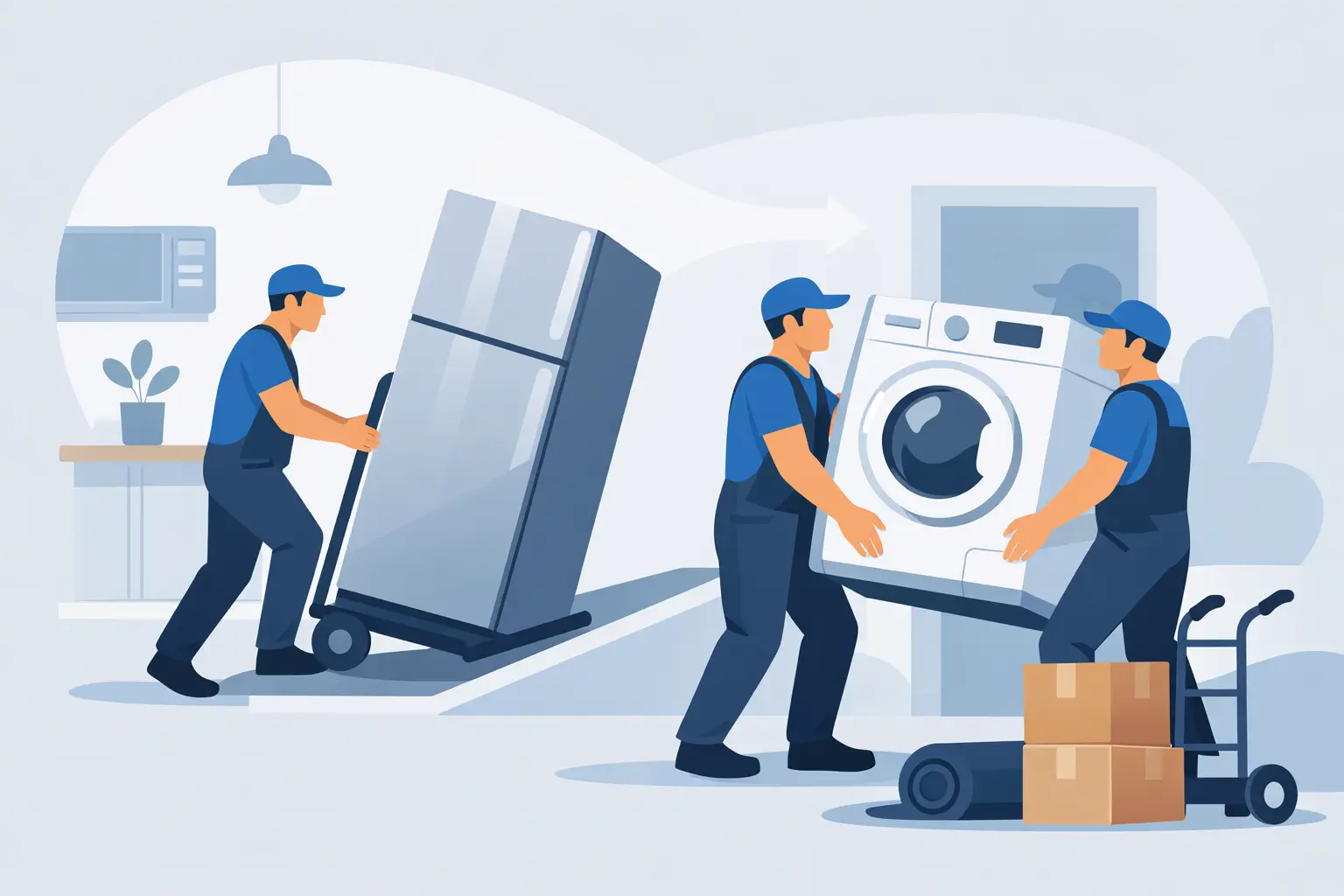
A refrigerator that will not clear the doorway by half an inch can turn a normal move into a long, expensive day. Large appliances are bulky, heavy, awkward to grip, and easy to damage. If you are figuring out how to move large appliances, the job starts well before anyone puts a hand on a dolly.
The biggest mistake people make is treating an appliance like oversized furniture. It is not. A washer can still hold water, a fridge can have delicate internal components, and a gas range adds utility shutoff concerns that need to be handled correctly. The safest move comes from planning the route, using the right equipment, and knowing when the risk to your floors, walls, back, and appliance is no longer worth doing on your own.
How to move large appliances without damage
Start with the route, not the appliance. Measure the appliance height, width, and depth, then measure doorways, stairwells, hallways, elevator openings, and tight turns. Remove doors if needed. It is much easier to spend twenty minutes taking off a door than to force a heavy unit through a space it barely fits.
Protect the path next. Hardwood, tile, vinyl, and carpet all react differently under weight. Floor runners, moving pads, and corner protection help prevent scratches, chips, and wall marks. This is one of those details that separates a controlled move from a rushed one. A heavy appliance rarely damages just itself. It often damages the home on the way out.
You also need the right people. Most large appliances should not be moved solo. Even with a dolly, you need enough hands to stabilize the load, guide turns, and control stairs. A small team with a clear plan is safer than a larger group improvising in a tight hallway.
Disconnect utilities before moving day
Appliances need to be properly disconnected before they are moved. Refrigerators should be emptied, shelves secured or removed, and unplugged in advance so they can defrost if needed. Washing machines should have supply lines disconnected, drained fully, and transport bolts installed if the manufacturer requires them. Dryers need venting removed carefully, and gas dryers or ranges should be disconnected by a qualified professional if there is any doubt.
This is not the place to guess. Water leaks, gas issues, and electrical damage can follow a rushed disconnect. If the appliance is hardwired, tied into a water line, or connected to gas, it depends on the unit and setup whether a homeowner should handle it. When in doubt, bring in the right help before the movers arrive.
Secure doors, cords, and loose parts
Once disconnected, secure anything that can swing open or shift during transport. Tape doors shut with painter-safe material or use stretch wrap around the appliance. Coil and tape cords so they do not drag or catch. Remove trays, glass shelves, and detachable parts and pack them separately.
This step matters more than people think. A refrigerator door that swings open on a ramp can throw off balance fast. The same goes for a loose washer hose or stove grate moving around inside the unit.
The equipment that makes appliance moving safer
If you want to know how to move large appliances the right way, equipment is a big part of the answer. An appliance dolly with securing straps is the baseline. Basic hand trucks are often not enough because they do not hold weight as securely against the frame.
Moving straps can help distribute load, but they are not a shortcut around technique. Sliders may work on some flooring for short indoor shifts, though they are not a replacement for proper lifting and transport equipment. Ramps are useful when loading into a truck, and moving pads protect both the appliance and the surrounding space.
For difficult jobs, specialty gear matters. Stair-climbing equipment, heavy-duty dollies, floor runners, and padded protection for railings and corners can make the difference between a controlled move and visible damage. Professional crews also work faster because they arrive with the right supplies already loaded, not because they take more chances.
How to move specific appliances
Different appliances have different weak points. That is why a one-size-fits-all approach usually fails.
Refrigerators
Refrigerators need to stay as upright as possible. Laying one down can cause compressor oil to move into the cooling lines, which may affect performance if the unit is plugged in too soon. Sometimes a tight space makes tilting unavoidable, but full horizontal transport is usually a last resort. Once delivered, the fridge may need time upright before reconnection, depending on manufacturer guidance.
French-door and side-by-side models can also be deceptively hard to maneuver because of their depth and top-heavy feel. Take doors off only if the model allows it and you know how to reassemble it properly.
Washing machines and dryers
Washers are dense and often heavier than they look. Front-load models especially can shift internally if they are not secured. Draining all water is critical because even a small amount can leak into trucks, hallways, or finished floors.
Dryers are usually lighter, but that does not make them easy. The shape is awkward, and vent connections can bend or crack if handled roughly. Gas units add another layer of caution.
Stoves and ranges
Ranges should have racks, burner grates, and other removable parts packed separately. Gas appliances require extra care during disconnect and reconnect. If there is any uncertainty about the gas line, stop there and use a qualified technician. Saving a little time is not worth a gas leak.
Dishwashers and microwaves
Built-in units can be tricky because the challenge is often removal rather than weight alone. A dishwasher may be secured to cabinetry and tied into power, water, and drain connections. Over-the-range microwaves can be awkward, top-heavy, and difficult to lower safely without proper support.
Stairs, tight turns, and loading into a truck
Most appliance damage happens in transitions – coming through a doorway, turning on a landing, or loading on a ramp. Slow is usually faster here. Rushing a 300-pound appliance into a narrow turn is how doors get gouged and units get dropped.
On stairs, the person below the appliance carries more of the controlling force, which makes footing and communication essential. If the staircase is narrow, steep, or has a turn, the move may require specialty equipment or a different game plan. It depends on the appliance size and the stair layout. Some jobs are physically possible but still not smart to attempt without trained movers.
Truck loading matters too. Appliances should be secured upright when possible and padded to prevent shifting. A poorly packed truck can undo all the careful work done inside the home.
When DIY stops making sense
There is a difference between saving money and taking on avoidable risk. If the appliance is extremely heavy, built in, connected to gas, going up or down stairs, or moving through a condo with elevators and booking rules, professional moving help is often the cheaper option once you factor in the cost of damage, delays, and injury.
This is where process matters. A licensed and insured crew with proper equipment, floor protection, moving pads, and heavy-item experience brings more than muscle. They bring control. That is especially important for families working on a tight closing timeline, landlords turning over units, or businesses trying to reduce downtime during a relocation.
For homeowners and businesses that need a full-service team, Baker Home Solutions handles heavy items with the same structured approach used for residential and commercial moves – route planning, protective materials, trained crews, and equipment built for real load demands.
A final check before the appliance is set in place
Before reconnecting anything, inspect the appliance and the area around it. Look for dents, loose hoses, damaged cords, scratched flooring, and wall contact points. Make sure the unit is level where required, especially for refrigerators, washers, and dishwashers.
Then reconnect utilities carefully and test the appliance before calling the job done. A move is not finished when the unit gets through the door. It is finished when the appliance is in place, undamaged, connected correctly, and ready to work.
Large appliances do not reward improvisation. A measured plan, the right equipment, and a crew that knows how to control weight through tight spaces will save time, protect your property, and make the whole day feel far less heavy.