
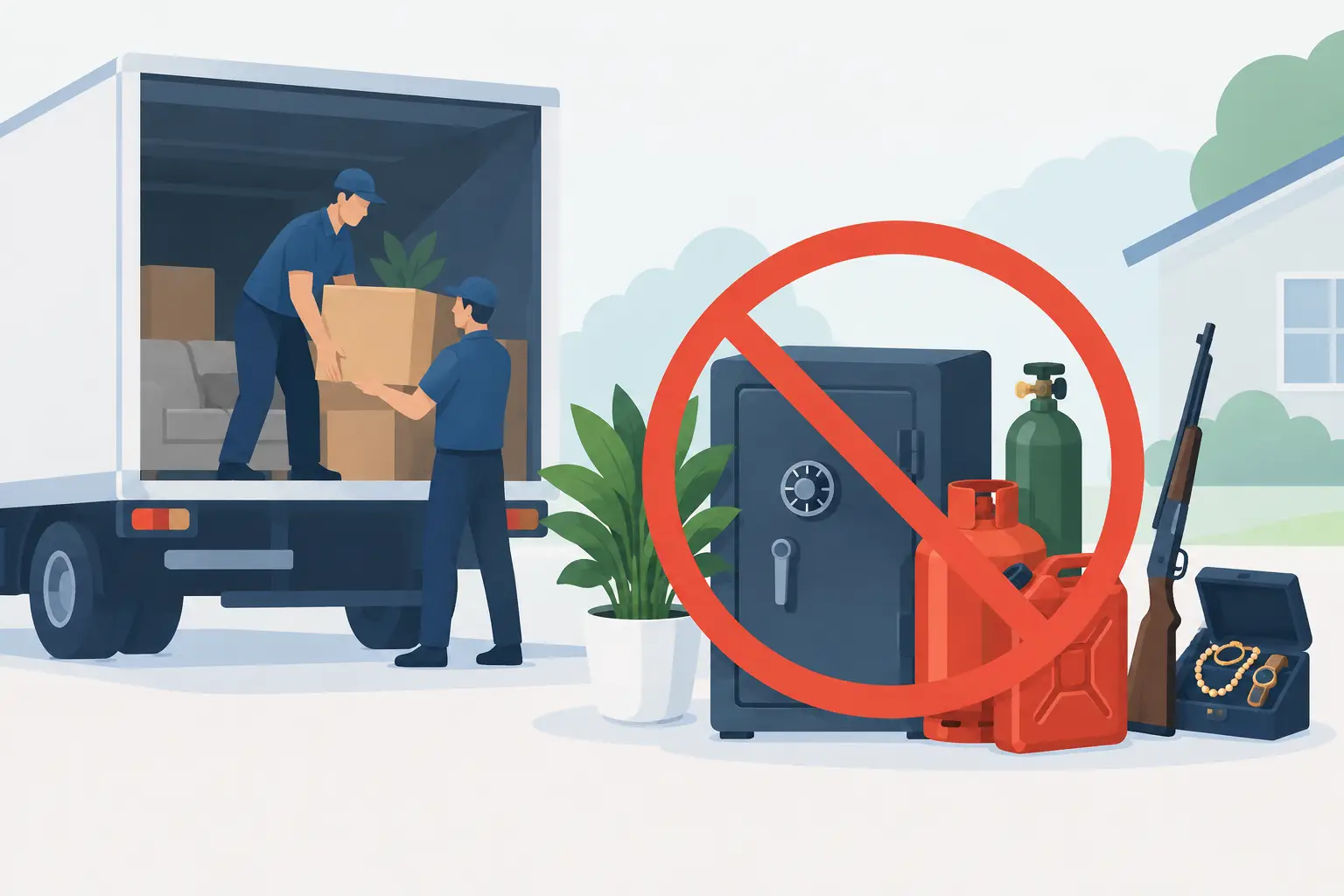
The box that causes a moving-day delay is rarely the heavy one. It is usually the open paint can in the garage, the propane cylinder on the patio, or the cleaning chemicals tucked under the sink. Knowing the items movers cannot transport before your crew arrives protects your home, your belongings, and everyone on the truck. It also keeps a well-planned move from stopping at the curb while you figure out what to do with restricted items.
Professional movers can handle a great deal, from packed kitchens and bedroom furniture to pianos, office equipment, and heavy safes when the right equipment and plan are in place. But a moving truck is not a hazardous-materials carrier, a refrigerated vehicle, or a secure personal vault. Some items are restricted by law, insurance requirements, carrier policy, or simple safety standards.
Why Movers Cannot Transport Certain Items
A loaded moving truck combines weight, motion, heat, and tightly packed belongings. A small leak, spark, or pressure change can turn an ordinary household product into a serious hazard. Flammable liquids can ignite, corrosive cleaners can damage other property, and pressurized containers can rupture in high heat.
There is also a responsibility issue. Movers must know what is being loaded so they can protect the crew, the customer, and other cargo. Licensed and insured companies cannot safely accept unknown chemicals, illegal materials, or property that requires specialized storage. Restrictions vary by state, municipality, and carrier, so always review your mover’s written policy before packing.
Common Items Movers Cannot Transport
The exact list depends on the company and your route, especially for interstate moves. Still, these categories are commonly refused by professional moving crews.
- Flammable and explosive materials: Gasoline, diesel fuel, lighter fluid, propane tanks, kerosene, fireworks, ammunition, and fuel-filled lawn equipment generally cannot go on a moving truck. Even an apparently empty fuel can may contain vapors that create a risk.
- Hazardous household chemicals: Bleach, ammonia, pesticides, pool chemicals, solvents, acids, paint thinner, and many automotive fluids require separate handling or disposal. Never combine products to make them easier to transport. Certain combinations can create dangerous fumes.
- Paint and aerosol products: Wet paint, stains, varnish, spray paint, compressed-air cans, and aerosol cleaners may be restricted because they are flammable, pressurized, or temperature-sensitive. Check whether your local hazardous-waste program accepts them before move-out day.
- Perishable food and open pantry items: Refrigerated food, frozen food, and open containers can spoil or leak during transport. Long-distance moves make this more complicated. Sealed shelf-stable goods may be accepted, but they are often better donated if the cost to move them exceeds the cost to replace them.
- Plants, pets, and living things: Movers do not transport pets, and many carriers will not take houseplants. Plants can be damaged by temperature extremes, and some states restrict the movement of soil, plants, and pests across borders. Move plants yourself if permitted, or give them to a neighbor before the move.
- Irreplaceable valuables and personal records: Cash, jewelry, prescription medication, passports, wills, financial records, family photos, and small heirlooms should travel with you. These may not be hazardous, but they are too important to place in a truck where you will not have direct access.
- Firearms and regulated items: Firearms, ammunition, controlled substances, and other regulated property require careful attention to local, state, and federal laws. A mover’s policy may prohibit them entirely. Do not assume a locked case makes an item acceptable for transport. Confirm requirements in advance and make your own lawful arrangements.
Restricted Does Not Mean Difficult to Move
Customers sometimes worry that a restriction means the mover will refuse everything unusual. That is not the case. There is a major difference between an item that is heavy or delicate and an item that is unsafe to load.
A piano, gun safe, large appliance, commercial printer, server rack, or oversized sectional may require extra labor, a piano skid, moving pads, floor protection, tie-downs, and the right truck capacity. With advance notice, a prepared moving company can build that work into the estimate and assign the proper crew and equipment.
The issue is communication. A treadmill is manageable when the crew knows it is in a basement. A refrigerator is manageable when it has been emptied, unplugged, and defrosted. A fuel-powered pressure washer is different if its tank has not been drained. Tell your mover about heavy, rare, valuable, or equipment-based items during the quote process so there are no surprises at loading time.
How to Prepare Items Movers Cannot Transport
Start sorting the garage, shed, utility room, and under-sink cabinets at least one to two weeks before moving day. Those are the places restricted items tend to collect. Do not wait until the last box is packed, when you are rushed and more likely to make an unsafe disposal decision.
Use up what you can safely use before the move. This works well for pantry food, lawn-care products, cleaning supplies, and partially used paint when appropriate. Give unopened, in-date items to friends, neighbors, or local organizations that accept them. For chemicals, fuels, batteries, and electronics, use your municipal household hazardous-waste or recycling program. Never pour chemicals down a drain, into a storm sewer, or onto the ground.
For appliances and outdoor equipment, follow the manufacturer’s instructions. Drain fuel from mowers, snow blowers, pressure washers, and similar equipment if required by the moving company. Empty water from humidifiers, ice makers, and washing machines. Defrost refrigerators and freezers early enough to dry the interior completely. A dry, clean appliance is safer to handle and less likely to cause odor or water damage in the truck.
Keep a personal travel bag for the items you cannot afford to lose access to. Include medications, chargers, keys, identification, legal documents, valuables, and a few days of essentials. This also makes the first night in a new home less stressful, even if the truck arrives exactly on schedule.
Make Disclosure Part of Your Moving Plan
A clear inventory is one of the best forms of moving protection. During an in-home or virtual estimate, point out anything stored in the garage, basement, attic, workshop, or office that could need special handling. Mention batteries, liquids, fuel-powered equipment, safes, large electronics, and commercial equipment. Photos can help a moving company assess access, weight, and equipment needs before the crew arrives.
Ask direct questions: Is this item permitted on the truck? Does it need to be emptied or disconnected? Should it travel with me instead? If an item is not accepted, ask early enough to arrange disposal, donation, recycling, or personal transport. A professional mover should give you a straightforward answer rather than making assumptions on moving day.
For office moves, assign one person to identify IT assets, confidential files, backup batteries, toner, cleaning chemicals, and leased equipment. Servers and monitors may require careful packing, but damaged lithium batteries or unapproved chemicals are a separate issue. A documented plan prevents downtime and keeps employees from packing restricted materials into labeled office cartons.
Moving day goes best when the crew can focus on protecting floors, wrapping furniture, loading efficiently, and delivering your property safely. Set aside restricted items before the truck arrives, disclose specialty pieces early, and keep essential valuables with you. That small amount of preparation gives your movers room to do what they do best: get the rest of your home or business moved carefully and on time.