
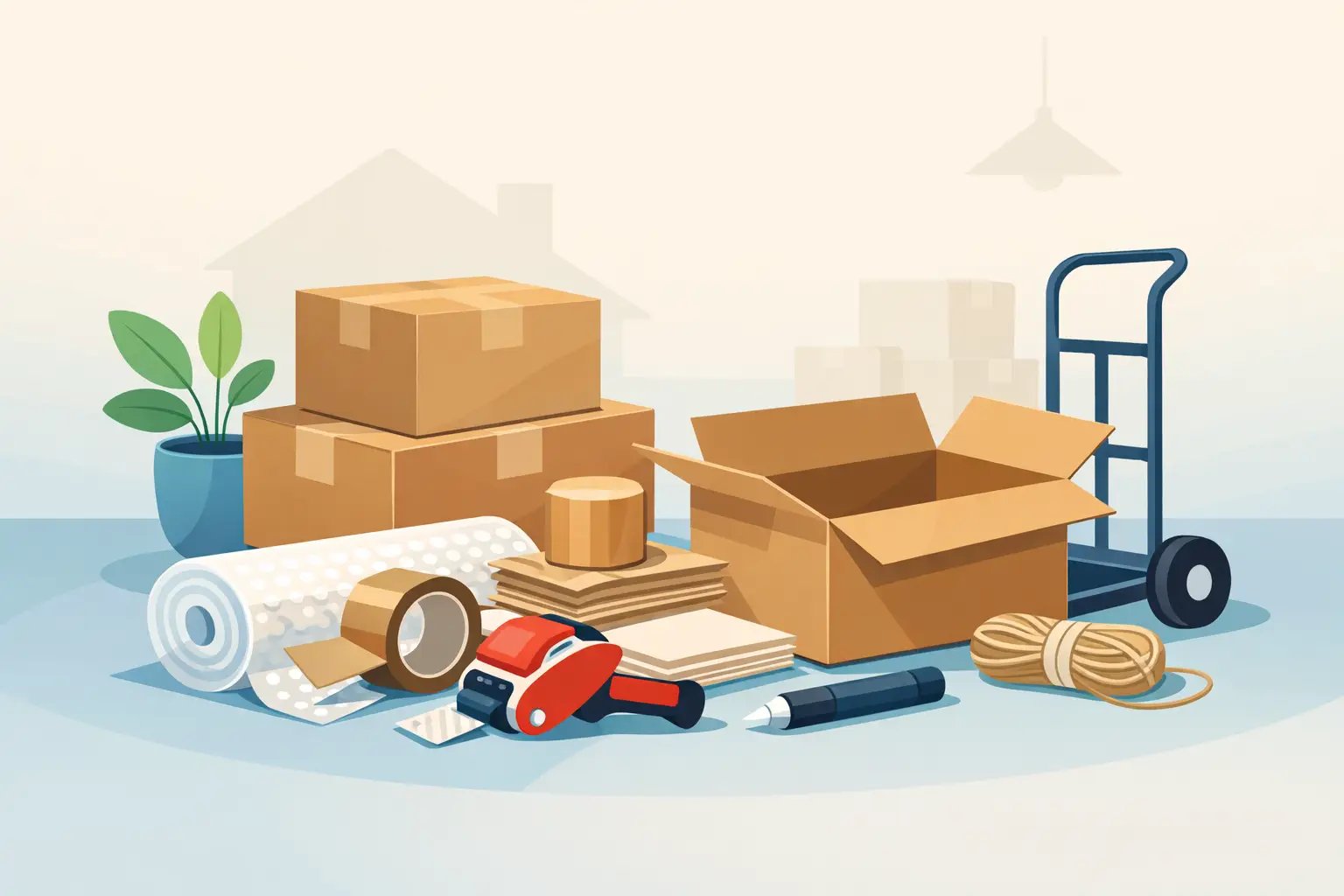
A move usually goes sideways before the truck is even loaded. It happens when the box bottoms out, the tape gives up on the stairs, or a dresser gets wrapped too loosely and picks up scratches on the way out. The best packing supplies for moving are not about buying more stuff. They are about using the right materials to protect your home, your furniture, and your schedule.
If you are moving a one-bedroom apartment, your supply list will look different from a five-bedroom house or a busy office. That is where people waste money. They either underbuy and scramble on moving day, or overbuy supplies that do not solve the real risks. A solid packing plan starts with what you are moving, how far it is going, and whether you need to protect fragile items, electronics, or heavy furniture.
What actually matters when choosing packing supplies
The right supplies do two jobs at once. First, they protect the item. Second, they make loading, carrying, and stacking more efficient. If a supply only does one of those things, it may not be the best choice.
For example, cheap boxes can hold lightweight clothing just fine. The same boxes can fail fast under books, kitchenware, or tools. Extra tape might seem like a fix, but weak cardboard still crushes when stacked. On the other hand, premium materials for every single item can drive up cost without adding much protection. The goal is to match the supply to the item and the handling conditions.
The best packing supplies for moving room by room
Moving boxes that fit the load
Boxes are still the foundation of any move, but size matters more than most people think. Small boxes are best for dense, heavy items like books, pantry goods, canned food, and hand tools. Medium boxes work well for kitchen items, toys, decor, and folded clothing. Large boxes are better reserved for light, bulky items such as bedding, pillows, and lampshades.
Wardrobe boxes are worth it when you want speed and less wrinkling. They are especially useful for business attire, formalwear, uniforms, and seasonal coats. Dish packs, which use heavier corrugated cardboard, are a smarter choice for china, glassware, and fragile kitchen pieces than standard moving boxes.
Used boxes can save money, but they are a gamble. If a box has softened corners, water marks, or crushed edges, it should not be carrying anything valuable. A professional crew can spot that quickly, but for a DIY move, it is easy to miss until the box is already in the truck.
Packing paper, not newspaper
Plain packing paper is one of the most useful supplies you can buy. It cushions dishes, fills empty space, and protects surfaces without leaving ink behind. Newspaper is cheaper, but it can transfer dirt and print onto plates, fabrics, and lighter-colored finishes.
Packing paper also works better than bubble wrap in some cases because it molds tightly around dishes and glassware without adding too much bulk. For kitchen packing, that matters. Overpacked boxes get too heavy fast, and heavy kitchen boxes are one of the top causes of tears and dropped loads.
Bubble wrap for fragile and high-value items
Bubble wrap still has a place, especially for framed art, electronics, lamps, mirrors, and breakables with awkward shapes. Small bubble wrap is better for tighter wrapping and delicate items. Large bubble wrap works better when you need more impact protection around larger objects.
The trade-off is cost and volume. Bubble wrap adds protection, but it also takes up more space in the truck and in the box. That is why it is best used selectively, not as a blanket solution for everything in the house.
Strong tape that stays put
Moving tape should do one simple thing well – stay sealed through lifting, stacking, temperature changes, and long carry distances. Flimsy tape turns into a problem when boxes are moved multiple times from room to truck to storage and back out again.
A good tape gun helps more than people expect. It speeds up packing, applies even tension, and reduces wasted tape. If you are packing an entire household, that time adds up quickly.
Stretch wrap for drawers, cushions, and grouped items
Shrink wrap or stretch wrap is one of the most practical supplies for furniture moves. It keeps dresser drawers shut, secures moving blankets in place, and bundles loose pieces together. It is also useful for keeping cords attached to electronics or hardware bags attached to furniture.
It is not a substitute for padding. Wrap alone can hold things together, but it does not protect wood finishes from impact. For furniture, stretch wrap works best when paired with moving pads.
Furniture protection is where many moves are won or lost
Moving blankets and pads
Moving pads are one of the best investments in a damage-free move. They protect dressers, tables, bed frames, headboards, appliances, and office furniture from scratches and dents. They also reduce rubbing damage in the truck, which is common when furniture shifts during transit.
This is where there is a real gap between a quick move and a professional one. A crew that shows up with enough pads, runners, and wrap is planning to protect the property, not just transport items. Furniture should be padded before it gets through doorways, hallways, and elevator walls, not after damage has already happened.
Mattress bags and sofa covers
Mattresses absorb dirt fast during a move. A mattress bag keeps them clean through loading, truck transport, and storage. The same logic applies to upholstered pieces. A sofa cover or plastic furniture cover helps protect against dust, moisture, and contact with dirty surfaces.
For local moves, some people skip these covers to save money. That can work if conditions are clean and dry, but it is a poor shortcut for longer moves, shared hallways, rainy weather, or storage situations.
Floor runners and doorway protection
Packing supplies are not just for the items being moved. They also protect the property you are moving out of and into. Floor runners help prevent dirt, scuffs, and moisture from being tracked through the house. Door jamb protection matters when large furniture is being turned through tight openings.
This is especially important for families selling a home, renters trying to protect a security deposit, and businesses moving between active workspaces. Damage to floors and walls creates stress that usually costs more than the protective material would have.
Specialty supplies for difficult items
Some moves involve items that should not be treated like standard furniture. Mirrors, artwork, TVs, pianos, commercial printers, servers, and sensitive office electronics all need a more specific approach.
Mirror boxes and TV boxes are useful because they reduce pressure points and keep corners protected. Anti-static packing for electronics can help with sensitive components, especially in office moves. For oversized or very heavy items, the supply list often includes equipment rather than consumables – dollies, lifting straps, piano skids, and custom padding.
That is where experience matters. A rare or heavy item can be damaged by good materials used the wrong way. It is not only about what you buy. It is about whether the handling plan matches the weight, shape, and fragility of the item.
How to avoid overspending on the best packing supplies for moving
The biggest mistake is buying based on fear instead of need. Not every cup needs a layer of bubble wrap, and not every chair needs a custom cover. Start with the highest-risk categories: fragile kitchenware, electronics, mattresses, upholstered items, and furniture with finished surfaces.
Then think about route and timing. A same-day local move in clear weather is different from a longer move with overnight storage, elevator bookings, or winter conditions. The more handling points involved, the more your supplies need to focus on durability and surface protection.
If you are hiring movers, ask what materials and protective equipment are already part of the service. A company like Baker Home Solutions already works with moving pads, floor runners, shrink wrap, wardrobe boxes, and specialty equipment, which can change what you need to buy yourself. That question alone can keep you from paying twice for the same protection.
When professional packing support makes more sense
There is a point where doing your own packing stops saving money. Large homes, office moves, last-minute relocations, and moves involving fragile or high-value items often benefit from professional packing support because speed and consistency matter. A trained team packs faster, stacks better, and usually wastes fewer materials.
It also reduces risk. Licensed and insured movers with proper tools, PPE, and a structured process bring more than labor. They bring systems that protect timelines, property, and access points. That matters when the move includes IT equipment, machinery, artwork, or heavy household items that cannot afford mistakes.
Good packing supplies do not make a move stress-free on their own, but they do set the tone for everything that follows. If your materials match the job, loading is smoother, damage risk drops, and moving day feels a lot more controlled from the first box to the final setup.