
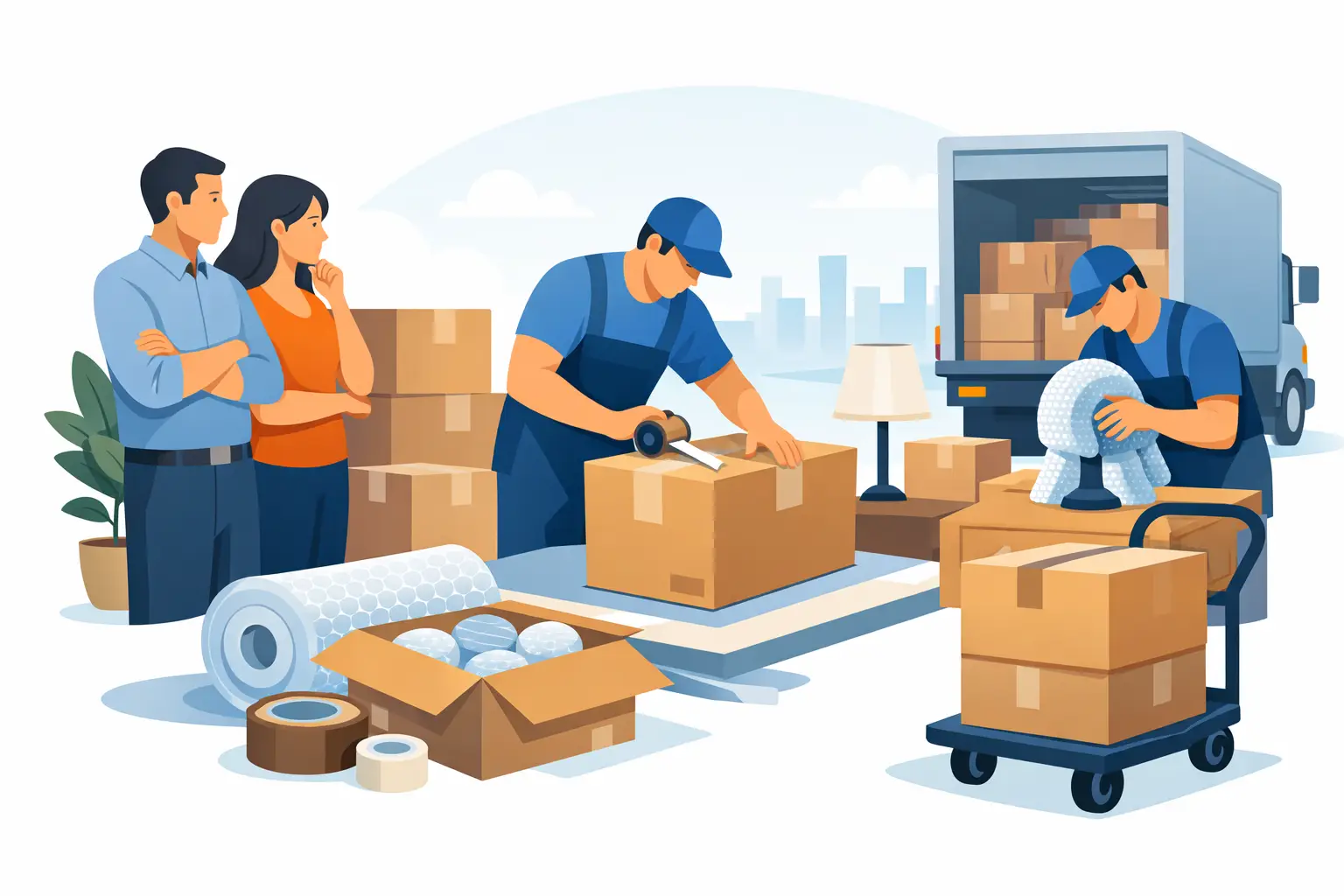
Moving stress usually peaks before the truck even arrives. It starts when the kitchen is still half in use, the closet is fuller than you thought, and every drawer seems to hide one more fragile thing you forgot you owned. That is where professional packing changes the job. It does not just put items in boxes. It brings order, speed, and damage control to a part of moving that most people underestimate.
For homeowners, renters, and businesses, packing services moving support can be the difference between a controlled move and a long, expensive cleanup after one. The real value is not only convenience. It is protecting your property, keeping the schedule on track, and making sure the move starts right.
What packing services moving actually include
A lot of people hear “packing services” and picture a crew boxing up every spoon, sock, and picture frame in the building. Sometimes that is the job. Sometimes it is not.
Professional packing can be full-service, partial, or highly targeted. A full-service pack usually covers the entire home or office, including dishes, décor, clothing, electronics, files, and storage areas. Partial packing is more selective. That might mean the movers handle the kitchen, artwork, and breakables while you take care of clothing and books. For commercial moves, it can also mean packing workstations, monitors, small equipment, archived files, and sensitive items that need a documented handling process.
The best packing plans are built around risk and time. Fragile items, high-value items, and anything awkward to move usually make the most sense to hand off. Items that are simple, durable, or already organized may not need the same level of help.
Why packing matters more than most people expect
Boxes are only a small part of a successful move. The bigger issue is how things are wrapped, loaded, labeled, and staged. A poorly packed box can collapse. An overloaded box can split from the bottom. Plates packed without the right padding chip under pressure. Electronics without proper protection get scratched, crushed, or shifted in transit.
That is why experienced crews rely on more than tape and cardboard. Moving pads, shrink wrap, floor runners, wardrobe boxes, and specialty equipment all play a role in preventing damage before the truck is even loaded. The packing phase also protects the property itself. Floors, door frames, stair rails, and walls take a beating when a move starts in a rush.
For offices, the stakes are even higher. If monitors, printers, files, or IT equipment are packed without a clear system, downtime grows fast. Employees lose time searching for basics, and reopening the new space becomes harder than it needs to be.
When hiring packing help makes the most sense
Not every move needs full packing. But there are situations where hiring professionals is the smarter and safer call.
If you are moving on a tight timeline, packing help can compress several days of work into a few focused hours. If you have a large household, young kids, mobility limitations, or a long-distance move, the value goes up quickly. The same is true if your move includes antiques, artwork, mirrors, glass tables, pianos, or heavy specialty items.
Businesses should also think beyond labor savings. Professional packing helps maintain continuity. When workstations, electronics, and sensitive materials are organized properly, setup at the destination is faster and less chaotic.
There is also a practical cost question. Many people try to save money by packing themselves, then spend more replacing broken items, buying the wrong materials, or delaying the move because the packing was not finished. The cheapest option on paper is not always the least expensive outcome.
Full packing vs. partial packing
This is where trade-offs matter. Full packing is the lowest-stress option. It is ideal when time is short, the property is large, or the move includes many fragile or high-value items. It also gives the moving crew more control over box consistency, protection standards, and truck loading efficiency.
Partial packing works well when you want support without turning over the entire house or office. Many customers pack personal clothing, books, and basic household items themselves, then bring in professionals for the kitchen, glassware, electronics, framed art, or specialty furniture.
Neither option is automatically better. It depends on budget, schedule, and the complexity of the move. A good provider should be able to explain what is worth outsourcing and what you can reasonably handle on your own.
What to look for in a packing and moving company
This is not a service where vague promises should be enough. If a company offers packing support, ask how they protect items, what materials they use, and whether they handle both standard and specialty pieces. Ask whether they are licensed and insured. Ask whether their crews are trained, uniformed, and covered by WSIB or the local equivalent. Ask how they label boxes and manage room-by-room staging.
The right company should also have the equipment to back up its claims. A serious operation comes prepared with the basics and the specialty tools. That includes moving pads, shrink wrap, wardrobe boxes, dollies, floor protection, and gear for heavy or awkward items. If the move includes oversized furniture, machinery, or rare items, you want a team that already has a plan, not one improvising in your hallway.
Capacity matters too. A company with the right fleet can keep the schedule tighter and avoid the domino effect that happens when one truck is not enough. For larger residential moves or office relocations, that makes a real difference.
How professional packing reduces damage and delays
Most moving-day problems start before moving day. They start with unsealed boxes, mixed labeling, loose items in drawers, or breakables packed with whatever happened to be around the house. Then the crew arrives and has to spend time repacking, sorting, or slowing the load to protect items that were not prepared properly.
Professional packing removes that friction. Boxes are built for the weight they are carrying. Fragile items are wrapped and separated. Rooms are labeled clearly. Load order is planned in a way that supports both safety and efficient unloading.
That structure matters at the destination too. Unpacking is faster when the kitchen actually lands in the kitchen and the office files are staged where they belong. A well-packed move saves time twice, once on departure and once on arrival.
Packing for homes and packing for offices are different jobs
Residential packing is about protecting personal property and reducing family stress. Office packing is more operational. The goal is to protect assets while limiting disruption. Computers, monitors, peripherals, filing systems, inventory, and specialized equipment all need a methodical approach.
An office move also demands better sequencing. Some departments may need to stay active until the last possible moment. Some equipment may need separate handling. Cables, accessories, and workstations need to be grouped in a way that supports fast reassembly. This is not the same as packing a bedroom or a garage.
That is why businesses should look for movers who understand logistics, not just lifting. If a company can manage commercial assets, secure transport, and setup support, the move becomes far easier to control.
What to do before the packing crew arrives
Even when you hire packing help, a little prep makes the day smoother. Set aside medications, passports, financial documents, jewelry, chargers, and anything else you want to keep with you personally. Decide what is being moved, what is being donated, and what should be removed as junk before packing starts. If unwanted items stay mixed into the job, you pay to pack and move things you do not even want.
It also helps to communicate access details early. Elevators, parking restrictions, loading zones, stairs, and building rules all affect timing. If your move includes items that need special handling, mention them upfront. Pianos, safes, oversized sectionals, glass tops, and machinery should never be a surprise on moving day.
For customers in Durham and the Greater Toronto Area who want one provider to handle packing, moving, heavy items, and cleanout support, Baker Home Solutions is built for that kind of job. The combination of licensed and insured service, WSIB-certified crews, protective equipment, and fleet capacity matters when the goal is a move without preventable damage or last-minute scrambling.
Packing is not the glamorous part of moving, but it is the part that sets the tone for everything that follows. When it is done well, the truck loads faster, the property stays better protected, and the new place starts feeling functional sooner instead of later.