
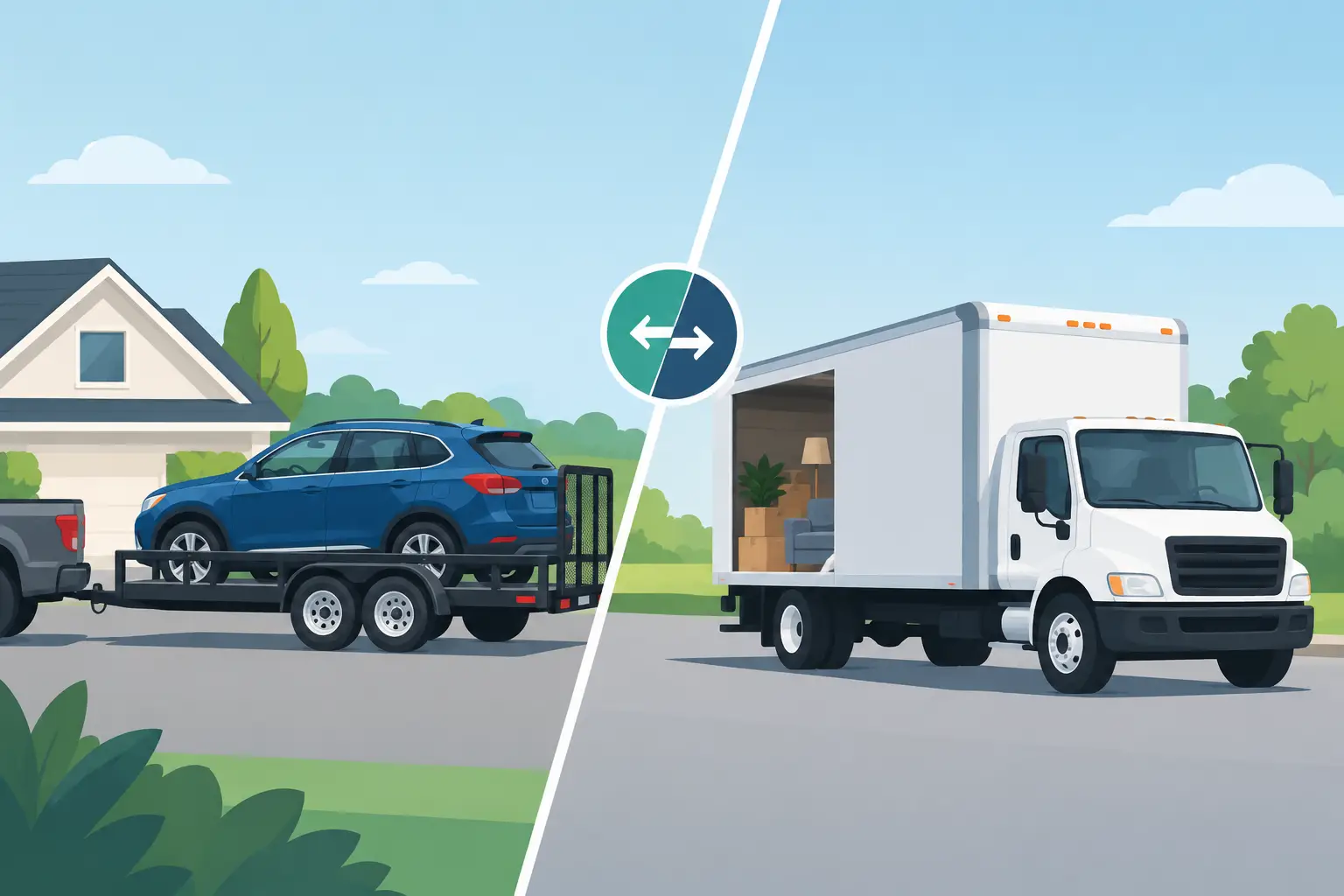
A rental counter can make moving look simple: pick a truck, load it, return it. But trailer hauling versus rental truck is not just a question of which vehicle costs less for the day. It is a question of load weight, driving skill, insurance, access at both properties, and whether your belongings will arrive in the same condition they left.
For a small, local move with a capable tow vehicle, a trailer can be a smart option. For a full household move, a long-distance trip, or a move involving stairs, tight driveways, and heavy furniture, a rental truck may offer more control. In other cases, hiring a trained moving crew is the safer and more economical choice once time, labor, and damage risk are counted honestly.
Trailer Hauling Versus Rental Truck: The Main Difference
A trailer adds cargo capacity behind a vehicle you already own or borrow. A rental truck combines the cab and cargo area into one vehicle. That difference changes nearly every part of the move.
With a trailer, you need a vehicle rated to tow the loaded trailer, a properly matched hitch, working trailer lights, and enough confidence to brake, turn, back up, and park with a load behind you. You also need to account for trailer weight, tongue weight, payload, and the actual towing capacity of your vehicle. The number in a vehicle advertisement is not always the number you can safely use with passengers, fuel, supplies, and cargo onboard.
A rental truck removes the towing setup, but it replaces it with a larger vehicle to drive. You will need to judge overhead clearance, turning radius, fuel use, loading height, and parking restrictions. Many rental trucks have a loading ramp or liftgate option, which can make a meaningful difference when moving appliances, couches, toolboxes, and heavy boxes.
Neither choice is automatically better. The right one depends on the move in front of you, not just the daily rental rate.
When Trailer Hauling Makes Sense
Trailer hauling works best when the move is relatively light, local, and well within the tow vehicle’s capacity. It can be practical for moving a few large items, clearing a garage, transporting materials, or handling a small apartment move with limited furniture.
An enclosed trailer gives your load protection from rain, road spray, and curious eyes. An open utility trailer can work for durable items, yard equipment, or junk removal, but it requires careful tarping and secure tie-downs. Furniture, mattresses, electronics, and boxed household goods do not belong exposed to weather or unsecured at highway speed.
The biggest advantage is flexibility. If you have the right truck or SUV, a proper hitch setup, and experience towing, a trailer may cost less than renting a large box truck. It can also be easier to maneuver in some residential areas than a long moving truck.
That said, the phrase “if you have the right setup” carries a lot of weight. A trailer that is too heavy, loaded unevenly, or attached to an underpowered vehicle can sway, lengthen stopping distances, and create a dangerous situation quickly. Loading mistakes are not minor details. They are safety issues.
Trailer hauling requires more than a hitch
Before choosing a trailer, confirm the trailer’s empty weight and maximum loaded weight. Then confirm your vehicle’s towing rating, receiver rating, hitch ball rating, and allowable tongue weight. The lowest-rated component sets the limit.
Load the trailer with heavier items low and centered over the axle area, while maintaining proper tongue weight. Secure every item with rated straps or restraints. Furniture pads prevent rubbing, but they do not restrain a load. Use wheel chocks while loading and keep a clear path around the trailer so no one is caught between the trailer and another vehicle.
If you have never backed a trailer into a narrow driveway or handled one in traffic, moving day is a poor time to learn. Add rain, tired helpers, and a schedule pressure, and a budget-friendly plan can become expensive fast.
When a Rental Truck Is the Better Choice
A rental truck is often the clearer choice for a one- to three-bedroom home, a move with many boxes, or any job that requires consolidating belongings into fewer trips. The enclosed cargo box provides weather protection, and the flat interior makes it easier to build stable tiers of furniture and boxes.
A truck also avoids the need to own a tow-capable vehicle. You do not have to calculate trailer tongue weight or install a ball mount. For many people, that convenience is worth the added rental cost.
The trade-off is that a box truck has its own operating demands. Drivers need to watch low branches, parking garages, bridges, drive-thrus, and apartment loading zones. A truck may also be harder to place close to the entrance, especially in neighborhoods with narrow streets, limited parking, or strict building rules.
Choose a truck with enough capacity for the whole load whenever possible. Multiple runs can add fuel, mileage charges, loading time, and fatigue. However, renting a truck that is much larger than your load can make it harder to secure belongings. Open space allows furniture and boxes to shift unless the load is properly padded, tied off, and packed tightly.
Do not underestimate loading labor
The vehicle is only one part of the job. A loaded truck needs a balanced, protected load. Heavy furniture should be wrapped, appliances should be prepared correctly, and boxes should be stacked by weight and durability. Mattresses, mirrors, televisions, and wood furniture need protection from straps, vibration, and contact with other items.
A rental truck can look affordable until the move includes several flights of stairs, a piano, a large safe, oversized sectional, or fragile commercial equipment. Those items require specialty equipment and trained handling, not just extra hands.
Compare the Real Cost, Not the Advertised Rate
A trailer may have a lower base rental price, while a truck may reduce the number of trips. Both can carry costs that are easy to miss during planning. Fuel is one factor, but not the only one. Consider rental insurance, mileage, trailer brake requirements, hitch equipment, moving blankets, dollies, straps, tolls, parking, and cleaning or late-return fees.
Then put a realistic value on your time. A do-it-yourself move can take a full day or longer when you include pickup, loading, driving, unloading, refueling, and return. If friends are helping, delays can leave everyone waiting around a half-loaded truck or trailer.
Damage risk also belongs in the calculation. A scratched floor, broken dresser, damaged doorway, or dropped television can erase the savings from a cheaper vehicle choice. Rental coverage may not protect every item in every situation, especially personal property packed or loaded by the customer.
A Quick Decision Check Before You Reserve
Use a trailer when you have a properly rated tow vehicle, towing experience, a light-to-moderate load, and a short route. Choose a rental truck when your belongings need weather protection, you want fewer trips, or your vehicle is not equipped to tow safely.
Consider professional movers when the move includes heavy or specialty items, time-sensitive possession dates, valuable furniture, commercial equipment, or a property where avoiding damage matters more than saving a few dollars upfront. A professional crew brings the labor, pads, floor runners, shrink wrap, wardrobe boxes, dollies, and specialty equipment that turn a difficult move into a controlled process.
Baker Home Solutions uses a capacity-forward fleet of trucks and trailers, along with trained, uniformed crews, to match the equipment to the load instead of forcing every move into one vehicle type. Licensed and insured service, WSIB-certified operations, and proper protection materials matter most when the job involves more than a few boxes.
Before reserving anything, walk through both properties and picture the actual route: the stairs, the driveway, the elevator, the doors, the parking, and the items that cannot be replaced. The vehicle that fits the move is the one that protects your belongings, your property, and your moving day.