
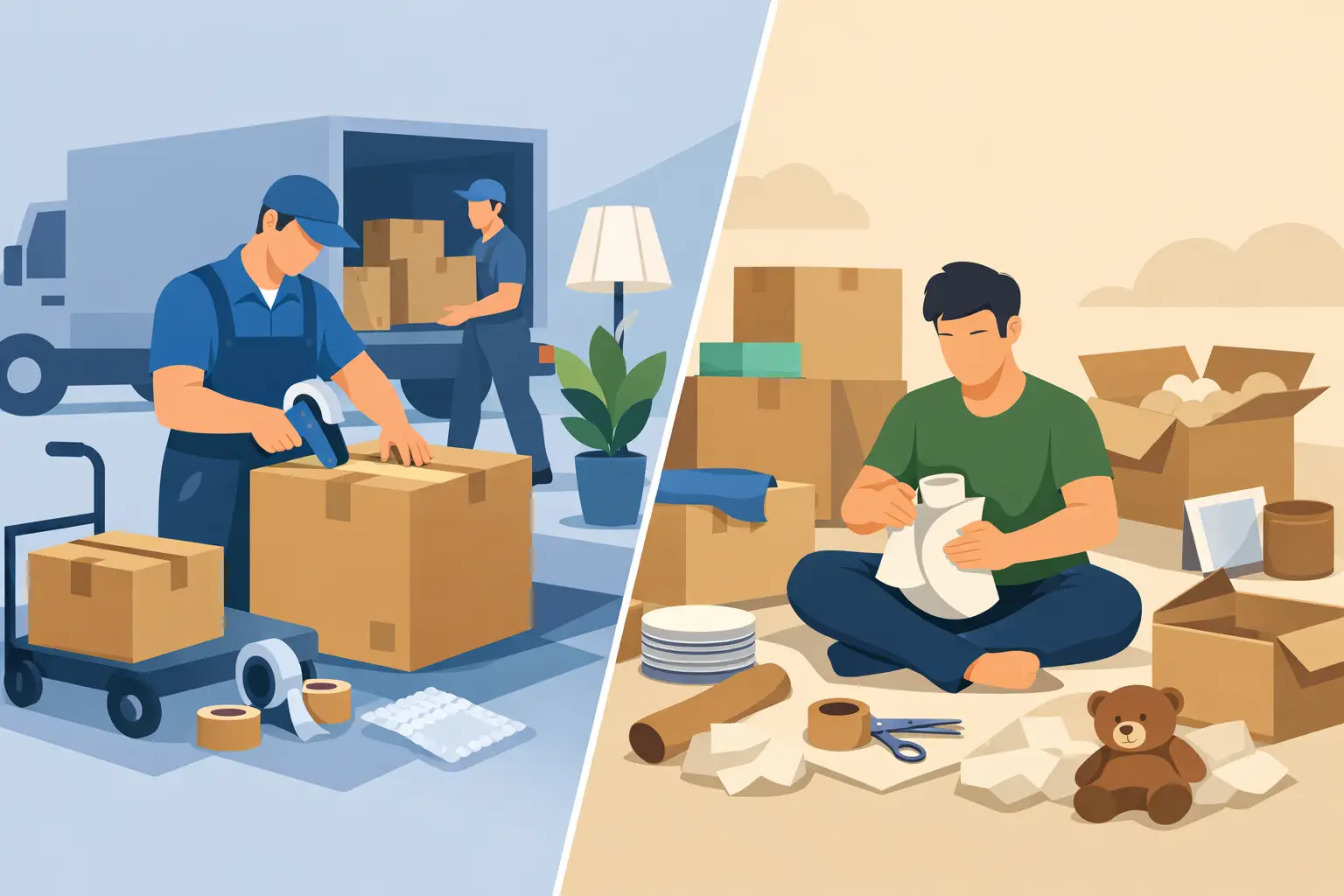
Boxes stacked in the hallway look manageable until moving week turns them into a deadline. That is where professional packing versus self packing becomes a real decision, not just a budgeting line item. The right choice affects damage risk, moving speed, insurance questions, and how stressful the entire job feels from start to finish.
For some moves, packing yourself makes perfect sense. For others, it creates delays, broken items, and a longer moving day than expected. The difference usually comes down to volume, fragility, timeline, and how much risk you are willing to carry personally.
Professional packing versus self packing – what actually changes?
At a glance, the difference seems simple. One option means you pack your own belongings. The other means trained movers pack them for you. In practice, the gap is much bigger.
Professional packing is a system. It includes the right box sizes, proper wrapping methods, labeling that helps the move stay organized, and packing sequences that protect fragile items while keeping loading efficient. It also means the crew arrives with supplies and tools already matched to the job, whether that includes moving pads, shrink wrap, wardrobe boxes, floor protection, or specialty equipment for oversized pieces.
Self packing is usually more improvised. Even organized households often underestimate how many cartons they need, how long packing takes, or how quickly kitchenware, electronics, artwork, and seasonal storage items pile up. A self-packed move can still go well, but it depends heavily on your planning, stamina, and time.
The real trade-off is not just price
Most people start with cost, and that is fair. Self packing usually looks cheaper on paper because you are not paying labor for wrapping, boxing, and labeling. But the full cost is broader than materials and hourly rates.
If you pack yourself, you are spending evenings, weekends, and likely a few last-minute late nights. You may need to buy more supplies than expected. You may also increase move-day labor if boxes are overfilled, mislabeled, loosely packed, or not ready when the truck arrives. A move that starts behind schedule often stays behind schedule.
Professional packing costs more upfront, but it often reduces wasted time and avoidable damage. For busy families, seniors, office managers, and anyone balancing work with a relocation, buying back that time matters. For businesses, time is not just personal stress. It is downtime, delayed setup, and staff disruption.
When self packing makes sense
Self packing can be the right call when the move is small, the contents are straightforward, and your schedule gives you enough runway. A studio apartment, a dorm move, or a local relocation with minimal fragile items may not require full packing support.
It also works well if you are highly organized and can pack in stages. People who label carefully, use quality boxes, avoid overloading cartons, and leave enough time for proper prep often do fine. If your furniture is simple, your timeline is flexible, and you do not mind doing the physical work, self packing can save money.
There is also a middle ground. Some customers self pack books, clothing, linens, and non-breakables, then bring in professionals for kitchens, glassware, TVs, artwork, mirrors, antiques, or a home office. That approach keeps costs under control while putting the highest-risk items in trained hands.
When professional packing is worth it
Professional packing starts making sense quickly when the move gets complicated. Large homes, tight timelines, multi-floor houses, office relocations, and properties with fragile or high-value items all benefit from a structured packing process.
If you have a piano, gym equipment, heavy wood furniture, electronics, framed art, or machinery, the risk goes up. These are not items you want wrapped with leftover tape and random boxes from a grocery store. They require the right materials, the right lifting methods, and a crew that knows how to protect both the item and the property around it.
Professional packing is also valuable when the move must stay on schedule. A trained crew can pack in hours what takes a household several days. That speed matters when you are closing on a home, coordinating building access, preparing for tenants, or trying to get an office back up without extended downtime.
Damage risk is where the decision gets serious
Most people think about broken dishes. The bigger issue is often hidden damage. A carton that is too heavy can split at the bottom. A TV can survive the drive but crack because it was boxed under pressure. Furniture can get scratched because drawers were left loose or surfaces were not padded properly.
Professional crews reduce that risk because they pack with transport in mind, not just storage in mind. There is a difference. Items are not simply boxed up. They are prepared for carrying, stacking, truck loading, and unloading.
That matters even more in bad weather, on longer drives, or in buildings with tight hallways and stairwells. Protective measures like shrink wrap, moving pads, floor runners, and proper box selection are not extras. They are part of preventing expensive problems.
Packing affects the entire moving day
Poor packing does not stay contained to the packing phase. It slows loading, creates confusion at delivery, and increases the odds that boxes end up in the wrong room or need to be repacked on the spot.
Well-packed moves run faster because the crew can load efficiently and safely. Box sizes are consistent. Labels are clear. Fragile items are identified. Furniture is prepped correctly. The truck can be organized in a way that protects the load and speeds up unloading.
This is one reason many people who initially choose self packing later wish they had at least partial packing help. They save on one part of the move but lose time and efficiency on the day that matters most.
Professional packing versus self packing for offices
For office moves, the answer is usually less flexible. Professional packing versus self packing in a business setting is not just about cartons. It is about continuity.
Desks, monitors, printers, filing systems, inventory, IT hardware, and sensitive equipment need a clear process. If staff pack inconsistently, cables disappear, labels get vague, and setup takes longer at the new location. Every hour spent sorting out avoidable packing mistakes is an hour not spent working.
A professional crew brings structure. Equipment is packed by category, fragile components are protected properly, and loading follows a sequence that supports efficient unloading and setup. For companies moving electronics, records, tools, or operational assets, that planning is worth far more than the labor line item.
The insurance and liability question
This part is often overlooked until something goes wrong. If you pack your own boxes and an item inside arrives damaged, liability can become more complicated. That does not mean self packing is a bad choice. It means you should understand where responsibility starts and ends.
With professional packing, there is a clearer chain of handling. That matters when you are trusting someone with breakables, collectibles, business assets, or irreplaceable family items. It is one reason customers often look for movers who are licensed and insured, with uniformed crews, safety standards, and a documented process.
How to choose the right option for your move
A simple question helps: what would be hardest to replace – your money, your time, or your damaged items? If saving cash is the top priority and your move is basic, self packing may be the right fit. If your schedule is tight, your inventory is fragile, or your move has no room for mistakes, professional packing is usually the smarter investment.
It also helps to think in zones, not all or nothing. You may want to pack closets and kids’ rooms yourself while hiring professionals for the kitchen, garage, office, and large furniture prep. That is often the sweet spot.
For households and businesses that want the move handled with less guesswork, a company like Baker Home Solutions can step in with the crew size, fleet capacity, protective materials, and specialty equipment needed to keep the job moving safely and on schedule. That kind of preparation is hard to replicate with borrowed bins and a free weekend.
A good move is not the one where you did every task yourself. It is the one where your belongings arrive intact, the day stays under control, and you are not still cleaning up preventable problems a week later.