
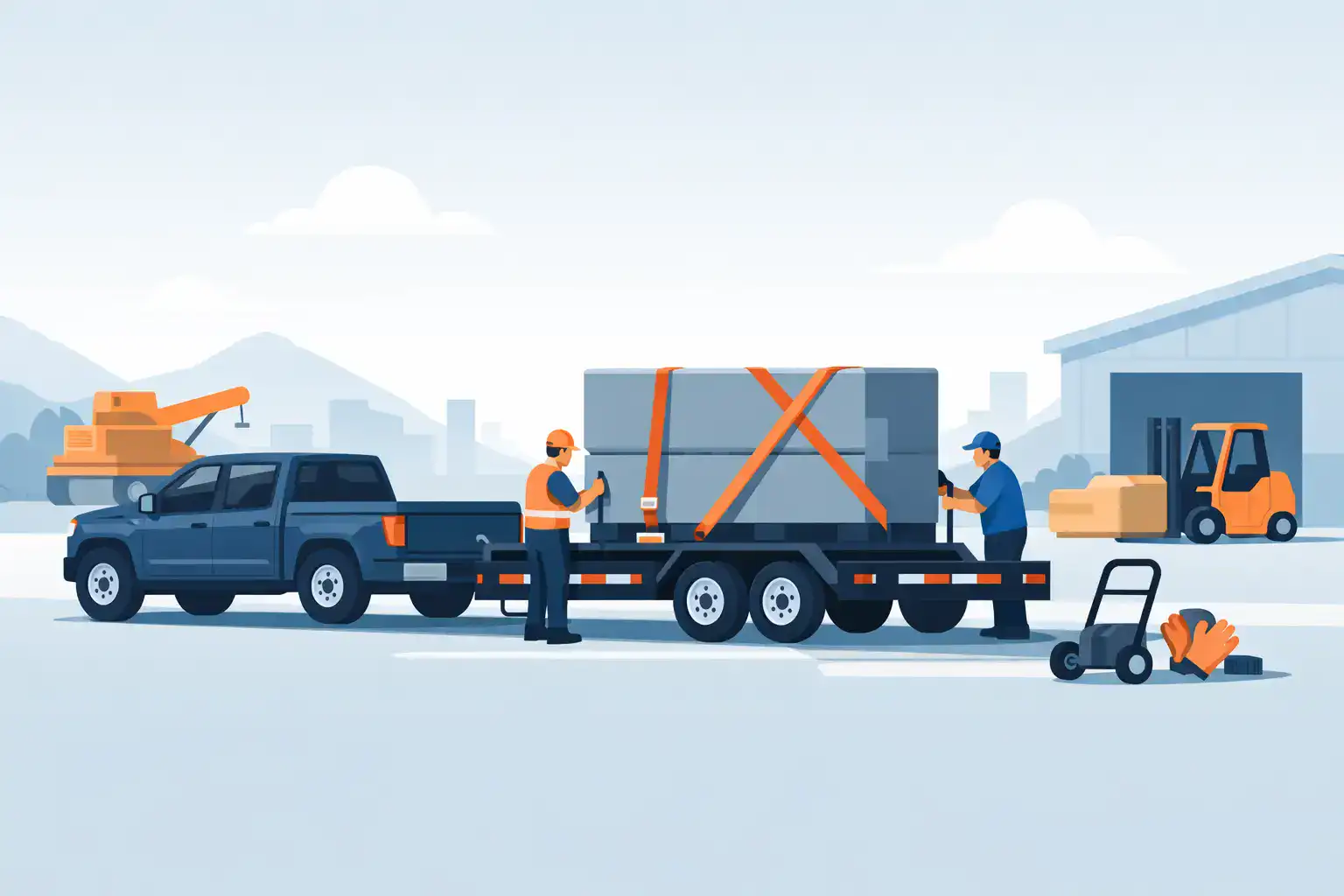
A safe move can go sideways fast when the job includes a gun safe, a commercial copier, a piano, a packed tool chest, or heavy retail fixtures. Heavy item moving with trailers is not just about fitting more cargo behind a truck. It is about weight balance, tie-down points, trailer type, floor protection, access planning, and a crew that knows how to move serious loads without damaging walls, floors, door frames, or the item itself.
For homeowners and business managers, that difference matters. A heavy item is often the one piece that can delay the whole move, damage the property, or create a safety issue if the equipment and plan are wrong. When the crew arrives with the right trailer setup, proper pads and skids, and a clear loading sequence, the job moves faster and with far less risk.
Why heavy item moving with trailers needs a real plan
There is a reason heavy moves are usually where do-it-yourself plans break down. The challenge is rarely just raw weight. It is the combination of weight, shape, fragility, access, and transport stability.
A safe, oversized chair may be awkward but manageable. A 700-pound safe on a narrow stair landing is a different kind of job. The same goes for office printers, server racks, gym equipment, vending machines, and pianos. These items need controlled movement inside the property and stable transport once they are loaded. That is where trailers become useful, but only when they are matched to the load.
A smaller trailer can be efficient for certain jobs, especially when the goal is separating heavy pieces from boxed household goods. A larger or gooseneck setup can be better when the load requires higher towing stability and more capacity. It depends on the item, the route, the loading angle, and how much equipment needs to travel with it.
The trailer matters as much as the truck
Not every trailer is built for the same kind of move. In heavy item moving with trailers, the trailer choice affects safety before the vehicle even leaves the driveway.
Ball hitch trailers are common and practical for many residential and light commercial loads. They can work well when the weight is within range and the cargo can be loaded and secured with proper balance. Gooseneck trailers offer a different advantage. They generally provide better stability and weight distribution for larger, heavier loads, which can make a real difference when transporting machinery, dense furniture, or multiple oversized items in one trip.
The trailer deck height also matters. Lower loading height can reduce the strain of getting heavy items on and off. Ramp angle matters too. A steep ramp may be manageable for light carts, but it is not ideal for dense equipment or wheeled items that need slow, controlled movement.
Tie-down locations are another detail many customers never see, but they matter. Heavy cargo has to be secured so it does not shift in transit, especially on turns, stops, and uneven roads. Good trailer equipment supports proper strapping, bracing, and positioning instead of forcing the crew to improvise.
What protects the item also protects the property
The move is not successful if the item arrives safely but your hardwood floors, tile entry, elevator walls, or office hallway are damaged. The best heavy-move crews think about both at the same time.
That starts inside the space. Floor runners help protect walking paths. Moving pads prevent surface damage. Shrink wrap helps keep drawers, doors, and loose elements controlled. Specialty equipment such as piano skids gives the crew better leverage and stability for awkward, high-value items.
Then there is route planning. Can the item clear the doorway? Does a handrail need to be worked around? Is there enough turning space at the landing? In office settings, there may be elevators, shared hallways, and access windows that need to be respected to avoid downtime and disruption.
For this reason, a proper estimate is more than a price conversation. It is often the point where the mover identifies weight, dimensions, obstacles, trailer needs, crew size, and any special handling requirements before moving day. That planning cuts down on surprises, and surprises are expensive during heavy moves.
Residential heavy moves are rarely just about one item
Homeowners often call about a single difficult piece, but the move usually connects to a bigger situation. Maybe a safe is going from the basement to a new home. Maybe a hot tub is being removed before a renovation. Maybe a piano needs to be relocated while the rest of the household is being packed.
In those cases, trailer support can make the overall move cleaner and more organized. Heavy pieces can be separated from standard furniture and boxes, loaded with the right equipment, and secured in a way that does not compromise lighter household goods. That is especially useful when the schedule is tight or the property has limited staging space.
Families also care about something else that gets overlooked – pace. A heavy item that takes too long to solve can hold up the rest of the move. The right crew and trailer setup keep the day moving instead of turning one difficult piece into a three-hour delay.
Commercial moves have less room for error
For businesses, heavy item moving is often tied directly to operations. A delayed copier install, damaged shelving system, mishandled server rack, or late fixture delivery can affect staff, customers, and reopening plans.
That is why commercial heavy moving should be handled with process, not guesswork. Electronics and machinery may require careful sequencing. Inventory and furniture may need to be staged in a specific order. Access to docks, building management rules, and after-hours schedules can all shape the move plan.
A professional crew should be thinking beyond transport. They should be asking where the item sits now, where it has to go, what path it takes, what protection is needed, and how to minimize business interruption. For many offices and retail spaces, the best move is the one that is barely noticed by staff and customers.
Credentials matter when the load is serious
When a company is handling heavy items in your home or business, credibility is not a bonus. It is part of risk control.
Licensed and insured movers give customers a stronger level of protection. WSIB certification matters too, especially when heavy lifting and equipment use are involved. Uniformed crews with PPE signal that the company treats moving as real work with real standards, not casual labor.
The same goes for fleet and equipment readiness. A company with multiple trucks and trailers can match the vehicle to the job instead of forcing every move into the same setup. That flexibility matters when one customer needs a full residential move with a piano and another needs heavy office assets relocated with minimal downtime.
Baker Home Solutions is built for that kind of work, with a capacity-focused fleet, trailer towing options including ball hitch and gooseneck setups, and the moving tools needed to protect both cargo and property.
How to tell if your heavy move needs trailer support
Some jobs clearly do. Others are less obvious. A good rule is to look at three factors: item weight, item shape, and move complexity.
If the piece is unusually dense, awkward to grip, or difficult to balance, trailer-based transport may be the better option. The same goes if the move includes multiple heavy pieces, long-distance transport, limited access, or a need to separate specialty items from the rest of the load.
Customers should also think about site conditions. A steep driveway, basement exit, condo loading rules, or a commercial building with strict timing can all influence the best vehicle and loading plan. There is no single answer for every heavy move, and that is exactly why a quote-based approach works better than one-size-fits-all pricing.
What a good heavy move should feel like
From the customer side, the process should feel organized. The crew should show up on time, walk the route, protect the space, use the right equipment, and communicate clearly about what happens next. There should be no scrambling for straps, no guesswork at the doorway, and no careless shortcuts because the item is harder than expected.
That kind of job comes from preparation. It also comes from having enough capacity to do the work properly. When a mover has the right trailers, towing capability, supplies, and trained crew members, heavy items stop being a moving-day problem and become part of a controlled plan.
If you are preparing for a move with a safe, piano, machinery, oversized furniture, or heavy office equipment, do not treat that piece as an afterthought. It often sets the tone for the entire day. Get the plan right early, and everything around it gets easier.