
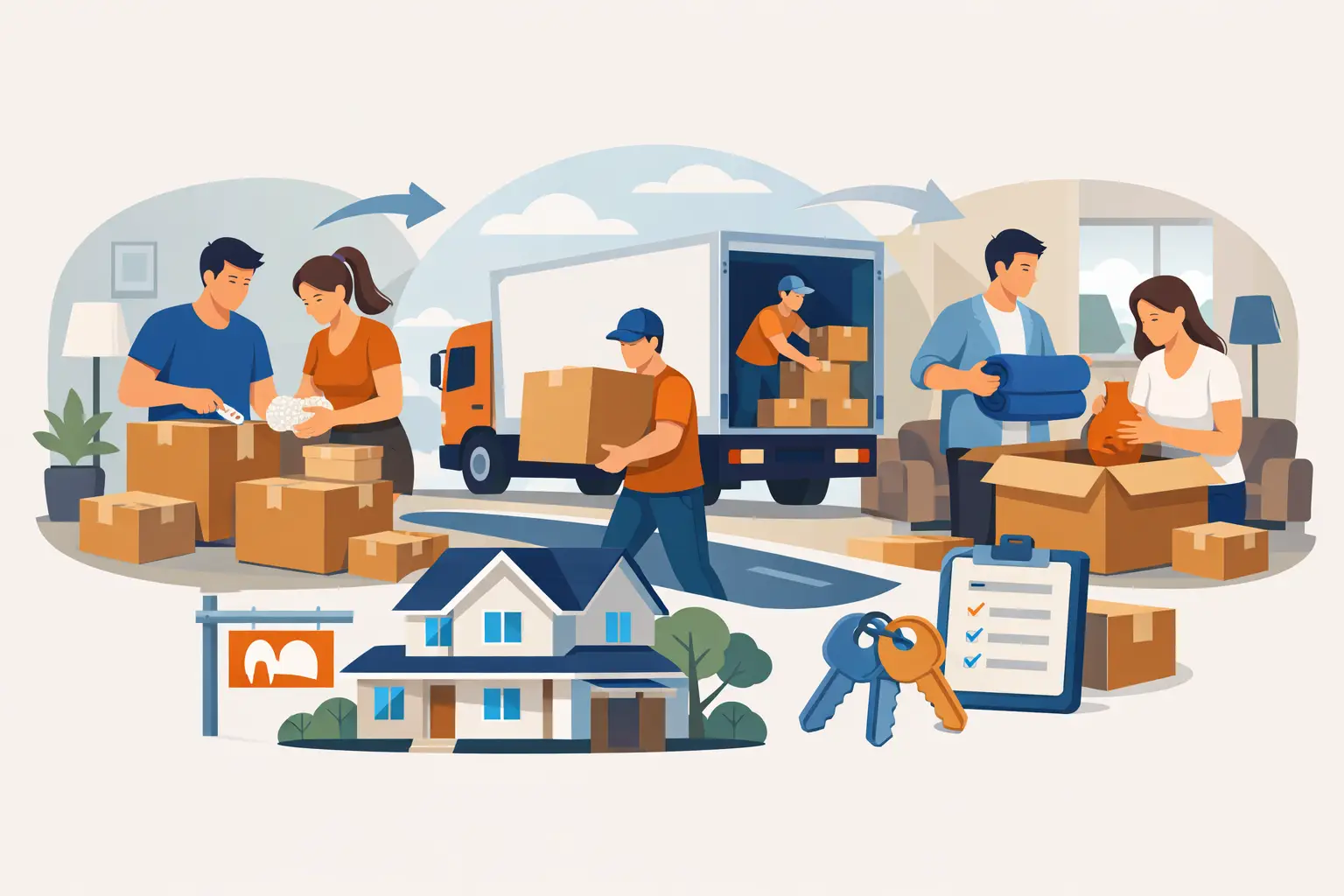
A move usually starts going sideways before the truck even arrives. Boxes get packed too late, hallways get scratched, keys are missing, and somebody realizes the couch will not fit through the new doorway. That is why the residential moving process step by step matters. A good move is not about rushing harder on moving day. It is about following a clear process that protects your home, your belongings, and your time.
For homeowners, renters, and families, the best results come from treating a move like a planned operation, not a weekend gamble. The right process reduces damage, keeps timing under control, and makes room for the real-life complications that show up in almost every relocation.
Residential moving process step by step starts with the walkthrough
The first step is figuring out exactly what is being moved, what needs special handling, and what could slow the job down. This is where a proper estimate matters. A phone quote can work for a small, simple apartment move, but larger homes, tight staircases, long carries, and heavy furniture often need an in-person look.
A walkthrough should identify the basics – furniture volume, fragile items, access points, parking, and building rules – but it should also catch the details people forget to mention. Think treadmills in basements, sectionals with awkward turns, pianos, oversized refrigerators, or sheds that still need to be emptied. Those details affect crew size, truck space, equipment, and timing.
This is also the point where you decide how much help you actually want. Some people only need loading and transport. Others want full packing, wardrobe boxes, floor protection, furniture wrapping, unloading, and setup. Neither option is wrong. It depends on your timeline, budget, and tolerance for stress.
Sorting before packing saves money and time
Packing items you do not want is one of the most common moving mistakes. Before the first box is taped, sort what is staying, what is going to donation, and what belongs in junk removal. That one decision can cut labor time, reduce truck space, and make unpacking much easier.
This is especially useful for garages, basements, storage rooms, and kids’ closets. Those spaces collect the kind of items people do not want to pay to move twice. If old furniture, broken shelving, worn mattresses, or renovation debris are still on the property, dealing with them before moving day keeps the job cleaner and faster.
A full-service crew can often help here because moving and junk removal work naturally overlap. If the goal is a smoother move, reducing clutter is not extra work. It is part of the plan.
Packing should match the item, not just the room
Packing is where damage prevention really starts. Good packing is not just putting things into boxes. It is using the right materials, wrapping for movement inside the truck, and preparing furniture so it can be carried safely through doorways and loaded without rubbing against other items.
Fragile kitchenware, framed artwork, electronics, lamps, mirrors, and decor need more than a few sheets of paper. Furniture should be padded, shrink wrapped where appropriate, and protected at corners and high-contact surfaces. Hanging clothes are faster and safer in wardrobe boxes. Mattresses should be bagged. Floors and entry points should be protected during the move, not repaired after it.
There is also a timing question here. If you pack too early, daily life gets messy fast. If you pack too late, the move starts behind schedule. A practical middle ground is to pack non-essentials first, keep daily-use items out until the final 24 to 48 hours, and prepare one essentials bag for each family member.
Labeling is part of the moving process, not an afterthought
A label should do more than say “kitchen” or “bedroom.” It should tell the crew where the box goes and tell you whether the contents are fragile, heavy, or needed first. Clear labeling speeds up unloading and reduces the amount of reshuffling inside the new home.
This becomes even more important in larger homes or multi-story moves. If every box looks the same, unloading takes longer and setup gets sloppy. If the boxes are clearly marked by room and priority, the crew can place items correctly the first time.
For families with kids, older adults, or anyone working remotely, prioritizing the first-night boxes matters. Bedding, medication, chargers, toiletries, coffee supplies, and basic cookware should never disappear into the middle of the truck.
The loading phase is where experience shows
A truck can be full and still be loaded badly. Loading is not just about fitting everything in. It is about weight distribution, protecting fragile items, preventing shifting, and staging the order so unloading is efficient.
Heavy items need the right equipment and enough trained hands. Appliance dollies, furniture dollies, straps, runners, pads, and specialty tools are not optional when you are moving large dressers, safes, treadmills, or pianos. The crew should also protect walls, corners, and floors while moving those items out. Property protection is part of professional moving, not a bonus feature.
This is where customers often see the difference between a casual labor crew and an organized moving company. Uniformed professionals, proper PPE, and a truck stocked with pads, shrink wrap, wardrobe boxes, and specialty equipment mean fewer shortcuts. Licensed and insured status matters here too, because heavy lifting always carries risk.
Transport is not just driving from point A to point B
Once the truck is loaded, the move is only halfway done. Transport has to account for route planning, timing windows, weather, building access, and the condition of the load inside the truck. A delayed elevator booking or a narrow driveway at the destination can throw off the whole day if nobody planned for it.
Larger fleet capacity helps when timing is tight or the move is more complex than expected. The same goes for having enough trailers and towing capability for heavier loads or specialty equipment. These details may not matter to the customer at first glance, but they matter a lot when the job needs to stay on schedule.
For local moves, transport often looks simple. For larger household relocations, it is a logistics job. The smoother it feels, the more likely it was planned properly.
Residential moving process step by step at the new home
Unloading should not turn into a second sorting session. If the pre-move plan was done right, each room is ready to receive furniture and boxes in the right order. Large furniture goes in first, key walkways stay open, and essentials are placed where they will be needed immediately.
This is also the right moment for basic setup. Beds, dining tables, sectionals, and office furniture often need reassembly. Putting those items together on moving day saves you from living out of boxes longer than necessary. If you have children, pets, or a home office schedule to manage, getting the most important spaces functional quickly makes a real difference.
There is a trade-off here. Full setup and unpacking services add cost, but they can save a major amount of time and frustration. For busy households, that is often money well spent.
Final checks prevent the usual post-move problems
Before the crew leaves, a final walkthrough should happen at both locations when possible. At the old property, check closets, cabinets, the garage, the attic, outdoor storage, and behind doors. At the new property, confirm furniture placement, inspect high-value items, and make sure assembled pieces are stable.
This is also the point to deal with leftover packing debris and any final junk that did not make sense to move. Some households want a clean, usable space immediately. Others are fine handling cleanup later. Again, it depends on your schedule and how quickly you need the home to feel settled.
If you are hiring professionals, this is where process and accountability matter most. A company with clear steps, trained crews, proper equipment, and real operating capacity is far more likely to deliver the kind of move people actually want – on time, careful, and without preventable damage. That is the standard Baker Home Solutions is built around, from estimates to setup.
The truth is simple. Most bad moves are not caused by bad luck. They come from skipped steps, weak planning, or crews that show up without the right tools or the right process. If you want a move that feels controlled instead of chaotic, start early, make decisions before the packing begins, and choose help that is prepared to protect both your belongings and your property from the first box to the final walkthrough.