
A 900-pound safe is sitting in your garage. Or you just bought a commercial fridge, a printing press, a pallet of tile, or a piece of shop equipment off a marketplace listing. The seller says, “Bring a trailer.” This is where moves go sideways fast – not because the item is impossible to transport, but because the wrong trailer setup turns a controlled haul into a white-knuckle drive.
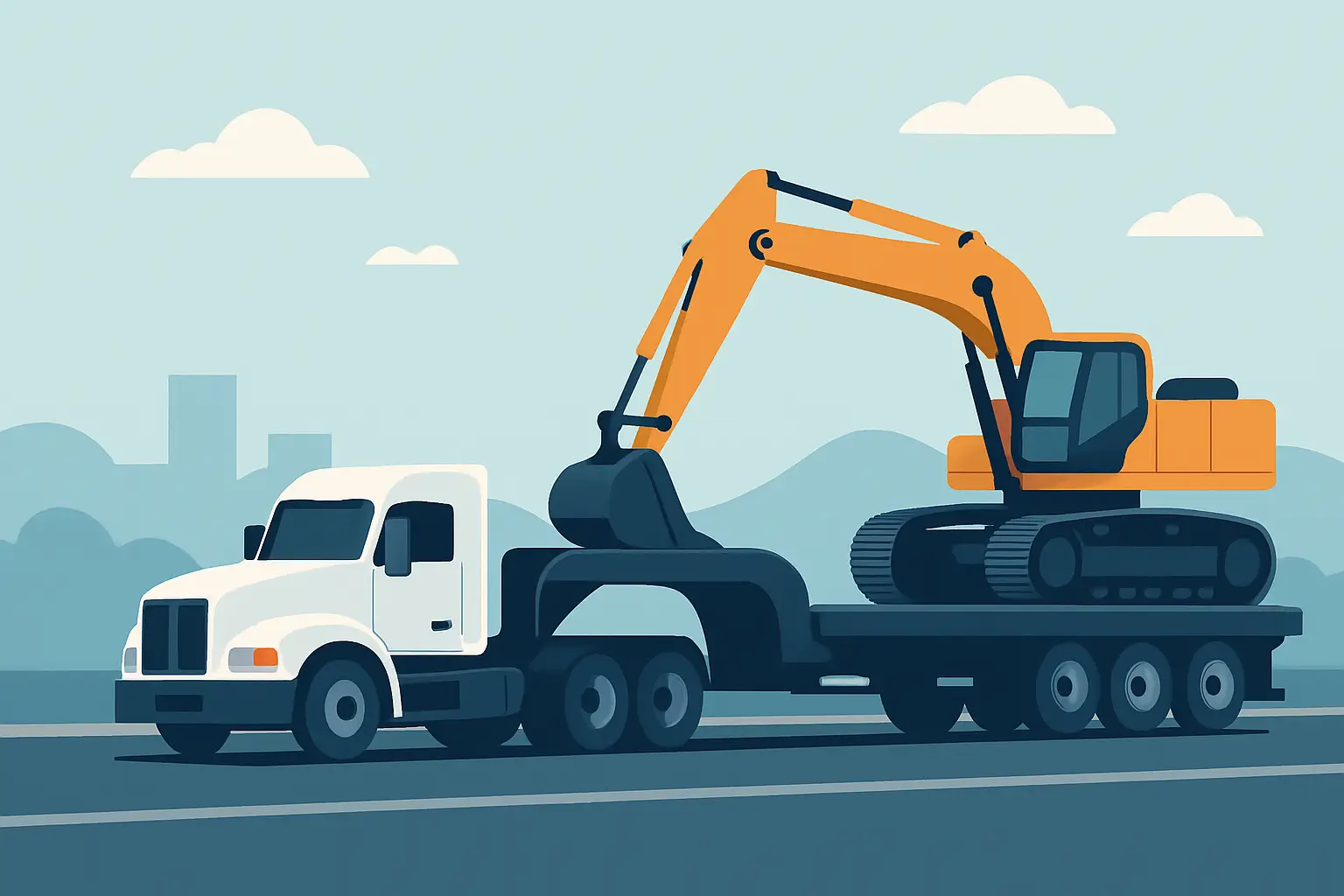
A heavy hauling gooseneck trailer is built for jobs where weight, stability, and control matter more than convenience. If you have a load that can punish a pickup, shift at the wrong moment, or crush a residential driveway if it’s handled carelessly, a gooseneck setup is worth understanding before you book help or rent equipment.
What “heavy hauling” really means for a gooseneck
People use “heavy hauling” casually, but the reality is simple: heavy hauling is any move where the combined demands of weight, tie-down force, braking distance, and load distribution push beyond what a bumper-pull trailer and a standard ball hitch can comfortably manage.
A gooseneck connects in the bed of the tow vehicle, typically over or just ahead of the rear axle. That placement changes the physics in your favor. The trailer is less prone to sway, the tow vehicle feels more planted, and steering inputs don’t get amplified the way they can with a long bumper-pull. When you’re transporting dense items like safes, machinery, or loaded pallets, that stability is not a nice-to-have. It’s the difference between “this is under control” and “we’re fighting it the whole way.”
Heavy hauling also has a “damage” side, not just a “weight” side. Even a load that’s within the trailer’s rating can still crack a driveway, destroy a garage threshold, or tear up a lawn if it’s loaded and unloaded without the right approach.
Why a gooseneck feels safer than a bumper-pull
Most customers don’t care about hitch geometry. They care about one thing: will it arrive without damage – to the item, the truck, or the property. The gooseneck’s advantage comes down to control.
With a bed-mounted connection, the trailer’s tongue weight is carried more naturally by the tow vehicle. That reduces the “lever effect” that can make a bumper-pull feel light in the front end or twitchy over bumps. You also get better behavior in crosswinds and when passing large trucks. If you’re hauling something tall, top-heavy, or just brutally heavy, those small stability gains add up quickly.
There’s a trade-off: a gooseneck requires the right tow vehicle and hitch setup. It’s not something you bolt on five minutes before pickup. And because the connection lives in the truck bed, you lose bed space for other cargo during the haul.
When a heavy hauling gooseneck trailer is the right call
Not every move needs this level of equipment. But there are patterns where goosenecks earn their keep.
If you’re moving a safe, a large gun safe, a commercial refrigerator, a forklift battery, a metalworking tool, or a crated piece of equipment, the load is usually dense. Dense loads create higher point pressure on trailer decks and ramps, and they punish weak tie-down points.
If you’re moving multiple rooms of a household plus a heavy specialty item, a gooseneck can let you consolidate trips, but only if the weight and balance are planned correctly. This is also common in office moves where you have filing systems, server racks, or bulky equipment that can’t be tipped or bounced around.
And if you’re dealing with awkward loading conditions – a sloped driveway, a tight turn, soft ground, or no dock – the trailer’s deck height, ramp style, and tie-down layout matter as much as its weight rating.
What to look at before you say “yes” to a trailer
A trailer can be rated for impressive numbers and still be wrong for your job. Before you commit, focus on the parts that protect your property and your load.
Weight ratings are only step one
You’ll hear terms like GVWR (gross vehicle weight rating) and payload. Those numbers are important, but they are not the whole story. Your real-world limit is the weakest link in the chain: the trailer rating, the tire load rating, the axle capacity, the hitch rating, and the tow vehicle’s towing and payload limits.
Also, the payload is not just the item. It’s the item plus any pallets, skids, blocking, straps, toolboxes, and added equipment used to secure it.
Deck height and ramps control the risk
A lower deck angle makes loading safer, especially for wheeled equipment and skidded items. If your load needs to be winched, pushed, or rolled, ramp length and traction matter. If your load is being skated, cribbed, or moved with machinery, you want a loading plan that does not depend on “muscling it.”
If you’re not sure how the item will be loaded, pause right there. The unloading is usually where damage happens – gouged floors, snapped thresholds, cracked steps, and dented door frames.
Tie-down points and securement strategy
Heavy hauling is not “throw a strap over it and go.” It’s about preventing sliding, tipping, and bouncing, all at once. A solid trailer has accessible anchor points placed so you can pull at correct angles without rubbing straps on sharp edges.
The other piece is knowing what you’re tying down to. Many items have weak panels, fragile edges, or components that can’t take strap pressure. The trailer can be perfect, and the securement can still damage the item if it’s done without experience.
The property-side risks most people don’t plan for
Customers usually focus on the road portion: “Can my truck tow it?” The property portion can be just as expensive.
Driveways and interlock can crack when heavy point loads sit too long in one spot. Garage slabs and transitions can chip if a dolly hits the lip. Inside a home or office, one wrong pivot can mark walls or tear flooring. If the move requires crossing finished surfaces, you want floor protection, controlled pathways, and enough manpower to move slowly without panic.
If the load is coming from a warehouse or a commercial building, you also have to consider dock access, freight elevators, clearance, and building rules. A heavy trailer and a heavy item don’t care about your building’s “no scuff marks” policy, so you need a process that respects it.
Questions to ask any hauler before they show up
If you’re hiring help for a heavy haul, don’t settle for vague answers. The right provider will be comfortable with specifics because heavy loads demand specifics.
Ask what tow vehicle and hitch configuration they’re using and whether it’s rated for the load. Ask how they plan to load and unload it, not just how they plan to drive it. Ask what they use for floor and wall protection, and how they prevent driveway damage. And ask whether they’re licensed and insured – because when something goes wrong on a heavy move, the repair costs are rarely small.
If you’re coordinating a business move, it’s also fair to ask how they handle downtime. A crew that shows up with the right equipment and a plan can keep your operation moving. A crew that improvises turns your move into a full-day interruption.
Gooseneck vs other options: it depends on the job
A heavy hauling gooseneck trailer is not the only answer. Sometimes a bumper-pull equipment trailer is perfectly appropriate, especially for shorter distances, lighter loads, or sites with tight access where a longer gooseneck setup is harder to maneuver.
Sometimes you need a flatbed with a different loading method, or you need specialized rigging beyond what a trailer alone provides. And sometimes the real issue is not towing at all – it’s getting a 700-pound object out of a basement without destroying the stairs.
The point is to match the equipment to the risk. Overkill can cost more than necessary. Underkill is how things break.
Where this fits into a professional move
At Baker Home Solutions, we run a capacity-forward fleet with both ball hitch and gooseneck towing capability, plus the moving equipment that keeps heavy items controlled – moving pads, floor runners, shrink wrap, wardrobe boxes, and specialty gear like piano skids. For customers, that means you’re not gambling that “the trailer should be fine.” You’re getting a planned approach, a trained crew, and the credibility basics that matter on heavy work: licensed and insured service and WSIB certification. If you want to see how we handle moves and get a quote, you can start at https://Bakerhomesolutions.ca.
The simplest way to make the right call
If your item is heavy enough that you’re thinking about renting a specialty trailer, it’s also heavy enough to justify a quick planning conversation. Measure the item, estimate its weight realistically, and think through the full route – not just the drive, but the path from where it sits to where it needs to land.
A good heavy haul doesn’t feel dramatic. It feels controlled, steady, and a little boring. That’s the goal. When the equipment and the plan match the load, you don’t need heroics – you just need careful hands and enough time to do it right.